

























































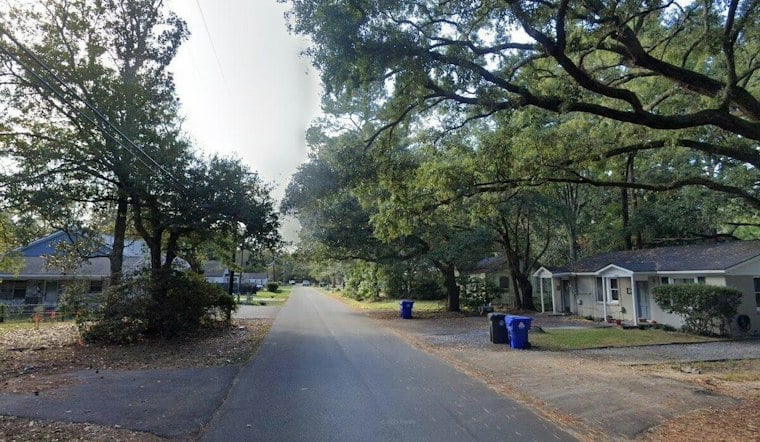
Homes at 1555 Juniper Street have sold for less than $289,000 each after a $60,000 city subsidy, according to local reporting. A city employee is among the buyers. The project is part of Charleston’s effort to make homeownership more attainable in a high-cost market.
The development is in the Ardmore-Sherwood Forest neighborhood. Live 5 News reported that it includes 10 newly constructed townhomes, each with about 1,100 square feet, two bedrooms, private ensuite baths and modern finishes. The city spent $3.7 million building the homes, according to WCBD News 2. Buyers accessed them through Charleston's First-Time Homebuyer Program, which serves households earning between 80 and 120 percent of area median income.
Published accounts differ on the project’s size and final prices. The Post and Courier has described 10 units across five buildings, with prices starting at $289,000 after the $60,000 subsidy. Separately, Live 5 News reported prices of about $278,000 with city subsidies. The discrepancies have not been resolved in the available reporting.
City employees are among the buyers
Rebecca Dail, the city's interim director of housing and community development, told Live 5 News that most city employees do not live in Charleston because of housing costs. Tamika Gasdsen, the city's director of sustainability and one of the buyers, described the purchase process as seamless and said she had not expected to become a homeowner in Charleston. She also expressed hope that more residents would find affordable housing, the station reported.
Another buyer, Alex Mendez, has worked in the food and beverage industry for more than ten years. He told Live 5 News that a short commute matters to many workers and that he was glad to live near work after receiving city down-payment assistance. Mendez also said it now takes five to six times a person's salary to afford a house. Mayor William Cogswell said the city was proud of the development, according to the station.
A street name with neighborhood history
The development is along Christian King Drive, named for Reverend Christian King, a longtime neighborhood reverend, Live 5 News reported.
The Juniper Street project is part of Charleston's Project 3500 initiative, which aims to create 3,500 affordable homes by 2032, according to CountOn2. The city is striving for a pace of 500 new units per year, per Multifamily Dive, which also reports that affordable units created through the initiative will remain permanently affordable. The outlet notes that Charleston's median income has doubled over the past 12 years, driven in part by an influx of wealthier residents.
How Project 3500 is being carried out
According to WCBD News 2, the broader plan combines new construction with redevelopment and uses a “build first” approach intended to avoid displacing current residents during construction. Its report describes that approach but does not provide a completed-versus-planned affordable-home tally, so it does not establish how many of the targeted homes have been delivered.
Why Affordability Has Become So Hard to Find
The math behind the Juniper Street subsidy reflects just how far local home prices have outpaced incomes. The median sales price for a townhouse or attached condominium in West Ashley was about $342,500 as of May 31, according to the Post and Courier. Applicants to the city's homebuyer program must earn between $62,160 and $93,240 annually, reflecting 80 to 120 percent of area median income, the paper's reporting shows.
Regional income limits illustrate the squeeze further: the top of the low-income range for a one-person household in the Berkeley-Charleston-Dorchester tri-county area now sits at $65,800, while the Charleston metro area's median income is $82,300 for one person and $94,000 for a household of two, according to the Post and Courier's coverage of regional housing data. Buyers in the city's program must also complete a homebuyer education workshop, with applications accepted on a first-come, first-served basis through the city's housing portal, the paper reported, adding that closings were underway with move-in anticipated in April.
The city acquired the Juniper Street property for $140,000 in 2018, and developer Jeffrey Roberts said the project wrapped ahead of schedule and under budget within seven months, following what the Post and Courier described as an eight-year backlog. Project 3500 itself envisions more than 5,500 units total — over 3,500 affordable and more than 2,000 market-rate — on 100 acres owned by the housing authority, according to CNU Public Square, which described the plan as a modified modern version of the federal HOPE VI redevelopment model. Housing shortages like the one Juniper Street aims to address have already pushed some workers into longer commutes because they cannot afford to live where they work, Live 5 News reported in an earlier story on the city's efforts to help first-time buyers.





