

























































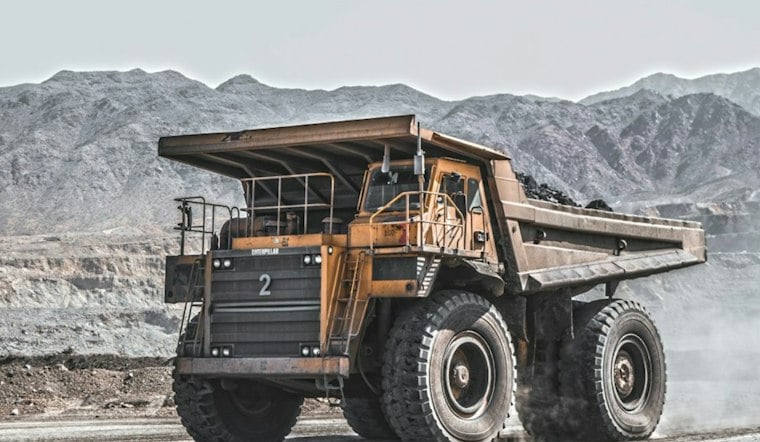
A 10-ton weight limit now applies to Saxonburg Boulevard, but West Deer residents say the restriction has not ended the problems they associate with coal-truck traffic: debris on homes and roads, speeding, and pavement damage. The trucks carry waste coal from the former Russellton mine to a Bitcoin-mining power plant and return with fly ash for storage.
According to TribLIVE, PennDOT instituted a 10-ton weight limit on Saxonburg Boulevard in September 2026 after an inspection found the road cracking and sinking from overuse. The outlet reports that heavy tri-axle trucks, some with payload capacities up to 25 tons, have hauled waste coal and fly ash through the township for years, and that TribLIVE's own observation of the route found many trucks traveling over the posted speed limit, crossing the median line, or both.
McElligott told TribLIVE that truck traffic and coal debris have been a persistent concern for residents. She said an elderly neighbor and a household with five children under age 10 live near the route, and worried that a driver might not be able to stop if a child entered the road.
A Legacy Mine Turned Bitcoin Operation
The Russellton mine operated from 1904 until 1982, when Republic Steel sold its holdings there, according to the same TribLIVE report. Stronghold Digital Mining took over the site five years before publication and began mining Bitcoin there, a process the report notes requires powerful computers performing trillions of calculations per second and massive amounts of electric power. Trucks hauled the waste coal roughly 60 miles to Stronghold's Scrubgrass power plant in Venango County, where it was burned to fuel the mining computers, then returned to West Deer carrying fly ash for storage.
Stronghold was sold to a company now known as Keel Infrastructure, the report states, and Keel has announced plans to transition from Bitcoin mining toward high-performance computing data centers. The corporate shift reflects a broader transaction: Architect Partners reported that global data-center operator Bitfarms completed its acquisition of Stronghold in March 2025 in an all-stock and debt-assumed deal valued at $175 million, absorbing the Pennsylvania power plants into its broader data-center business. Despite the announced pivot, the report notes Keel continued truck operations through West Deer after the transition was announced.
Fly Ash, Heavy Metals and Health Concerns
Shubert, who told TribLIVE he worked with fly ash during three decades in construction, said ash from the trucks had collected on his home and those of neighbors. He also said trucks exceeded the 25 mph speed limit on his section of road and violated the 10-ton weight limit. Fiaretti told the outlet that truck traffic had left indentations 4 to 6 inches deep at the road’s edge, where rainwater now collects.
TribLIVE described fly ash as a chalk-like byproduct of burning waste coal and reported concerns about its potential health effects. Patrick Campbell, executive director of the Pittsburgh-based Group Against Smog and Pollution, told the outlet that inhaling coal particles can contribute to asthma and cardiovascular disease, and that fine particulate matter from coal burning can reach deep lung tissue. The report also noted that waste coal can contain arsenic, mercury, cadmium and lead, metals associated with kidney, liver and brain disease. Campbell said that spillage during transport is difficult to prevent.
A Crash and a Pattern of Violations
The trucks have a documented history of crashes in the area, the report notes. On July 18, 2025, a truck flipped over on Little Deer Creek Valley Road while turning near the Russellton mine, spilling coal into its bed and onto the roadway, per the crash report cited by TribLIVE. Police found the truck traveling 5 mph below the 40 mph speed limit at the time, but determined that the 33-year-old driver had been using a mobile phone while driving.
West Deer Township Manager Daniel Mator said the township's police and code enforcement departments have issued citations to the trucks' employers, and that West Deer will continue using whatever legal enforcement mechanisms are available to protect residents. Per a West Deer police representative, Russellton mine operators have received citations, and police have worked with the Department of Environmental Protection and a state trooper to address the truck issues. The report states Keel Infrastructure began cleaning up its practices after that intervention, and that police have continued traffic control near the mine. The same police representative said the department has received no resident reports of problems in several months — but McElligott said residents simply stopped reporting truck issues because of what she sees as township inaction, a conflict the report presents without resolving.
Weight Limits, Permits and a Pending Repair Deal
The new Saxonburg Boulevard limit adds to longstanding restrictions on the route: Little Deer Creek Road has had a weight limit since 2001, while Bakerstown Road, Oak Road and the Route 908 extension have had 10-ton limits since the 1980s, according to TribLIVE. Russellton mine operators hold a permit to use Saxonburg Boulevard and Little Deer Creek Road. PennDOT has reported possible weight violations to police and says it has issued no weight exemptions for the hauling trucks. It plans to install weight-limit signs on Saxonburg Boulevard when they are available and is negotiating an Excess Maintenance Agreement with Keel Infrastructure, which would make the company responsible for repairing future road damage caused by overweight vehicles. Pennsylvania Code provisions allow PennDOT and local posting authorities to require bonded agreements from haulers exceeding posted limits, according to Pennsylvania Code provisions. TribLIVE reported that drivers are responsible for monitoring their vehicle weights; residents can contact PennDOT at 1-800-FIX-ROAD.
Regulatory Scrutiny Beyond West Deer
The Russellton-to-Scrubgrass pipeline has drawn scrutiny well beyond the township's roads. In January 2025, Stronghold Digital Mining and its subsidiary Scrubgrass Reclamation agreed to pay nearly $1.4 million in penalties and returned revenues to settle federal charges, as reported by Utility Dive, that the company violated PJM Interconnection market rules by diverting power meant for grid obligations into Bitcoin mining instead. Two months earlier, environmental groups PennFuture and the Scrubgrass Creek Watershed Association reached a legally binding settlement with Pennsylvania's Department of Environmental Protection and Stronghold, forcing the removal of an unpermitted, overflowing 5-acre coal ash pile at the Scrubgrass plant 14 months ahead of schedule, according to The Allegheny Front.
What Scrubgrass’s Permit Figures Show
A Pennsylvania Department of Environmental Protection notice in the Pennsylvania Bulletin listed potential emissions from Scrubgrass Generating’s Boilers 031 and 032 as SOx—1003 tons per year, NOx—370 tons per year, CO—223 tons per year, VOCs—2 tons per year and particulate matter—67 tons per year. These are facility permit figures, not measurements of emissions or residents’ exposure in West Deer; the notice information cited here does not provide particulate-monitoring results or establish controls at the Russellton mine site.
Federal lawmakers have been asking questions even longer. In January 2022, eight Democratic members of Congress, including Rep. Jared Huffman, sent formal inquiries to Stronghold and five other cryptocurrency companies to investigate how energy-intensive Bitcoin mining affects local electrical grids, energy prices and carbon emissions. The scrutiny extends to the science behind the business model itself: a September 2025 study led by University of Nevada researchers found that waste-coal-fired power generation emits 7% to 118% more greenhouse gases per kilowatt-hour than conventional coal-fired plants, according to The Cool Down.
That research complicates the industry's long-standing pitch that burning waste coal serves an environmental good by clearing old refuse piles. Pennsylvania offers real money for that pitch: the Commonwealth authorizes up to $20 million annually in Coal Refuse Energy and Reclamation Tax Credits for waste-coal facilities, according to the Pennsylvania Department of Community and Economic Development, while state utility mandates generated an estimated $180 million in Tier II Alternative Energy Portfolio Standards subsidies in 2025. Governor Josh Shapiro signed legislation in July 2024 that doubled the per-ton tax credit for qualified coal refuse burned to generate electricity, from $4 to $8. The scale of the underlying problem is immense: the state's Department of Environmental Protection estimates more than 700 unreclaimed coal refuse piles remain across historical mining regions, with total remediation costs estimated between $2 billion and $16 billion, per Spotlight PA.
For West Deer, that statewide policy debate is secondary to daily life on Saxonburg Boulevard, where a narrow two-lane road with blind spots and steep drops carries trucks tied to a century-old mine and a newer industry built on it. The Russellton mine stands as a former major source of industry for the township, sitting beside residential areas that were never designed around tri-axle coal haulers. Mator said the township intends to keep pressing enforcement options as the Excess Maintenance Agreement negotiation with PennDOT continues.





