

























































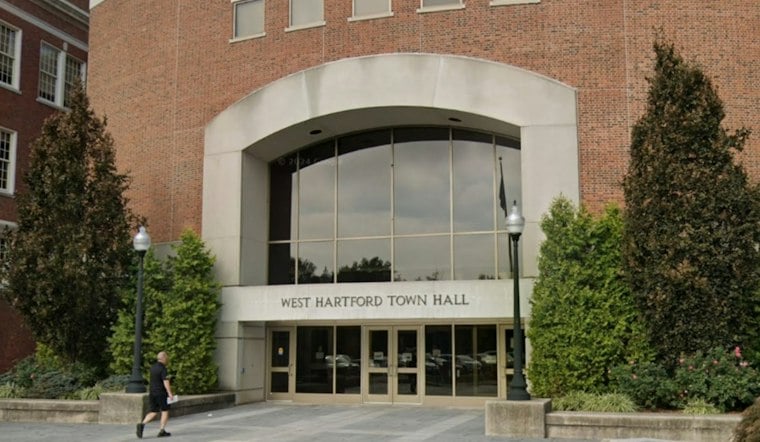
The West Hartford Board of Education voted 5-2 on October 6 to approve a position statement on balanced learning and purposeful technology use in district schools. The statement commits the district to integrating technology thoughtfully while preserving conditions and habits that support age-appropriate learning; it does not establish a specific cellphone ban. Board members Miriam Bleich and Ethan Goldman opposed the measure, reflecting disagreement over how quickly the district should move from broad principles to detailed screen-time and cellphone rules.
The statement followed months of discussion that began when the board announced plans to draft a screen-use resolution on June 2, according to West Hartford News. Before approval, members changed the wording from “seeks to” to “will,” strengthening the district’s stated commitment to balance and purposeful technology use. The vote came two months after the Connecticut State Board of Education adopted updated statewide guidance on personal technology and classroom screen time.
What the Statement Commits To—and What Remains Open
The statement is one part of a three-phase evaluation planned from summer 2026 through summer 2027. The review will draw on stakeholder surveys, parent responses, classroom walkthroughs, network traffic data, curriculum audits and software audits. Assistant Superintendent Anne McKernan presented the plan and first-phase results, including a parent survey with 1,214 responses. The stated aims are to build a shared vision for technology use, establish a guiding perspective on technology as a learning tool and develop a strategic direction for future screen-time policies.
The phased review leaves specific restrictions for later consideration. At the board’s September 1 opening-of-school meeting, Superintendent Paul Vicinus said “technology is not learning within itself… technology is a tool,” and cautioned against over-reliance on classroom devices. Board member Jonathan Weiner supported a broad position statement rather than rigid rules, arguing that rapid technological change can make specific policies outdated.
Dissenters Push for Faster, Narrower Rules
Bleich argued for faster, more targeted action, proposing consideration of a bell-to-bell cellphone ban or tighter technology restrictions for students below second grade. She also questioned the statement’s silence on artificial intelligence and whether its screen-time guidance applies at home. “What are we waiting for?” she asked.
Board Secretary Jason Gagnon defended the phased approach, saying the board could return to more specific policies as the work proceeds. The statement warns that unintentional, excessive or developmentally inappropriate technology use could displace experiences essential to learning and healthy development—a concern cited by members on both sides of the vote, despite their differing views on what should happen next.
Other Voices Raise Curriculum and Data Concerns
Board member Sandra Hershon called for greater district transparency regarding curriculum and instructional materials, while Dr. Gunjan Sharma pointed to the University of Chicago Law School's policy banning technology, including artificial intelligence, in first-year courses, which instead requires paper-based coursework. Stefani Corsi-Travali raised concerns specifically about technology use in elementary schools, and board members noted that the Funhub platform used in district classrooms records students' names, test scores, and voices.
The board also reiterated an existing rule that student communication during school hours should go through the school office rather than personal devices — underscoring public-safety reasoning that echoes a broader national debate. The National Association of School Resource Officers released a letter this year supporting bell-to-bell prohibitions.
Student representatives offered their own perspective on the debate. Luke Kalke, who represents Conard High School, said balance and student self-responsibility matter in how any policy gets applied, while Savannah Singh represents Hall High School on the board. West Hartford Public Schools plans to create a website section detailing its ongoing efforts and events tied to re-envisioning student technology use.
How West Hartford Compares Statewide
School cellphone rules remain a point of debate in West Hartford and elsewhere in Connecticut. Statewide, Connecticut Department of Education data reported by CT Public in August showed that 31% of high schools had adopted bell-to-bell bans, leaving high school phone rules a point of debate in West Hartford and elsewhere in Connecticut.
That statewide gap exists partly because lawmakers couldn't agree on a mandate. The state board's August guidelines were issued only after a proposed bill mandating a statewide, bell-to-bell school cellphone ban failed to pass during the 2026 General Assembly session, according to CT Mirror's reporting, leaving individual districts like West Hartford to chart their own course. Connecticut's framework also drew on the 2025 U.S. Surgeon General's Warning on Screen Use, which linked early screen exposure to adverse social-emotional, communication, and physical health outcomes, per reporting from Pullman & Comley.
What Connecticut’s Guidance Recommends
According to the Connecticut State Department of Education, the updated guidance encourages districts to develop local bell-to-bell policies but does not create a statewide requirement. It includes grade-band recommendations for personal technology use and purposeful screen time based on students’ developmental levels and needs, leaving local districts to develop policies with their communities.
The board did not vote on a resolution at its September 1 meeting. Its October 6 vote approved a position statement, not a cellphone-ban resolution. The board’s next regular meeting is scheduled for October 20 at 7 p.m. in the Legislative Chamber, Room 314, at West Hartford Town Hall, 50 South Main St.
Other District News
Beyond the technology debate, West Hartford schools have a busy stretch ahead. Conard High School will hold its fall homecoming on October 24 from 7 to 9:30 p.m. in the Conard cafe. Hall High School also has a 2026 homecoming. Morley Elementary School will host a movie night on November 13 from 5:30 to 7:30 p.m.
Special education investments are also part of the district’s work alongside the broader technology review.



