

























































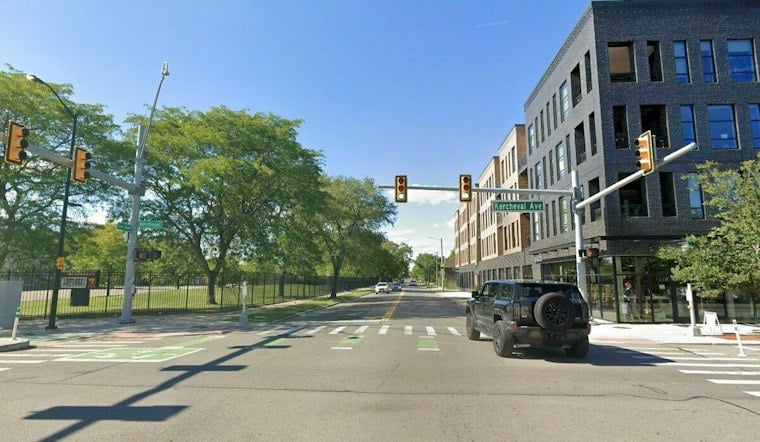
Bars and restaurants along Kercheval Avenue in Detroit's West Village are suddenly under the microscope after a City Council member asked regulators to review whether those businesses are operating with proper licenses. The request has left owners in the tight-knit commercial corridor caught off guard, with several describing themselves as shocked that their licensing status was being questioned at all.
The council member's request, reported Monday by Crain's Detroit, asked city regulators to review the licensing compliance of bars and restaurants operating on the stretch of Kercheval Avenue that runs through West Village. According to the outlet, West Village business owners were shocked by the request, which arrived without the kind of warning that typically precedes a city compliance check on an established commercial strip.
Crain's Detroit identified Barkside and Two Birds as businesses facing review, but does not name which council member made the request. It also does not specify whether the review concerns city business licenses, state liquor permits, zoning approvals, health licenses, or some combination of those categories — details that remain unconfirmed as of publication.
A Citywide Push to Simplify, Not Complicate, Licensing
The scrutiny lands at an odd moment for Detroit's licensing system, which has just been overhauled to make compliance easier rather than harder. Changes approved unanimously by the City Council require most business licenses to be renewed every two years instead of annually, according to BridgeDetroit. The new rules also create a provisional license that lets businesses keep operating while they finish the licensing process.
The same ordinances eliminated a redundant health license that restaurants previously had to carry on top of other permits, and they established a repayment program for businesses that owe less than $350 in outstanding fees. BridgeDetroit's reporting notes the changes followed a year-long review of city licensing practices and meetings with business owners, suggesting the city had been working to ease compliance burdens even as individual corridors like Kercheval Avenue now face fresh questions.
That shift toward leniency comes with a cost to the city. Renewing licenses every other year instead of annually is expected to give up $530,000 in annual revenue for the Buildings, Safety, Engineering and Environmental Department, per the same BridgeDetroit account. Separately, city guidance posted by the City of Detroit indicates that restaurants, restaurants with a Michigan Liquor Control Commission license, Class C bars, mobile food vendors and coffee houses no longer need a BSEED license at all, though a Detroit Health Department license remains mandatory.
West Village Has Been Here Before
This is not the first time a West Village drinking establishment has run into licensing trouble with regulators. The Villages Bier & Weingarten, a seasonal outdoor beer garden in the neighborhood, canceled its entire 2019 season after running into problems with its temporary nonprofit liquor license, according to Eater Detroit. That dispute stemmed from an audit by the Michigan Liquor Control Commission.
The pop-up's operators said at the time that they had been notified in January 2019 that the MLCC was auditing them, and that they still had not received the audit's findings by the time they pulled the plug on the season that June. Eater Detroit reported the closure was announced to Facebook followers on a Friday in mid-June 2019. The current dossier of evidence does not establish any connection between that 2019 episode and the licensing review now facing Kercheval Avenue businesses.
What Remains Unknown
Plenty about the current review is still unsettled. It is not yet clear what prompted the council member to request the scrutiny in the first place, what specific businesses are being looked at, or whether any violations have actually been found. No comment from the affected business owners beyond their shock, from city regulators, or from the Michigan Liquor Control Commission has surfaced in reporting so far.
The uncertainty echoes a broader national conversation about how cities police problem establishments without punishing compliant ones. In Chicago, aldermen recently proposed strengthening licensing enforcement and giving the city more leverage to close businesses tied to repeated violence or nuisance complaints, according to Block Club Chicago. Whether Detroit's Kercheval Avenue review reflects a similar push toward tougher enforcement, or is something narrower, remains to be seen as regulators begin their work.





