

























































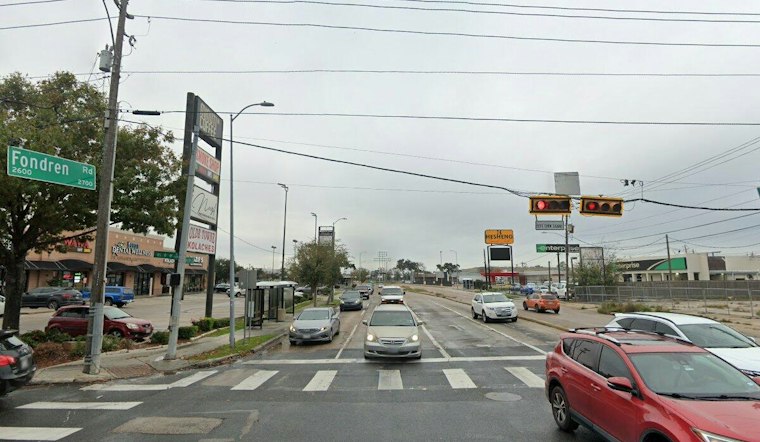
Hailey Reed was a 19-year-old nursing student working at House of Pies on Westheimer Road to pay her tuition when she was struck and killed crossing the street at about 2:30 a.m. on October 15, 2022. Four years later, the Texas Department of Transportation is not expected to finish safety upgrades along that same stretch of road until the summer of 2028.
Reed's grandparents, Mike and Cathy Watford, got the call from a Houston police officer the night their granddaughter died, according to Click2Houston. Police said Reed was crossing against the light and outside the crosswalk when she was struck by an F-150, and the driver told officers she did not see her. The driver was not ticketed or charged in Reed's death, the station reported. Mike Watford has said better lighting at crosswalks could help drivers spot pedestrians in the dark, and the family wants to see safer crossings and improved visibility installed along the corridor.
Westheimer Road ranked among the deadliest U.S. roads for pedestrians in 2022, with 10 pedestrian deaths recorded that year along a 3.8-mile stretch between the West Loop and Fondren Road, based on NHTSA and TxDOT data cited by Click2Houston. That finding tracks with a broader pattern documented elsewhere: a 2025 Washington Post investigation found 36 pedestrians were struck and killed between 2010 and 2023 along a 3.5-mile stretch of Westheimer, prompting researchers to label the corridor a national “pedestrian death zone.”
A Corridor With a Body Count
A 2023 analysis by Houston Landing found that a 4-mile section of Westheimer between Fondren Road and the 610 Loop recorded 38 total traffic deaths from 2018 to 2022 — 26 pedestrians, three bicyclists and nine drivers — spread across eight contiguous Priority High Injury Network segments. Houston's Vision Zero program defines those segments as half-mile spans with at least two traffic deaths, at least five severe crashes and at least one pedestrian severe crash, making Westheimer the longest continuous high-injury corridor in the city across every type of road user.
Speed is a central factor, per the same Houston Landing investigation, which found that only 9 percent of drivers observe posted 35-mph limits on comparable multi-lane city arterials. Westheimer itself has four lanes in each direction at Fondren Road, with traffic signals spaced far apart, the outlet reported.
Houston's pedestrian death toll has drawn national attention. The city recorded 98 pedestrian fatalities in 2023, ranking third among U.S. cities behind only Los Angeles and Phoenix, according to federal crash data from the National Highway Traffic Safety Administration reported by KHOU. More recently, preliminary TxDOT data analyzed in 2026 showed Houston recorded 99 pedestrian fatalities in 2025 — roughly a third of the city's 300 total roadway deaths that year — after reaching 119 pedestrian deaths in 2024, according to Hoodline's prior reporting on a Rice Village pedestrian death.
What the Law Says, and What TxDOT Plans To Do
Under Texas Transportation Code Section 552.008, drivers are legally required to exercise due care to avoid colliding with any pedestrian on a roadway, while Section 552.003 mandates that drivers stop and yield to pedestrians crossing within marked crosswalks. The 2021 Lisa Torry Smith Act strengthened that requirement further, amending state law to require a complete stop rather than merely slowing down when pedestrians are crossing.
Katie Alexander, a licensed peace officer with the Oak Ridge North Police Department and a member of the state's Pedestrian Safety Task Force, said Texas has significant problems with pedestrian fatalities, according to Click2Houston's reporting. She noted that roughly 70 percent of fatal pedestrian crashes involve people not using crosswalks, crossing highways, crossing in darkness, or not waiting for the signal. More than 800 pedestrians were killed across Texas in 2022, the station reported.
TxDOT plans to award a contract for enhanced crosswalks at 23 intersections along Westheimer between Loop 610 and Highway 6, with the project letting scheduled for fall 2027 and construction expected to begin shortly after, per Click2Houston. The agency expects the improvements to be completed by summer 2028. The upgrades are meant to feature highly visible pavement markings designed to draw drivers' attention, shorten crossing distances, reduce vehicle speeds and increase driver compliance at crosswalks. A similar reworked intersection at Westcott and Blossom streets near Memorial Park already includes brighter signage, a wide median and new road paint.
Vision Zero's Uncertain Path Forward
Houston launched its Vision Zero initiative in 2019 under then-Mayor Sylvester Turner, committing the city to eliminating traffic deaths and serious injuries by 2030. The plan can include street redesigns, lane reductions, lower speed limits, and measures that prioritize pedestrians and cyclists over vehicle throughput. A redesign of 11th Street in the Houston Heights that reduced vehicle lanes and added dedicated, curbed bike lanes led to a 36 percent reduction in crashes between 2019 and 2023, according to Houston Public Works crash data cited by Click2Houston.
But that approach has shifted under Mayor John Whitmire. Houston has moved away from physical street redesigns and bike lane infrastructure in favor of expanded police traffic enforcement since Whitmire's 2024 inauguration, according to reporting from the Texas A&M Transportation Institute and Route Fifty cited in Hoodline's earlier coverage of a bike lane protest in EaDo. Whitmire declined an on-camera interview request about Vision Zero, and his office did not directly address whether the city remains committed to the program's 2030 target, Click2Houston reported. The city does continue to work with TIRZs, Harris County and TxDOT to coordinate roadway safety initiatives.
That policy tension comes as Houston has also left money on the table. In October, Hoodline reported that Houston may have missed up to $29 million in federal Safe Streets and Roads for All grant opportunities, though it remains unclear whether the city submitted an application; the report said KHOU 11 first reported the issue and described the applications as incomplete, according to Hoodline's reporting. The federal program was created specifically to help cities redesign dangerous corridors and install the kind of safety improvements Westheimer still needs.
Beyond One Road
Westheimer's danger is not unique nationally. A 2025 Washington Post study found that pedestrian death clusters concentrate heavily on multilane commercial arterials where about 20 percent of surrounding households lack access to a personal vehicle, and that fatal collisions disproportionately affect low-income, Black and Latino residents who walk to reach essential services — a dynamic Hoodline detailed in its earlier look at Westheimer and FM 1960. Separate research from the Insurance Institute for Highway Safety found that pickups and SUVs with hood heights exceeding 40 inches are 45 percent more likely to cause pedestrian fatalities than smaller vehicles with sloping hood profiles, pointing to the growing size of the American vehicle fleet as another factor behind worsening crash outcomes.
For the Watford family, the statistics and policy debates matter less than the stretch of road where their daughter died. They are still waiting, along with everyone else who walks Westheimer, for crosswalks that won't be finished for roughly two more years.





