

























































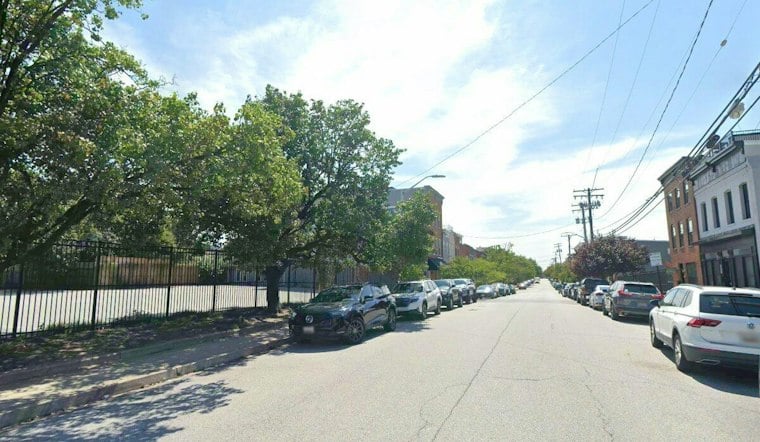
A molasses tank at Westway Feed Products overflowed in South Baltimore, sending thousands of gallons toward the Inner Harbor before cleanup crews could contain the mess with sand berms, a floating boom and a fleet of vacuum trucks. State inspectors say the spill came from a facility sitting less than 200 feet from the Patapsco River, a waterway protected for marine life, shellfish harvesting and recreation.
Overflow Traced to Overnight Chemical Reaction
According to WBFF, the Maryland Department of the Environment inspected Westway Feed Products at 1075 Hull St. after receiving two separate complaints. The first complaint, attributed to Matt Belstra, reported that a tank underwent a chemical reaction after midnight and began overflowing at about 2 a.m., while a second complaint alleged molasses had spilled into the harbor and that the surrounding air smelled sugary. Separately, WMAR-2 News reported that inspectors attributed the overflow to a Maillard reaction.
Per Belstra, the tank was about three-quarters full when the overflow started, and he estimated that 15,000 gallons of molasses left the tank before the situation was brought under control. Paul Rutherford, identified as Miller Environmental's vice president of operations, reported a separate estimate of about 5,000 gallons entering the harbor itself. WMAR-2 News reported the same approximate figure in its own account of the spill. The overflowing tank has a capacity of 1 million gallons.
Hot, Pressurized Molasses Still Flowing During Inspection
Inspectors described the molasses as extremely hot and pressurized, still spewing from the tank while the inspection was underway, and they observed molasses pooled on the ground around the tank's north, south and east sides. Cleanup teams arrived around 5 a.m. and began transferring molasses into a larger storage tank, and Belstra reported the overflow was stopped by 5 p.m. that day. Cleanup was expected to continue into the night and the following day, and no additional molasses was reported entering the harbor once the spill was contained.
Crews placed a sand berm near the harbor to contain the flow and set a boom in the water to keep molasses from spreading further, steps that WMAR-2 News also documented at the scene. Vacuum truck crews worked to remove the spilled molasses, and Miller Environmental sent a boat to assess conditions in the water. Inspectors found no storm drain inlets beside the Hull Street site, but they isolated one stormwater outfall pipe near the tank to reduce the risk of molasses reaching the water.
State Finds Violations, Warns of Daily Penalties
State inspectors determined that Westway Feed Products violated state environmental laws by allowing molasses waste to be released directly into the water, and they ordered the company to stop all unauthorized discharges immediately and to use approved methods to remove molasses from the ground and water. The Maryland Department of the Environment warned that Westway could face daily penalties if the violations continued, and it later closed the complaint cases after sending a copy of the inspection report to site representatives.
At the time of the inspection, state inspectors reported no dead fish or immediate harm to aquatic life, echoing the same finding WMAR-2 News relayed from the inspection record. Experts have previously noted that molasses spills behave differently from oil spills in open water. As National Geographic has reported, molasses can create a localized dead zone because bacteria consume oxygen while breaking down its organic material, though a molasses spill can also be cleaned up faster than oil by natural processes since it dissolves in water and many bacteria can digest it.
A Harbor With a History of Oxygen Trouble
The Patapsco River has faced water-quality challenges well before this spill. A February 2011 State of the Harbor assessment found that nearly all analyzed Baltimore Harbor data ranked poor or very poor, according to the University of Maryland Center for Environmental Science. That same assessment found Inner Harbor bacteria monitoring showed the water was unsafe for swimming more than 80% of the time, and most evaluated parameters — including dissolved oxygen, nitrogen, phosphorus, water clarity and chlorophyll a — scored below the ecological thresholds needed for healthy fish and habitats.
Baltimore's Inner Harbor has also seen large-scale fish die-offs tied to oxygen depletion. Hoodline previously reported on 25,000 dead fish found floating from Canton to Locust Point, which the Maryland Department of the Environment attributed to a sharp drop in dissolved oxygen levels suspected to stem from an algae die-off, with investigators finding no single pollution event responsible for that incident. Elsewhere, a far larger molasses spill has shown how severe the stakes can get: a 2013 pipeline leak released as much as 233,000 gallons of molasses into Honolulu Harbor, and crews there collected 2,000 dead fish with officials expecting more recoveries, as NBC News reported at the time.


