

























































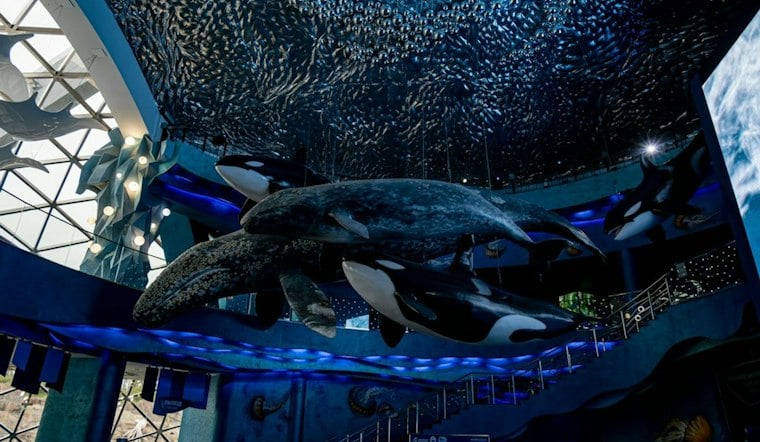
An open-air garden at a Waikiki hotel has become the latest stop for an award-winning sound-and-light experience built entirely from real whale and dolphin recordings, and a slice of every ticket sold is funding cleanup crews working some of the most remote waters in the Pacific. Sounds of the Ocean opened at the Waikiki Beach Marriott Resort & Spa on October 15 and is scheduled to run through April 30, 2027, inside the resort’s Mohala Garden.
The exhibition combines whale and dolphin sounds with original music, immersive visual art and ocean imagery, according to Sounds of the Ocean. The project emphasizes that none of it is generated — the ticketing site states the imagery and audio are “100% real marine species recorded in the Ocean” and explicitly not artificial intelligence. The Waikiki run follows the same format described by Marriott, which confirms the October 15, 2026 through April 30, 2027 schedule and the use of fully authentic marine recordings and footage.
Joshua Miller, founder and creative director of Sounds of the Ocean, told KHON2 that audiences in Hawaiʻi are looking for meaningful ways to connect with and protect the ocean. Per the same report, the experience is designed as a mindful underwater odyssey that uses marine sounds, music and visuals to help families slow down and connect with marine life, offering calm and rest as much as spectacle.
A Hotel Garden Built for Both Guests and Neighbors
The attraction sits within the resort grounds across the street from the beach in Waikīkī, and KHON2's report notes the exhibition aims to reach both visitors and local residents, not just hotel guests. That open-door approach tracks with how the experience is described elsewhere: it is located within the Waikīkī Beach Marriott Resort & Spa and open to both resort guests and the public, according to eHotelier. The same account describes the installation as designed to encourage mental wellness alongside marine conservation.
The Waikīkī engagement arrives after a sold-out run at Bishop Museum, per KHON2's reporting. A 2025 Bishop Museum presentation at the J. Watumull Planetarium offered two one-hour showings, at 5:30 p.m. and 7 p.m., with tickets ranging from $15 to $20, according to Hawaii News Now. Bishop Museum has separately noted that the experience has already reached audiences in twenty-six countries.
Ten Percent of Every Ticket Funds Remote Debris Removal
Ten percent of every ticket sold directly supports the Papahānaumokuākea Marine Debris Project, per eHotelier's report — a partnership KHON2 reports has now lasted a year and a half. That nonprofit, described on its own site as a U.S. 501(c)(3) organization, was created to protect sensitive wildlife and critical habitats from marine debris, according to the Papahānaumokuākea Marine Debris Project. KHON2 reports the project works to protect what it describes as the largest marine protected area in the Northern Hemisphere, and its founder, Kevin O’Brien, joined Joshua Miller on the station's Living808 program to discuss the exhibition and the conservation partnership behind it.
The project runs annual large-scale debris removal missions, and the scale of that work is substantial: in 2026 alone, the organization conducted three missions totaling 65 days at sea and removed more than 147,000 pounds of marine debris, according to KHON2's separate reporting on the cleanup effort. A recent announcement noted the project is now seeking new funding and partnership opportunities after wrapping up its five-year Catch-up and Keep-up Initiative, per a release carried by PR Newswire.
Accounts of the monument’s exact size vary slightly: the Papahānaumokuākea Marine Debris Project’s own site puts it at 582,578 square miles of the Pacific Ocean, while Hawaii Sea Grant describes 582,570 square miles of coral reefs, atolls and aquatic habitat in the Northwestern Hawaiian Islands. Either figure underscores why removal missions there require weeks at sea rather than single-day cleanups.
A Production Five Years in the Making
Sounds of the Ocean was created by ocean artivist, director and composer Joshua Sam Miller, along with co-director and expressive arts facilitator Elise Lein, according to Bishop Museum's event listing. The production evolved over five years while touring through the United States, Costa Rica, the Middle East and Europe, per its own account on the Sounds of the Ocean website. It carries the designation of an official UN Ocean Decade Activity, according to the project's ticketing page.
Hawaiʻi has already hosted earlier versions of the touring exhibition, including a February 2026 engagement with Pacific Whale Foundation on Maui and an appearance at Maui Ocean Center in March 2024, per the tour archive on Sounds of the Ocean's site. For now, the Waikīkī installation gives both visitors and residents a chance to experience the ocean through sound and art while supporting conservation work unfolding hundreds of miles away in the Northwestern Hawaiian Islands, as KHON2's report frames the pairing.




