

























































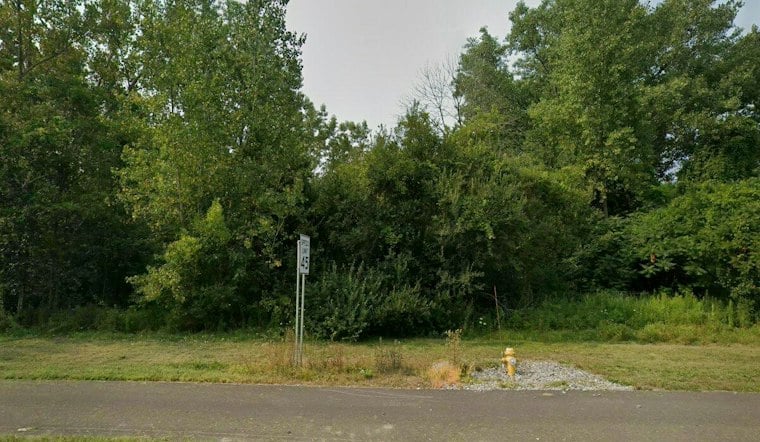
The Town of Wheatfield is asking the Niagara River Greenway for $203,800 to help pay for construction at 2020 River Road, where officials hope to turn a 4.59-acre former dumping ground into a public park on the Niagara River. The site was described as undeveloped in 2023, and the latest funding request marks another step in the redevelopment effort.
According to the Niagara Gazette, the town approved its application to the Greenway Commission in July, seeking the funds toward construction costs for what's being called the 2020 River Road trailhead project. The parcel, made up of four tax lots, is municipally owned and proposed for public-park redevelopment, according to the Niagara County Center for Economic Development, which notes the town acquired the site on December 29, 2006.
Getting there has meant confronting a messy environmental history first. The Gazette's report, citing town officials, describes the site as a former illegal dumping ground near the former 102 Street and Brzezinski landfills, where industrial wastes including ash, cinders, firebrick, coal and foundry sand were left behind. Testing turned up arsenic, lead, mercury and beryllium, and Town Supervisor Don MacSwan told the paper that people had also dumped concrete, blacktop and oil at the property over the years.
A History of Dumping and Industrial Debris
The property has a history of unpermitted dumping and industrial debris. It is near the 102 Street Landfill.
The project lists a $425,000 EPA Brownfields Cleanup Grant among its funding sources.
What the Finished Park Would Look Like
Once remediated, the site is envisioned as a park featuring a 200-foot-long fishing and observation platform, a shoreline trail, wayfinding signage, bicycle parking and seating, according to the Gazette's reporting on the Niagara River Greenway application. The Greenway application describes the broader project as incorporating habitat restoration, climate-adaptive design and nature-based shoreline improvements alongside recreational, educational and scenic features.
The price tag has crept upward as the project has evolved. Project filings cited by the Niagara County Center for Economic Development list the total budget at $1.77 million, supported by pending grant requests of $650,000 from a state flood resilience program and $491,900 from the Local Waterfront Revitalization Program.
Grant Timing Still Holds Up the Clock
MacSwan told the Gazette the project depends on grants, some of which won't be awarded until next year, a timing issue that continues to shape the whole schedule.
Assuming funding falls into place, the town expects a consultant team to handle final design work and bid packaging through 2027 and 2028, with a construction bid awarded in late 2028. Construction would then begin in spring 2029, with the park opening that fall — meaning the town's 2006 purchase would take roughly 23 years to become a functioning public space. The Town of Wheatfield would maintain the park once it opens, per the Gazette's reporting.
Linking Into a Regional Trail Network
Linking Into a Regional Trail Network The timing lines up with a broader regional push. WGRZ reported that a new 2.5-mile multi-use path along an abandoned rail line adjacent to River Road cost $4.3 million and brought the Niagara River Shoreline Trail closer to completion. The planned trailhead is within the Great Lakes Seaway Trail National Scenic Byway Corridor.
The 2020 River Road project has drawn written support from a wide range of local and state entities, including the Niagara County Legislature, Buffalo Niagara Waterkeeper, Destination Niagara, the Greater Buffalo Niagara Regional Transportation Council, state representative Angelo Morinello, state senator Rob Ortt and U.S. senator Chuck Schumer, according to the Gazette. For a town with just one piece of riverfront land to its name, that level of backing underscores how much is riding on finally getting the contaminated lot across the finish line.




