

























































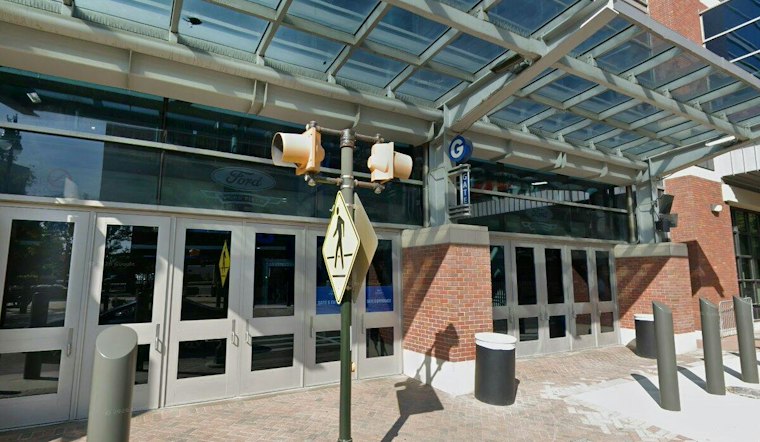
She usually crosses the finish line dead last, but Sadie Mae the corgi gets some of the loudest cheers at Ford Field anyway. The 7-year-old corgi, who lost the use of her back legs to intervertebral disc disease, rolls through halftime races in a tiny wheelchair, and she has become one of the most talked-about competitors in the Detroit Lions' Corgi Cup lineup.
Sadie Mae has raced at numerous sporting events across the United States, but she keeps coming back to Ford Field. She ran in the Lions' Thanksgiving game in 2025 and returned for the team's home game against the New York Jets in September 2026, according to ClickOnDetroit. She didn't win in Detroit, but her determination earned her more than a million likes on TikTok, per the same report. The team's own website later referred to her as one of the Corgi Cup's returning fan favorites, alongside racers Grizzly and Tito, in a fourth-annual event at Ford Field featuring 12 corgis competing for a $500 Pet Supplies Plus gift card, according to DetroitLions.com.
The Lions franchise even gave her a nod on social media, posting, “Throwback to when Sadie Mae stole the show at the Corgi Cup,” on the team's X account.
A Family Trip From Columbus For One Race
Sadie Mae lives in Columbus, Ohio, with Diana Woolf, whom the dossier identifies as her fur mother, and the Woolf family made the trip to Ford Field specifically to enter her in the event, ClickOnDetroit reported. Woolf says Sadie Mae's reaction to her equipment tells its own story: “Now every time you get the wheels near her she jumps up and down and gets excited,” Woolf told the outlet. Around the house, Sadie Mae scoots around on her front legs, saving her wheels for trips outside.
Sadie Mae isn't just a mascot for disabled dogs at Ford Field. She has actually won before. At the Ohio State men's basketball halftime race in January 2026, she ran straight and crossed the line first, becoming the only competitor using a wheelchair in that race, according to Cuteness.com. Per Diana Woolf's account, she may be the first wheelchair-using dog to win a corgi race, though that claim comes from Woolf rather than an independent record-keeper.
Living With Intervertebral Disc Disease
Corgis and other long-backed, short-legged breeds are prone to spinal disc herniation or rupture, a condition that can progress to full loss of hind-limb function. The American College of Veterinary Surgeons notes that damage that is more significant leads to loss of walking or inability to move the legs voluntarily, and the same source explains that dogs can lose bladder control along with mobility. That's Sadie Mae's reality: she requires bladder expression and cannot defecate independently, reflecting a pattern the American College of Veterinary Surgeons describes in dogs with complete hind-limb paralysis, who may need their bladders expressed several times a day and face higher risks of urinary tract infections.
Veterinary guidance also notes that wheelchair-using dogs may require supplements, pain management, and physical therapy, and that postoperative recovery can include rehabilitation for muscle strength and flexibility. Woolf's original telling of Sadie Mae's story carries real weight here: Sadie Mae's original owner was told to put her down, according to the dossier's account of Woolf's statements, but Woolf has said dogs with intervertebral disc disease do not have to be euthanized and can live great lives. She now fields questions from people around the world about the condition and corgi care, and shares information about the disease at races and events.
A Household Built Around Special-Needs Dogs
Sadie Mae is far from the only special case in Woolf's home. She has four fur siblings, including another wheelchair-using dog, and the household includes two other Pembroke corgis. In July 2026, the family brought home a fourth corgi, Pepper, who also uses a wheelchair and, according to Woolf, loves her wheels. Woolf has also rescued a senior dog that had a 10-pound tumor on its back, underscoring a pattern of taking in animals other owners might have given up on.
Woolf hopes Sadie Mae's story encourages more people to consider adopting dogs with disabilities, and the corgi is now training to become a therapy dog, continuing a role that started on the race track. Despite usually finishing last, Sadie Mae is described as resilient and adaptable, and she continues to draw crowd support wherever she rolls to the starting line.
Other Disabled Corgis Have Found Similar Spotlights
Sadie Mae isn't the only corgi turning hind-limb paralysis into a crowd-pleasing moment. At the University of Arkansas's third annual corgi race in March, 14-year-old Yumi, diagnosed with degenerative myelopathy, finished second-to-last but still had the crowd going wild once he crossed the finish line, according to TODAY.com. At Michigan State, 12-year-old Bella competed in a wheelchair due to degenerative myelopathy as part of a 12-dog race the Michigan Corgi Club staged across the Breslin Center court during a basketball game, per The State News. Together, the stories suggest Sadie Mae's wheels are becoming a familiar, cheer-worthy sight on sidelines far beyond Ford Field.





