

























































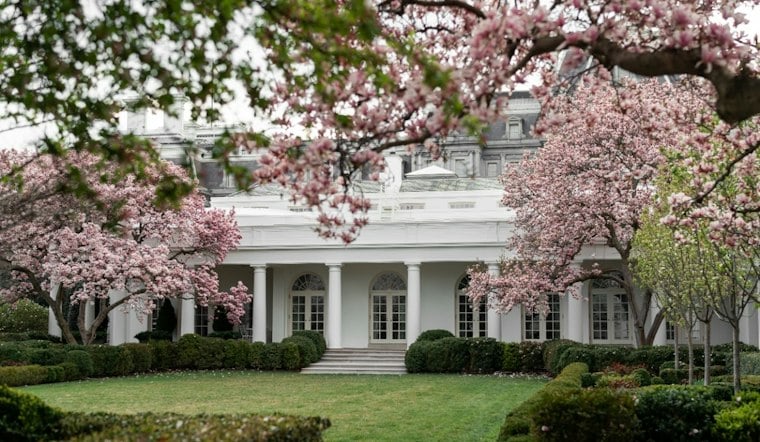
The White House grounds will open to the public for free, self-guided tours this Saturday and Sunday, October 17 and 18, with Saturday hours running from 10 a.m. to 4:30 p.m. and Sunday from 10 a.m. to 2:30 p.m. Visitors need a timed ticket to get in, and those tickets are given out first come, first served starting at 8:30 a.m. each day, one per person.
According to The Zebra Press, the National Park Service distributes the free tickets from a tent outside the White House Visitor Center at 1450 Pennsylvania Ave. NW, near 15th and E Streets. The outdoor route winds through the South Lawn, the Rose Garden, the White House Kitchen Garden, and the expanded White House beehive, giving visitors a rare close-up look at grounds that double as active diplomatic space between tour weekends.
This twice-yearly opening traces back more than five decades. First Lady Pat Nixon established the biannual tours in 1972, opening the executive residence's grounds to the public each spring and fall, according to East Wing Magazine. The tradition has continued under administration after administration as one of the few times ordinary visitors can walk grounds otherwise reserved for official business.
What's New on the South Lawn This Year
One of the more talked-about stops is the expanded White House beehive. In April, First Lady Melania Trump added a new hive shaped like a miniature White House, joining two existing hives installed in 2009 that together produce 200 to 225 pounds of honey annually, per the same report from AP News that the dossier draws on. Those hives support local pollination and yield clover honey used for White House meals, official gifts, and donations to local food kitchens.
Nearby sits the White House Kitchen Garden, planted on the lower South Lawn by First Lady Michelle Obama in 2009 — the first dedicated vegetable garden on the grounds since Eleanor Roosevelt's World War II-era Victory Garden, according to the National Park Service. Presidents growing their own produce on the grounds actually dates back even further, to John Adams in 1800.
A permanent 2016 redesign gave the Kitchen Garden a wooden arbor designed by University of Virginia architecture students, along with stone walkways and an engraved stone threshold meant to preserve the space for future administrations, according to the university's own account of the project. The National Park Foundation privately funded that redesign to keep the garden intact across changes in the White House.
The Rose Garden's Long Evolution
The Rose Garden, arguably the tour's most recognizable stop, dates to 1913, when First Lady Ellen Wilson first created it. It was later redesigned in 1962 by horticulturist Rachel Lambert “Bunny” Mellon at President John F. Kennedy's request so it could host large public ceremonies, per the National Park Service. That redesign added the central grass lawn bordered by trees, perennials, and roses that visitors still see today.
A 2020 renovation modernized the space further, updating underground electrical infrastructure and drainage while installing limestone walkways to meet Americans with Disabilities Act requirements. The project preserved the historical footprint of Mellon's 1962 plan while bringing the garden up to date for modern press events and diplomatic functions, the agency notes.
On the east side of the grounds sits the Jacqueline Kennedy Garden, which First Lady Lady Bird Johnson formally dedicated in April 1965 to honor Mrs. Kennedy's work restoring and beautifying the White House and its grounds. That garden site actually dates back further still, to a colonial-style garden First Lady Edith Roosevelt commissioned in 1903.
Historic Trees Line the Tour Route
Walking the South Lawn also means passing dozens of trees planted by U.S. presidents dating back to the 1870s. The oldest surviving specimen is a Japanese Threadleaf Maple planted by First Lady Frances Folsom Cleveland in 1893, according to the National Park Service. Most presidents since Rutherford B. Hayes have planted their own commemorative trees to mark their terms or to honor visiting foreign dignitaries.
The National Park Service has officially maintained President's Park and the 18-acre White House grounds since 1933, following landscape preservation standards set in 1935 by the Olmsted Brothers landscape architecture firm. NPS horticulturists and groundskeepers work year-round alongside White House executive staff to keep the gardens ready for both public tours and official events.
What to Bring — and What to Leave Home
Strollers, wheelchairs, cameras, and umbrellas without metal tips are all permitted on the tour, per The Zebra Press. But visitors are asked to leave large bags and backpacks at home; any bag brought along cannot exceed 18 by 13 by 7 inches.
Prohibited items include drones, scooters, metal water bottles, glass containers, selfie sticks, e-cigarettes, tablets, and signs or flags, along with any wearable technology capable of taking photos or video. Medical items such as EpiPens, glucose tablets, and electric scooters used for medical reasons are allowed, but visitors should tell Secret Service personnel about those items upon arrival, since the agency may restrict additional items for safety reasons.
The tours are weather dependent, so anyone concerned about cancellations can call the 24-hour information line at (202) 456-7040 or check whitehouse.gov/visit for the latest access information before heading downtown. Given the strict first-come, first-served ticketing and the 8:30 a.m. start time for distribution, arriving early at the Visitor Center tent is likely the difference between walking the grounds and missing out entirely.
Just south of the fence, the 52-acre Ellipse typically serves as the staging and queuing area for major public White House events, including garden tours and the annual Easter Egg Roll, according to Wikipedia. Its visitor pavilion, which opened in 1994, was built to help manage exactly this kind of large-scale public event.





