

























































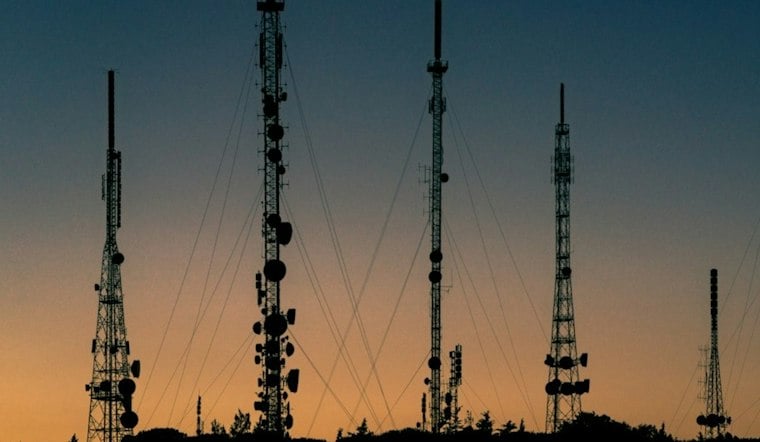
A hot dog held to a live AM radio tower in St. Charles became an unlikely speaker in March 2024. Its end burned away, and the station’s broadcast was heard coming from the sizzling meat. The striking result is documented; precisely how the sound was produced is not settled. A report published by St. Louis Public Radio revisits the experiment and its aftermath.
The measurements point to contact, not just proximity
Jeff Geerling’s account of follow-up tests provides one clue about what mattered: a hot dog held about an inch from the tower for roughly a minute did not heat significantly. In his blog post, he also reports that a pickle conducted electricity well and briefly stopped the transmitter’s RF output, while a breakfast sausage reduced output by half and was louder than the other foods tested. Those results show that different foods interacted with the tower differently; they do not, by themselves, explain why the hot dog produced audible broadcast sound.
The Geerlings have not established a definitive mechanism. Jeff Geerling suggested to St. Louis Public Radio that radio-frequency energy might create an intensely hot channel through the hot dog. Another possibility raised in an online discussion is that arcs of plasma pulsed with the AM signal and generated sound. That is a commenter’s proposed explanation, not a confirmed finding; the discussion is available on Hacker News.
A dramatic effect, with limits on what is known
The tower experiment was not a controlled demonstration of a single mechanism. Geerling’s accounts give differing descriptions of how much the hot dog warmed overall, and Geerling’s blog post gives the tower’s power as nominally 12 kilowatts, with a brief 14-kilowatt spike before safety systems reduced it. Those uncertainties make it difficult to draw precise conclusions from the spectacle alone.
The father-and-son team said they consulted radio experts and made a safety plan before the test. That detail does not establish that this kind of experiment is safe to repeat. The Occupational Safety and Health Administration says there are no specific OSHA standards for radiofrequency and microwave radiation; that general statement does not determine the safety conditions at the St. Charles tower.
The video has drawn millions of views across platforms, and the tower’s owner has since restricted access for further investigations there, St. Louis Public Radio reports. The Geerlings have discussed higher-power tests with transmitter manufacturers, but any such work would be separate from the original experiment. For now, the hot dog remains a vivid demonstration of an unexpected effect—not a settled account of the physics behind it.




