

























































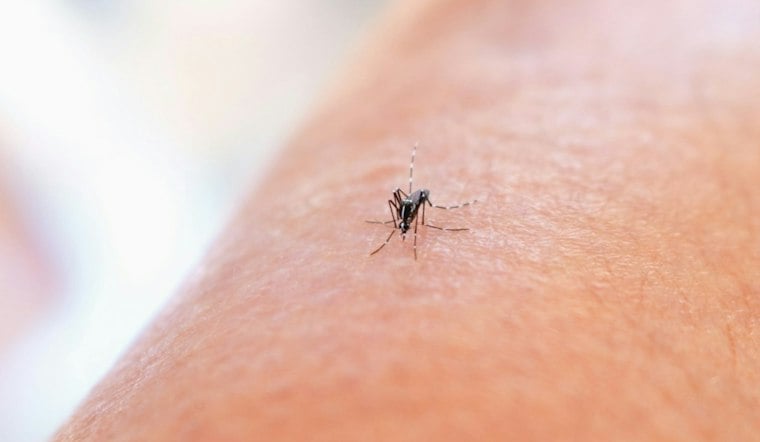
Seminole County health officials have confirmed a locally acquired case of dengue fever in the Winter Springs area, and they say more could be on the way. At least two additional potential cases are currently being tested in a laboratory, with no word yet on whether those will be confirmed.
The Florida Department of Health in Seminole County issued the advisory Wednesday, according to orlandosentinel.com, confirming that a person in Seminole County had contracted the mosquito-borne illness. The person diagnosed does not live in the area but works regularly in Winter Springs, and reported mosquito bites near their place of employment, according to Alan Harris, director of Seminole County Emergency Management, in an account carried by WKMG ClickOrlando.
“The individual that doesn’t actually live here works here regularly in the winter springs area and did have some mosquito bites while working around his place of operation,” Harris said. As for the additional cases under review, Harris was direct about the uncertainty: “We already have a couple more potential cases. They’re being tested right now. We don’t know if they’re going to be confirmed or not.”
What Happens If More Cases Are Confirmed
Harris said the county is holding off on any expanded response until lab results come back. “Once we hear back from the lab, if the lab does come back that they’re confirmed and locally acquired, additional measures will be taken at that point,” he said, per the same account. In the meantime, the Florida Department of Health and Seminole County Mosquito Control are coordinating surveillance, prevention and control efforts, the Sentinel reported.
That coordination builds on weeks of ramped-up mosquito work in the county. Crews collected more than 20,000 mosquitoes in traps during the week before September 25, fogging nightly while applying larvicide during the day, the station's earlier report noted. As of September 24, the county had logged 178 service requests and fogged more than 32,000 acres. Harris pointed to a familiar culprit behind the surge: heavy rainfall. “Of course, a lot of rain, mosquitoes, means breeding of mosquitoes and more mosquitoes,” he said.
Tracking Mosquitoes With Traps and Chickens
Seminole County's surveillance system relies on more than fogging trucks. The county uses traps to identify which mosquito species are circulating locally, and it also runs a sentinel-chicken program to monitor for viruses moving through the community, according to a report from mynews13.com. Harris said that monitoring is now being enhanced specifically around the Winter Springs case.
Part of a Larger Central Florida Pattern
The Winter Springs case arrives as dengue continues to spread across Central Florida and the state at large. As of October 10, the Florida Department of Health had documented 368 locally acquired dengue cases statewide across eight counties, with the Tampa Bay area alone accounting for 351 confirmed cases this year, mostly in Hillsborough County, orlandosentinel.com reported.
Neighboring counties are seeing their own spikes. Orange County has reported five locally acquired cases, including two confirmed in the Apopka area, and conducted mosquito control spraying there Tuesday night, according to the Orange County newsroom. The county also announced plans for aerial spraying in select areas, which officials say is expected to reduce the targeted mosquito population by 99%. Brevard County, meanwhile, reported its first locally acquired dengue case of the year last week, prompting its health department and mosquito control division to coordinate enhanced monitoring, targeted treatment and overnight spraying, per fox35orlando.com.
What to Know About Dengue Symptoms
Dengue fever is spread through the bite of an infected mosquito. Symptoms usually occur within two weeks of a bite and may include fever, aches and pains, nausea, vomiting and rashes. Dengue can rarely be deadly if symptoms are untreated.
Health officials are urging residents to take basic precautions as testing continues. Recommendations include using insect repellent, wearing protective clothing, and dumping standing water around homes where mosquitoes can breed.


