

























































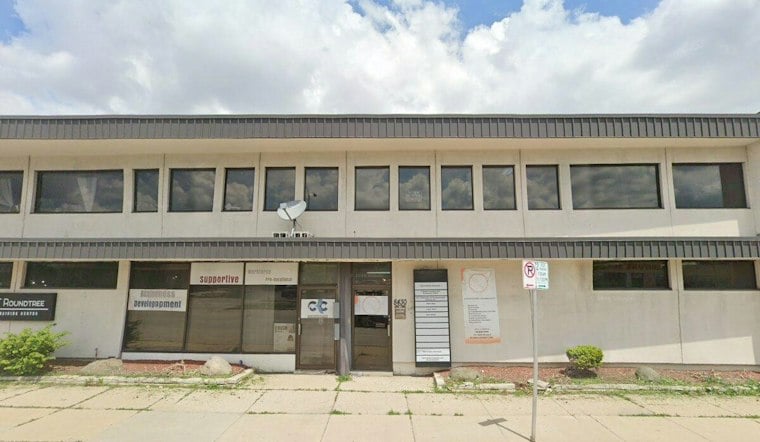
A Wisconsin grant closeout form required recipients of the state’s Diverse Business Assistance Grant to attest that they would keep records showing compliance with federal American Rescue Plan requirements for at least five years. That documentation standard is central to the state’s repayment demand against Milwaukee business owner Cynthia Brown, whose organization received pandemic relief funds.
Brown, who leads CRC Employment and Entrepreneurial Services, received nearly $3 million through the program, according to Wisconsin Public Radio. The state Department of Administration terminated her contract and gave her 45 days to repay nearly $800,000 after reviewing the first $1 million installment, which Brown received in August 2022 and spent by December, WPR reported.
State reviewers found adequate supporting documentation for $205,247, or about 26%, of that $1 million. At least $794,752.10 lacked sufficient paperwork for the state to determine whether the expenses were potentially eligible, according to WPR’s reporting and The Heartland Post. The finding describes a documentation shortfall; it does not establish that every unsupported expense was necessarily ineligible.
What the program’s paperwork says
The Department of Administration’s January 2023 closeout form describes eligible expenses as services and programs for diverse businesses, along with other costs reasonable and consistent with the program’s intent. That broad description does not determine whether any particular Brown expense qualified. The form also required grantees to attest they would retain records demonstrating compliance with ARPA requirements for at least five years. The department’s form sets out those general requirements, while the state’s case-specific conclusions are based on its review of Brown’s records.
Brown’s attorney has disputed the department’s findings and said Brown would pursue administrative remedies, WPR reported. The department told the station that Brown’s was the only contract in the program suspended at that point and that it planned to monitor other grantees.
Oversight questions have different dimensions
Brown’s dispute concerns whether her organization’s spending records support the grant expenses. A separate review addressed a different part of Wisconsin’s pandemic-aid oversight: Wisconsin Watch reported that a Legislative Audit Bureau review released in December 2022 found the Department of Administration had not provided auditors enough information to show how officials decided where broader pandemic-relief funds would be distributed. That finding concerned statewide allocation decisions, not Brown’s expense records, and does not resolve the repayment dispute.
The grant program was part of a broader $73 million initiative that distributed funds to 38 organizations, according to Wisconsin Watch. Separately, the U.S. Government Accountability Office has cautioned that the full extent of fraud in COVID-19 relief programs remains undetermined and that losses are difficult to estimate reliably. That national uncertainty is not evidence of fraud in Brown’s case; the state’s stated basis for seeking repayment is the documentation review.
The amount Brown ultimately must repay remains unresolved. Her attorney’s challenge could affect the outcome, while the state’s current demand rests on its finding that most of the first installment could not be adequately documented.





