

























































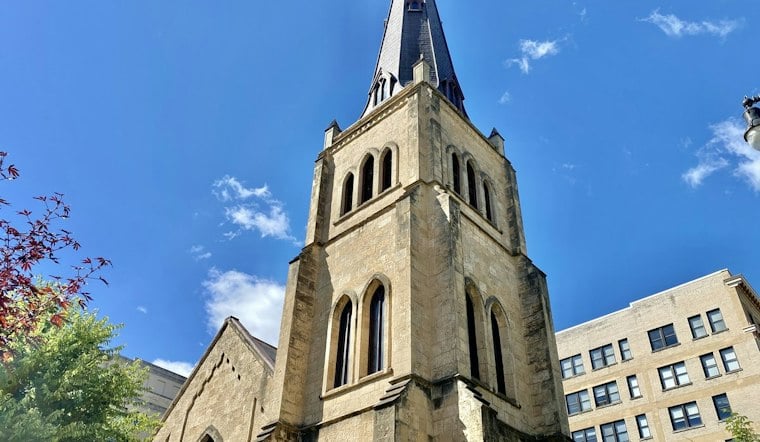
Wisconsin voters head to the polls on November 3 to decide whether the state constitution should permanently bar government from shutting down churches, synagogues, mosques or other places of worship during a declared emergency, including a public health crisis. The question grew directly out of pandemic-era restrictions that once limited indoor religious gatherings to fewer than 10 people, and it would apply even if businesses and schools remain closed under the same emergency order.
What Question 2 Actually Asks
Ballot Question 2 asks whether Section 18 of Article I of the Wisconsin Constitution should be amended to prohibit the state or a political subdivision from ordering the closure of, or forbidding gatherings in, places of worship during a state of emergency, according to the State Democracy Research Initiative at the University of Wisconsin Law School. The measure would add new language to a section of the constitution that already protects religious liberty, as WEAU reported. A yes vote means the voter believes government should never be allowed to close places of worship during emergencies, while a no vote means the voter believes government should retain that authority for public health reasons, according to the Milwaukee Journal Sentinel.
If a majority of voters approve it, government could not close churches, synagogues, mosques or other places of worship during future emergencies, the Journal Sentinel reports. That protection would apply even in scenarios where businesses and schools are simultaneously ordered closed, per the same report. The question is one of three statewide constitutional amendments Wisconsin voters will weigh on the November ballot, and it is distinct from local school or fire and EMS funding referendums that may also appear on local ballots.
How the Pandemic Sparked the Fight
The amendment traces back to the earliest months of the COVID-19 pandemic. In March and April 2020, state orders limited indoor, in-person religious gatherings in Wisconsin to fewer than 10 people, according to the State Democracy Research Initiative. After the Wisconsin Supreme Court struck down those statewide orders, Dane County issued its own order in May 2020 capping in-person gatherings, including religious services, at 50 people, the same research group notes. Some Wisconsin cities kept restrictions in place even after the state supreme court's ruling, the Journal Sentinel reports, and churches across the state grappled with how to safely resume services as the pandemic wore on.
Republican lawmakers first tried to address the issue through ordinary legislation, passing a bill that would have barred local health officers and the state health department from closing or forbidding gatherings in places of worship to control COVID-19. Gov. Tony Evers vetoed that bill in 2021, according to the State Democracy Research Initiative. Rather than try again with a similar bill the governor could veto, the Legislature pursued a constitutional amendment instead, since the governor cannot veto constitutional amendments and they only need to pass in two consecutive legislative sessions before going to voters, as the research initiative explains.
Supporters Say It's About Equal Treatment
Groups backing the amendment frame it as a matter of letting faith communities make their own choices rather than preventing them from closing voluntarily. Religious groups supporting the measure emphasize that it would allow each place of worship to decide for itself whether to remain open, not force it to stay open, the Journal Sentinel reports. Katie Crain, legislative and policy director for Wisconsin Family Action, said the amendment gives churches equal treatment, not special treatment, according to the Journal Sentinel. Wisconsin Family Action, which typically represents evangelical churches, and Pro-Life Wisconsin both support the amendment, and both groups registered in support of the ballot language, per Wisconsin Watch.
Not every faith organization has taken a side. The Wisconsin Catholic Conference and the Wisconsin Council of Churches have both adopted neutral stances on the amendment, per the Journal Sentinel. The Catholic Conference noted that faith communities adapted to the circumstances of the pandemic, and it said that freedom to gather for worship is one aspect of religious liberty and religious conduct that extends beyond a house of worship, according to the same report.
Opponents Warn of Public Health Fallout
The League of Women Voters of Wisconsin opposes the amendment, arguing it would strip government of its role in mitigating public health risks. The group contends that government is responsible for promoting a health care system that provides access to a basic level of quality for all its citizens, including people who are immune-compromised, according to the State Democracy Research Initiative. Legal experts say the measure would give places of worship greater protections during emergencies than other essential locations such as schools or grocery stores, the research initiative notes, and political science professor Eric Kasper told WEAU the proposal would create potentially some additional protections for places of worship compared to other organizations or businesses. Analysts point out that Wisconsin would be the first state to enshrine this kind of protection at the constitutional level, per the research initiative.
Unanswered Questions and the Political Backdrop
Several legal questions remain unresolved heading into Election Day. The amendment does not define what counts as a place of worship, and it is not clear what it means to forbid gatherings in or order the closure of one, including whether neutral capacity restrictions would still be allowed, according to Wisconsin Public Radio.
The fight over Question 2 is also playing out in Wisconsin's governor's race. Democratic candidate David Crowley would vote no on all three referendum questions, according to a spokesperson cited by the Journal Sentinel, with Crowley separately telling Wisconsin Watch that under extreme circumstances, leaders must make difficult decisions for the greater good of the state. Republican candidate Tom Tiffany said he would vote yes on all three questions, telling Wisconsin Watch, “I also support constitutional protections for places of worship.” Gov. Evers, who cannot run again, is encouraging voters to reject the Republican-led referendums, per Wisconsin Watch. More broadly, conservative groups tend to support yes votes on the amendments while liberal groups support no votes, and Democrats object to Republicans using their legislative majority to advance the questions and bypass the governor's veto power, the Journal Sentinel reports. Republicans have said they use the constitutional amendment process to put policy priorities directly to voters while sidestepping Evers' veto pen, according to the Wisconsin Examiner.




