

























































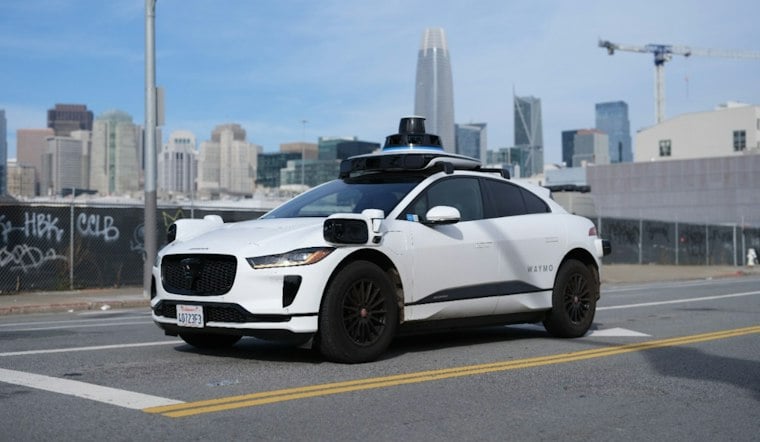
A driverless Waymo vehicle drove the wrong way down an alley used for drop-off at Downtown Denver Expeditionary School on Monday morning, snarling the routine for parents trying to get their kids to class or leave afterward. The vehicle's confused maneuver through the narrow passage made for an awkward scene right as families were trying to get their day started.
The incident was first reported by Krystal 93, which described how the wayward robotaxi caused problems for parents trying to drop off their kids, or leave after dropoff, at the school that morning. Video of the incident was also captured by 9News, which has been tracking the driverless cars' rocky rollout across the city.
A Rocky Start Since Launch Day
Waymo formally launched its self-driving cars in Denver on Sept. 2, according to The Denver Post, though service technically opened a day earlier with an operating territory of roughly 60 square miles, per Colorado AI News. The company already has dozens of cars running around the city and has said it plans to add more, the newspaper's report notes.
This is not the first time a driverless Waymo has wandered somewhere it should not have in Denver. A vehicle drove straight through the South Pearl Street Farmers Market on a Sunday morning in September, passing barricades and a stop sign before staff guided it back onto the street, according to 9News's earlier reporting. The same outlet's sister coverage found that the driverless car had followed a vendor past a Road Closed sign and onto South Pearl Street, per Colorado AI News. Days later, on Sept. 24, a second driverless Waymo went around a small barrier and ended up inside a street resurfacing work zone near Perry Street and Conejos Place, the outlet reported.
No Way To Ticket A Car With No Driver
Colorado law requires autonomous vehicles to follow the same traffic rules as any other car on the road, but police currently have no mechanism to issue a traffic-infraction citation when there is no human behind the wheel to hand it to, according to reporting referenced in the farmers market incident. Missy Cummings told 9News that unpredictable environments remain a persistent challenge for autonomous vehicle systems generally, a dynamic that seems to be playing out repeatedly on Denver's streets since the service's debut.
Colorado's legislative framework for autonomous vehicles does address what happens after a crash: liability in such cases is determined according to applicable state, federal or common law, per a summary published by the Colorado General Assembly. That framework, however, does not appear to cover routine traffic violations like driving the wrong way down an alley when no collision occurs.
Similar Trouble Beyond Denver
Denver is not the only city where Waymo's robotaxis have strayed into oncoming lanes or restricted zones. In Tampa, passengers had to abandon their driverless Waymo after it took them into oncoming traffic on North Himes Avenue outside Raymond James Stadium during a Buccaneers game, according to WFLA. Waymo told the station the vehicle had briefly entered a temporary one-way street before correcting itself, and that it was investigating the incident. The station also noted that a driverless Tesla Robotaxi was spotted heading the wrong way on Tampa's Armenia Avenue in July, shortly after that service launched.
A broader CNN investigation found hundreds of incidents in which Waymo robotaxis allegedly made dangerous maneuvers or struggled with obstacles, including vehicles that ran red lights, drove into oncoming traffic and active crime scenes, and failed to abide by emergency road closures. That review covered roughly 1,200 collisions Waymo self-reported to the federal government between January 2025 and mid-April 2026, according to CNN. Separately, the National Highway Traffic Safety Administration's Office of Defects Investigation has received reports of 22 incidents involving Waymo vehicles equipped with the company's fifth-generation automated driving system in which the vehicle was involved in a collision or potentially violated traffic-safety laws, per the agency's open investigation resume.
Waymo Points To Its Own Safety Data
For its part, Waymo has told CNN that its vehicles are 13 times less likely than human-driven cars to be involved in serious-injury crashes. The company has also said it now reports more than 500,000 paid rides a week nationally and is aiming for 1 million weekly rides by the end of 2026, according to Colorado AI News. Whether that broader safety record will ease concerns among Denver parents watching a driverless car wander the wrong way down their school's drop-off alley remains to be seen.





