

























































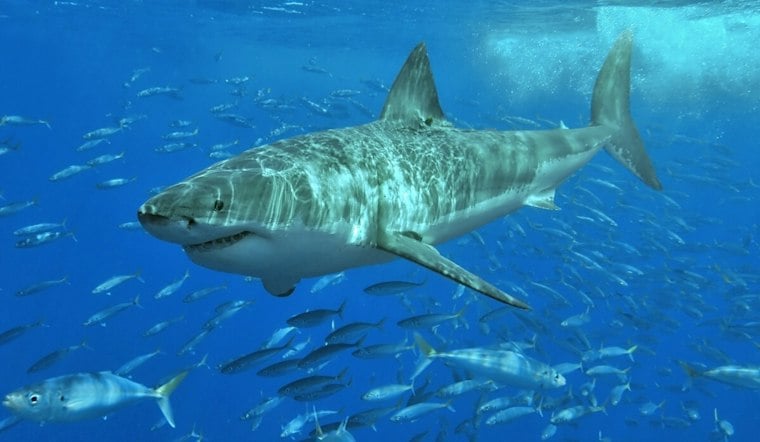
A 1,009-pound great white shark has turned up off the coast of Jacksonville Beach, according to the satellite-tracking nonprofit OCEARCH. The shark, named Ernst, is a 12-foot sub-adult female whose movements have been followed by researchers since she was tagged more than a year ago off Nova Scotia.
OCEARCH received Ernst's latest tracking ping on Friday, November 13, at approximately 6:47 p.m. off the Jacksonville Beach coast, as reported by News4JAX. That signal was what the organization calls a Z-ping, meaning her exact location cannot be pinpointed. OCEARCH explains that a Z-ping happens when a shark spends only a brief period of time at the surface, so the Argos satellite receiving the transmission picks up a signal too weak to calculate an accurate position.
Ernst was originally tagged off the coast of Nova Scotia on October 4, 2025, as part of a collaborative research effort between OCEARCH and the Tancook Islands Marine Field Station. That work is designed to help scientists better understand the movement, health and behavior of white sharks in Atlantic Canada, per the station's partnership with OCEARCH.
A Name Tied to a Ferry and Its Crew
Ernst takes her name from the ferry William G. Ernst, which has connected the communities of Big and Little Tancook Islands to the mainland since 1982. OCEARCH has said the ferry has served as a lifeline for residents for more than four decades. The name is also dedicated to the ferry's hardworking crew, many of whom call Big Tancook Island home, according to the organization behind the naming, Team Tancook.
This isn't the first time a tagged shark has surfaced off Jacksonville's coast. An earlier report from the same station noted that a great white named Goodall pinged off the coast of Jacksonville Beach, part of a broader pattern of white sharks showing up along Florida's Atlantic side as they move south for the colder months.
Part of a Much Longer Winter Journey
Ernst's appearance fits a seasonal pattern researchers have documented for years. Great white sharks begin a seasonal migration in the fall, typically from mid-October through November, leaving their summer feeding grounds around Atlantic Canada and New England and traveling as far south as Florida and the Gulf to their overwintering spots, according to Marco News. A separate report noted that great whites typically arrive in Florida's shelf waters during winter after migrating from Canadian and New England coastal habitats.
A study published in March by OCEARCH found that the Gulf serves as a regular winter habitat for white sharks migrating thousands of miles from those northern waters. Of 92 white sharks tagged along the Atlantic coast of North America between 2012 and 2023 using satellite and acoustic telemetry, 57 individuals across all life stages spent significant time in the Gulf or Straits of Florida, primarily between December and May, the organization reported. That research found sharks were most frequently detected along the shelf edge of the West Florida Shelf, with activity concentrated in offshore environments away from heavily used recreational beaches.
Ernst's Earlier Florida Stretch
Ernst has made headlines in Florida waters before. She pinged 22 times off the Southwest Florida coast between November 18 and December 22 of last year before surfacing off Sarasota on New Year's Day at 12:47 a.m., per the same Marco News account. Separate Naples Daily News reports from that stretch offered differing mileage totals for her journey, with one putting her distance traveled since tagging at 2,657 miles as of December 10 and another putting the figure at 2,712 miles as of the same date.
Ernst isn't the only large female making her way south this season. Marco News reported that at least six OCEARCH-tagged great white sharks, including a 13-foot, 1,400-pound female, surfaced around Florida between New Year's Eve and early January, stretching from Jacksonville to Santa Rosa Beach. Fox Weather also reported that a female great white named Ernest, weighing more than 1,000 pounds, was detected off New Jersey on Nov. 2, while a 522-pound shark named Penny turned up in Florida's Gulf Coast waters the same day.





