

























































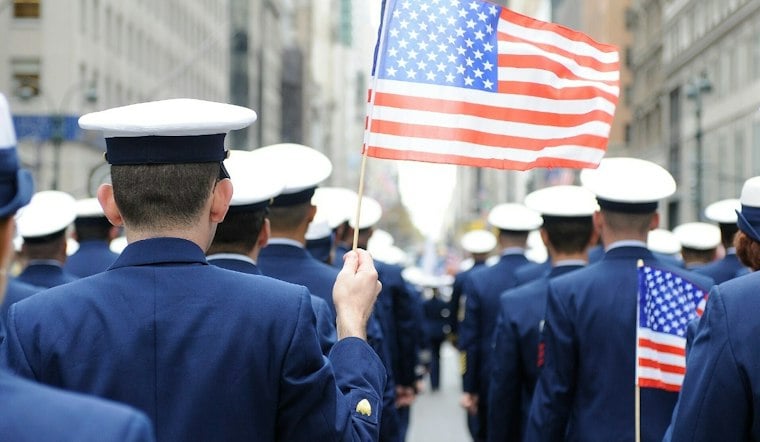
The In Their Honor Veterans Day Parade is scheduled for Saturday on Tejon Street, with more than 100 organizations and an estimated 3,000 participants, according to The Gazette. Wanda Daniels, 103, will serve as grand marshal. Organizers say the honor recognizes her work building military aircraft nearly 85 years ago, as reported by FOX21 News Colorado.
The parade starts at 11 a.m. and runs the 1.5-mile route south on Tejon Street from St. Vrain Street to Vermijo Avenue, ending near the Colorado Springs Pioneers Museum, according to KOAA News 5. Tejon Street will see closures from Dale Street to Vermijo Avenue, with the northernmost three blocks of that stretch used for parade staging, and drivers can detour via Cache La Poudre Street to the north or Cimarron Street to the south. Parade spokesman Andy Koen recommends arriving early and allowing time to find parking.
A Riveter's Long Road From Nebraska to the Grand Marshal's Seat
Daniels moved from Nebraska to California and worked at Northrop Aircraft in Hawthorne, operating a rivet gun on P-61 night fighters before later taking an office job, according to KOAA News 5. The Gazette reports that the P-61 Black Widow was the first U.S. aircraft designed as a night fighter. Daniels is expected to pause at the reviewing stand during Saturday’s route.
Daniels has described women taking wartime factory jobs while men fought overseas. Her family created a poster depicting her as Wanda the Riveter for the parade. An earlier Gazette report from September described Daniels as a Colorado Springs resident who assembled airplanes in California during the war and said organizer John O'Donnell's daughter suggested the Rosie the Riveter tribute after last year's parade.
Rosies and the changing workforce
Daniels’s wartime factory work reflects women’s contributions to the war effort. The U.S. Census Bureau notes that more women worked outside the home after World War II than before it, although men still held most jobs outside the home.
Women’s labor force participation continued to change in the decades that followed: the U.S. Bureau of Labor Statistics reports that it increased dramatically from the 1960s through the 1980s, then slowed in the 1990s and early 2000s.
Roughly 250 Modern-Day Rosies Join the March
About 250 women from the Pikes Peak region are expected to dress as Rosie the Riveter, honoring women who took factory jobs to support the war effort. Organizer John O’Donnell estimates overall participation is running 25% to 30% higher than in previous years, as reported by The Gazette.
The parade will include active service members from Fort Carson and the U.S. Space Force, along with 30 to 40 Canadian service members stationed with the North American Aerospace Defense Command, according to The Gazette.
A Bell Tolling for the Fallen Makes Its Debut
The Pikes Peak Honor Bell will join the Veterans Day parade for the first time this year. Volunteers have previously brought it to services honoring veterans and their families, tolling it seven times at services at Pikes Peak National Cemetery, according to KOAA News 5.
Veterans Day is observed Nov. 11, a date rooted in Armistice Day, which marked the end of fighting in World War I. Legislation approved in 1954 changed the observance to Veterans Day, honoring American veterans of all wars, according to the U.S. Department of Veterans Affairs. VA News explains that the day honors all who served honorably in the military, living or dead, in wartime or peace. Parade spokesman Andy Koen said the event gives Colorado Springs a shared place to thank veterans.
The Rosie image and the wider wartime workforce
Daniels’s riveter work represents one part of women’s wartime labor, not the whole picture. The National Park Service notes that women also drove trucks, treated patients, grew crops and broke codes. The National Museum of American History likewise notes that “Rosies” were just one of many types of women workers during the war. The U.S. Census Bureau says more women worked outside the home after World War II than before it, though men still filled most jobs outside the home. Women’s labor force participation later increased dramatically from the 1960s through the 1980s, according to the U.S. Bureau of Labor Statistics.



