

























































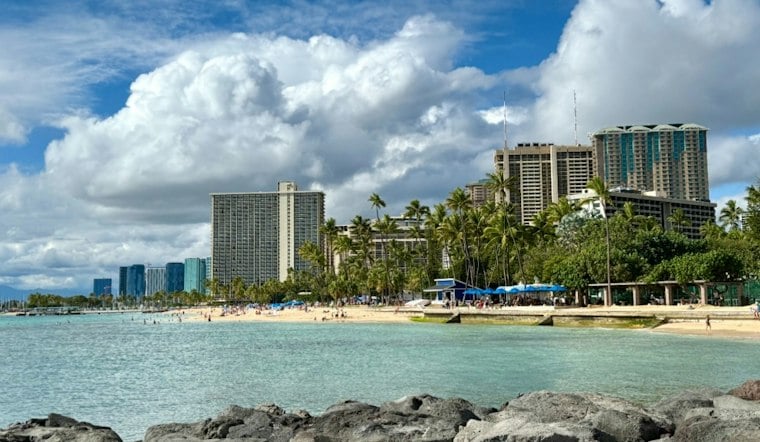
A plan to sink 150 concrete reef modules into the waters off Fort DeRussy in Waikīkī is moving toward a early 2027 construction start, but not everyone on the water is convinced the spot chosen for it is the right one. The project, known as REEFrame, would place the structures in 40 to 60 feet of water near the mouth of the ʻĀpuakēhau Channel, just outside the Threes, Paradise and Populars surf breaks.
A Coral Nursery Years in the Making
According to Hawaii News Now, REEFrame would establish a coral nursery spanning 11 underwater acres, with each six-by-six-foot module weighing an average of five tons. Per the project's own site, the modules are designed to deploy within a tight January to March 2027 window specifically timed to avoid summer swells, assuming permits come through in time, according to REEFrame project information. The same materials describe a project area 0.52 to 0.75 miles offshore, and state the reef will sit surrounded by a sandy area the project team considers suitable for construction.
REEFrame isn't starting from scratch. Its earlier pilot, called CReME, began in 2016 with six units deployed at each of two sites, Hanauma Bay and Waikīkī, the same project information notes. Since then, the team says it narrowed down from eight potential sites after collecting data on navigation, seafloor conditions, biological resources, and possible conflicts with other ocean users, and has hosted more than 40 meetings with community leaders, cultural groups, elected officials, Waikīkī residents, ocean users, and the visitor industry.
Funding Figures Diverge
Hawaii News Now reports the project is funded by a NOAA grant of $9 million, while a separate NOAA search listing instead cites $8.9 million for the REEFrame project under its Transformational Habitat Restoration funding source, a discrepancy that remains unresolved in available records from the National Oceanic and Atmospheric Administration.
A Waterman's Doubts
Keone Downing, a waterman with the Surfing Education Association, told the station he supports artificial reefs in general but questions whether this particular spot is the best place for one. Downing said the modules could dissipate wave energy approaching the shallower reefs where waves actually break, and he also questioned the restoration rationale behind placing an experimental reef where coral wasn't already present.
Downing pointed to how heavily used the proposed site already is, noting it sees daily traffic from one-man and six-man canoe paddlers, foil board riders, tour operator boats, and catamarans. He added that a project of this magnitude needs thorough vetting, since the modules would be basically permanent once installed.
Fishing Rights a Separate Concern
Fisher Mike Sur offered a different take, saying he supports artificial reefs because they create habitat where fish and biomass can congregate. But Sur said he wants assurances that fishing rights won't be affected once the modules go in, adding that local residents need fresh fish.
Permits Pulled Without Explanation
The Hawaii Board of Land and Natural Resources had been scheduled to consider permits and other items required for the project at a Friday meeting. Instead, those items were withdrawn from the agenda without explanation two days earlier, according to the same Hawaii News Now report. State meeting materials filed with the State of Hawaiʻi eHawaii calendar identify the relevant filing as Conservation District Use Application OA-3997, covering submerged lands within the ʻĀpuakēhau/Halekulani Channel. A separate State of Hawaiʻi Environmental Notice lists a Final Environmental Assessment with a Finding of No Significant Impact for the project.
How It Compares to Kalaeloa's Hybrid Reef
REEFrame isn't the only artificial reef effort underway around Oʻahu. The Kalaeloa Hybrid Reef Pilot Project, made up of 60 engineered concrete structures designed to absorb wave energy and attract coral and fish, was initially planned for Kāneʻohe Bay before permitting issues pushed it to Kalaeloa Harbor instead, the Honolulu Star-Advertiser reported. Computer modeling for that project showed incoming wave energy reduced by more than 80 percent while the structures stayed stable in extreme conditions, and testing found the habitats recruited thousands of times more coral than bare, flat ocean substrate. The Star-Advertiser also notes Hawaiʻi installed five artificial reefs between 1961 and 1986, though those earlier structures were built mainly to attract fish rather than to blunt wave energy like the newer designs.





