

























































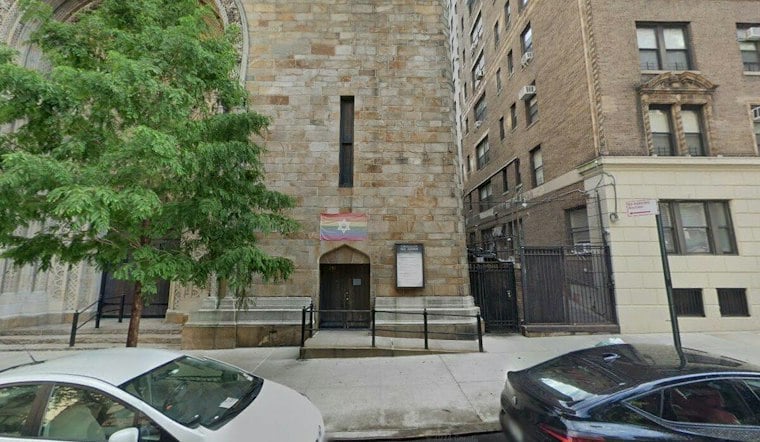
A Torah scroll older than the United States itself was welcomed into its permanent home at B’nai Jeshurun synagogue on West 88th Street on the Upper West Side, with attendees gathering on November 9 to mark the scroll’s rededication after a long journey of survival and restoration. Experts believe the scroll dates back to 1700, making it more than 300 years old, and B’nai Jeshurun itself describes the artifact as “now known to be over 300 years old.”
According to the New York Post, the scroll is made from the same type of ink and parchment used in the U.S. Constitution. The rededication centered on a siyum ceremony marking the end of the Torah’s long journey and restoration, the Post reported, and the event fell 88 years after Kristallnacht, the infamous night of Nazi-organized violence against Jewish communities in 1938. B’nai Jeshurun itself traces the scroll’s path as one that moved from Jewish communities in Bohemia, through the devastation of the Shoah, to London, and ultimately to the synagogue, according to the synagogue’s own event page.
From a Damp, Abandoned Synagogue to a New York Pulpit
Per the Memorial Scrolls Trust, the scroll was located in Europe when the Nazis came to power and survived both annihilation during the Holocaust and what the Trust describes as rescue from communist Czech oppression, according to the Post. The scrolls that included this one were left to rot in a damp, abandoned synagogue for nearly 30 years before their rescue, the Post reported. Jefferey Ohrenstein, chairman of the Memorial Scrolls Trust, said the scrolls continue their life as living symbols of life, per the Post’s account of the ceremony.
The rescue effort traces back to 1964, when Ralph Yablon bought 1,564 Torah scrolls from the Czech-Slovakian government and brought them to London, according to the Post. Westminster Synagogue, which now houses the Memorial Scrolls Trust Museum, describes the same rescue in its own history, saying Yablon donated the 1,564 Czech scrolls that arrived there in February 1964, according to Westminster Synagogue. A separate account describes around 1,800 Torah scrolls as having been collected in Prague during the Second World War, drawn from extinguished Jewish communities in German and Czech regions, according to the Post; B’nai Jeshurun’s own materials describe its Torah as one of 1,564 scrolls rescued from the Holocaust, per the synagogue’s account of its history. The two figures describe different counts from the wartime collection and its later usable total, and are not interchangeable.
A Trust That Spans Dozens of Countries
Once the scrolls arrived in London, they were distributed on permanent loan to communities in 30 countries worldwide, B’nai Jeshurun’s materials state. The practice continues today: the Memorial Scrolls Trust does not sell or give away scrolls but instead allocates them on permanent loans, according to the New York Jewish Travel Guide. Since 1964, the Trust has allocated scrolls on permanent loan to 1,300 synagogues and institutions worldwide, according to the New Jersey Jewish News, which also reported that Temple Sholom of West Essex recently prepared 11 Czech Torah scrolls, each between 200 and 300 years old, for shipment back to the Trust in London.
Restoration and repair remain part of the ongoing care these scrolls receive. The Jewish Telegraphic Agency has reported that the Memorial Scrolls Trust has worked to restore, repair and find new homes for the scrolls, a description that matches B’nai Jeshurun’s own note that its rededication would follow necessary care and repair of the Torah. That 2019 gathering, which the agency described as the largest reunion of the rescued scrolls and their first reunion in the United States, brought together 72 Torah scrolls carried in slow procession through New York.
Community Reflections Amid Rising Unease
At B’nai Jeshurun, Cantor Ari Priven said Jewish New Yorkers feel uncertainty about Mayor Zohran Mamdani’s attempts to meet community needs, according to the Post. Community members at the ceremony said the anniversary of Kristallnacht reminds them that events in Europe can happen again regardless of who is in power, the Post reported.
Myriam, who joined the synagogue in 1988, said events like those seen in Germany or Poland could happen in the United States, according to the Post. She asked what it is about Jews that bothers everyone, the Post reported. Her remarks, offered amid the rededication of a scroll that endured annihilation, communist-era oppression, and decades of neglect before finding a permanent home on West 88th Street, underscored the weight many in attendance placed on the moment.




