

























































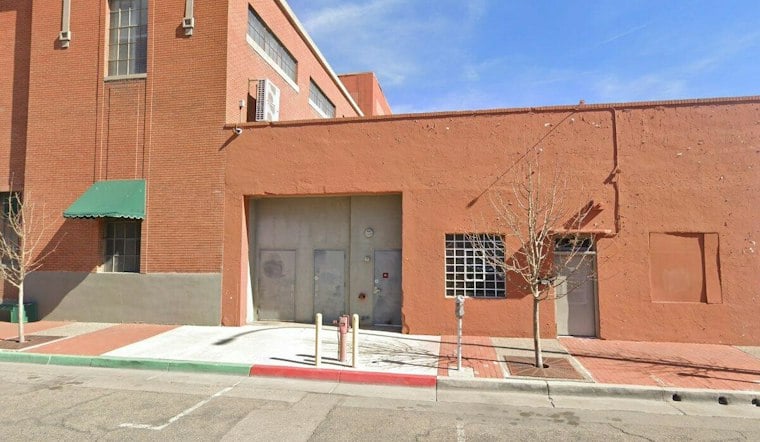
516 Arts, a local independent nonprofit contemporary arts organization, has opened its new gallery at 508 1st Street NW in Downtown Albuquerque, moving into a building that once housed an adult entertainment venue and a youth recreation center before becoming an artists’ hub. The new facility spans 16,000 square feet, triple the size of the organization’s former home.
“This is triple the space. Our current building is 5,300 square feet. This is 16,000 square feet,” 516 Arts’ Chalay said, according to The Paper. The project was supported by more than $5.2 million in state capital outlay funding, the outlet reported, and the finished space now includes eight artist studios along with dedicated areas for performances, workshops and youth programming.
A Building With a Complicated Past
The Paper describes the building as having once been used for cold storage along the railroad before later housing the Ice House adult entertainment venue and, afterward, Warehouse 508. A strip club that had operated in the building closed in 2005, per the Albuquerque Journal, and KRQE reported that the city bought the building in 2005. The Daily Lobo also covered 516 Arts’ new space.
The Albuquerque Journal reported that $800,000 in city funds were appropriated for renovations to the building. Warehouse 505 later expanded to a multistory building elsewhere Downtown.
Preserving Traces of the Past
The project transformed the building into an artists’ space. Formative Architecture’s renovation description says existing murals and graffiti art were preserved as authentic artifacts of the building’s community identity, rather than painted over or erased.
Ortiz curated the opening exhibitions. The City of Albuquerque has described the project as a public-private partnership that transformed the 16,000-square-foot facility into a new center for contemporary art, education and community engagement.
Two Exhibitions, Different Names Depending on the Source
The Paper identifies the opening exhibitions as Kincentric Ecologies, a group show featuring Indigenous artists, and Quimera, a solo exhibition by Vanessa Saavedra — both curated by Ortiz.
The Paper said the public opening would feature live music and performances.
Funding Pressures Facing Local Arts Groups
The expansion comes as arts nonprofits across Albuquerque navigate tightening federal support. 516 Arts’ executive director told the Albuquerque Journal that the organization lost a $30,000 NEA grant it had received annually for the previous decade. Warehouse 505, the youth program that once occupied the same 508 1st Street building, has said it now receives a majority of its funding from the city and county, a shift that reflects reduced access to federal arts grants following funding cuts.
Warehouse 505 continues to offer free, year-round classes to young people ages 13 through 20 in disciplines including DJing, screen printing, photography, music production, mural painting and sewing, per the Journal. That program traces back to 2009, when it opened as Warehouse 508 in the same building 516 Arts now occupies, before later expanding to a multistory building elsewhere Downtown.
A Property With a Long Paper Trail
The 508 1st Street site has been the subject of reports about its purchase, possible lease and renovation funding. KRQE reported that the city bought the building in 2005 and was considering leasing it to 516 Arts. The Albuquerque Journal separately reported that the property was later appraised at $1.3 million, more than double the price the city paid, with $800,000 in city funds appropriated for renovations.
The city considered selling 508 1st Street NW. Years later, the same address has become the latest chapter for 516 Arts — an organization built, in its own telling, on turning a building with a complicated history into a new space for contemporary art.





