

























































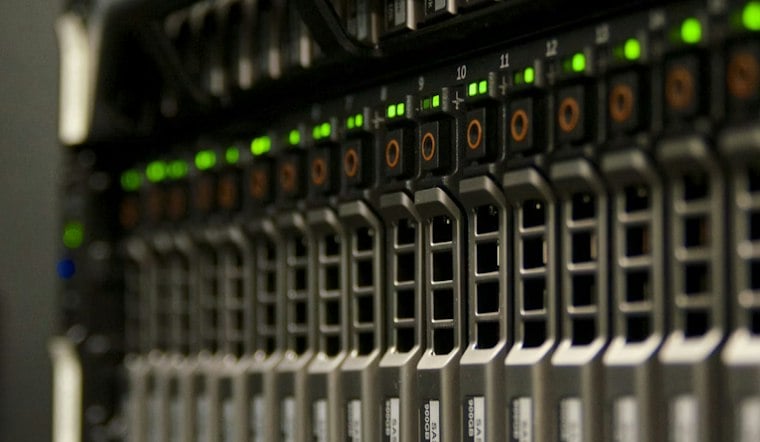
A new study out of Cornell University finds that the explosive growth of AI data centers is driving up electricity prices across the country, and the people footing most of the bill are not the tech companies building the facilities — they're ordinary residents, with rural and lower-income households hit hardest. Researchers analyzed energy demand and infrastructure spending across four major U.S. power grids between 2020 and 2025, alongside data from 4,000 existing and proposed data centers, and found that already-stretched grids saw the steepest wholesale price increases.
Billions in Costs Shifted to Residential Customers
According to Cornell's research summary, data centers were responsible for $8.25 billion in energy infrastructure costs tied to their growth in 2025, but on average paid just 38% of that tab — about $3.12 billion. The remaining 62%, or $5.13 billion, fell largely on residents. The underlying study, published in Nature Energy, found that residential users are allocated a median 47% of transmission costs despite contributing far less to demand growth than data centers do.
Transmission investment tied to these infrastructure projects ballooned from $2 billion in 2020 to $34 billion in 2025, the Cornell summary notes, with data centers driving much of that surge. As reported by WINK News, spending across the four grids studied climbed to $34.2 billion by 2025, with residential users billed more than $16 billion of infrastructure costs compared to roughly $3 billion billed directly to data centers.
Rural Areas Bear a Disproportionate Burden
The study found that the increase in the share of rural families shouldering a high energy burden was 76% greater than the increase in the share of urban families with a high energy burden. WINK News characterized the finding as rural and lower-income residents facing cost increases as much as 76% larger than their urban counterparts. The Nature Energy article further states that the lowest-income households face extra energy burdens of up to 28 percentage points, while Cornell's own news summary describes the same finding differently, saying the lowest-income households saw extra energy costs as high as 28% of their incomes — two distinct ways of characterizing the same underlying hardship that the dossier does not reconcile.
Wholesale price effects also varied sharply by region. By 2025, data-center growth had raised wholesale electricity prices by 20% in California's southern Bay Area and by 15% in Virginia, according to the Cornell summary, while WINK News separately reported data centers pushed wholesale prices up nearly 17% in Dallas-Fort Worth, Texas. New York, by contrast, saw no significant changes in wholesale energy prices, per WINK News's reporting.
Why the Cost-Sharing Formulas Matter
Fengqi You, a researcher on the study, said people do not need to live near a data center to end up helping pay for its power infrastructure, according to WINK News. He explained that building a data center requires expanding the power grid long before the facility itself ever draws electricity, meaning the infrastructure costs arrive well ahead of any actual energy use. Per WINK News, residents in New Jersey and Pennsylvania have helped pay for power grid updates linked to data center growth in Virginia, while West Virginia and Ohio — states reporting some of the lowest generative AI usage — have faced some of the largest data-center-linked energy cost increases.
The researchers attribute much of this imbalance to energy cost allocation formulas that distribute expenses based on past energy consumption rather than new growth, a structure that leaves households bearing much of the cost of building new infrastructure even when their own demand hasn't changed. You said the team hoped its findings would help lawmakers and other stakeholders weigh their options, telling WINK News the goal was to provide evidence and data so people could understand the issue clearly before deciding what to do next.
Possible Fixes and a Mixed National Picture
The researchers suggested two potential remedies: having data centers cut their energy use during roughly 22 peak-demand hours per region each year, or having them pay states directly for the additional demand they generate, per Cornell's summary. Separate research paints a more varied national picture. A Dallas Fed study estimated data centers raised wholesale electricity prices by 6.9% nationally by 2025 and by 15% in northern Virginia, projecting the national effect could reach 12.3% by 2028. Another analysis, from MIT's Center for Energy and Environmental Policy Research, found data center entry raised average retail electricity rates by 2.7% and residential rates by 2.1% between 2010 and 2024, with bigger effects in restructured electricity markets.
Not every region has seen costs rise. A 2025 study cited by Fast Company found that increased demand from large customers, including data centers, actually helped lower electricity bills in North Dakota between 2019 and 2024, partly because abundant supply let utilities spread existing grid costs across more customers without new construction. A separate working paper by Wharton and Harvard Business School researchers, also cited in that report, found new data centers contributed an average of just 4% of the total observed increase in residential bills during its study period — a reminder that outcomes depend heavily on local grid conditions.
Meanwhile, demand keeps climbing nationally. Data centers are projected to consume between 8% and 17% of U.S. electricity by 2030, with 70% to 80% of that attributed to AI, according to Cornell's summary. In Florida, utility Florida Power & Light told Gulf Coast News Now that it hadn't yet seen AI data centers connect to its grid, but expected that to change. Elsewhere, more than 150 local transmission projects to connect data centers across seven PJM grid states were initiated between 2022 and 2024; transmission costs approved in 2024 alone totaled $4.36 billion.




