

























































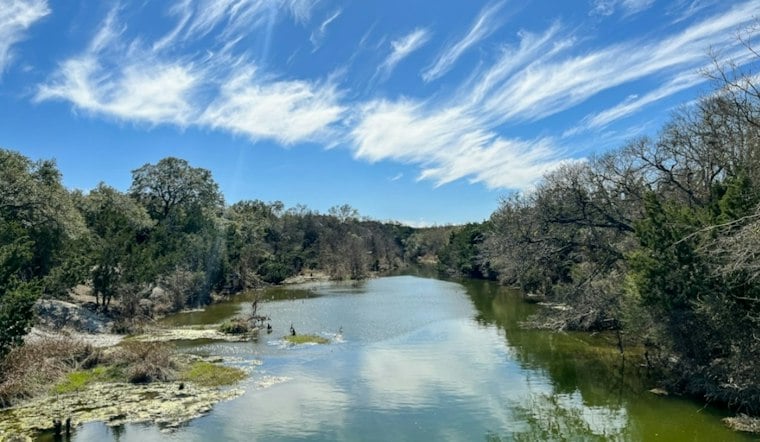
More than a year after floodwaters tore through Central Texas, crews are digging into the banks of Big Sandy Creek with a different kind of rebuilding tool: saplings. TreeFolks plans to plant 750 trees in landowner Wren Bates' backyard this fall at no cost to her, part of a broader effort to replace tree cover stripped away when the creek surged last year.
A Free Reforestation Push For Flood-Damaged Land
Bates has lived along Big Sandy Creek since 2002, according to kxan.com. Her property is one stop in a much larger campaign: TreeFolks aims to plant 34,000 trees at 41 sites along six linear miles of streambank. The nonprofit calls the effort Rooted in Recovery, describing it as a post-disaster reforestation program designed to help communities recover trees lost in flooding, according to TreeFolks.
The program covers eligible landowners in Travis, Williamson and Burnet counties whose riparian areas, streambanks or floodplain forests were damaged by the flooding, TreeFolks says. Every part of the work — native trees, professional planting crews, site assessments and technical support — comes at no cost to participating landowners, the organization notes in a separate post. Planting plans typically call for 400 to 500 saplings per acre using at least 10 native species, per TreeFolks' own description of the program.
Why Creekside Trees Matter For Recovery
TreeFolks says trees along creeks and rivers help stabilize soil, reduce erosion, improve water quality and create habitat for wildlife. A reforestation manager with the organization put it more simply to kxan.com, noting that a healthy tree canopy over these rivers helps aquatic wildlife and keeps water temperatures cooler. That framing underscores why the group is targeting streambanks specifically rather than scattering plantings across open land.
The effort isn't happening in isolation. TreeFolks is working with the Hill Country Alliance on Rooted in Recovery, with support from the Texas Parks & Wildlife Department, according to the nonprofit. In Kerr County, the Hill Country Alliance separately distributed more than 7,000 native plants to 200 landowners along the Upper Guadalupe River Basin, per kxan.com's reporting — a sign of how widely the 2025 flooding's damage to tree cover stretched across the region.
A Timeline Still Debated, A Recovery Still Unfolding
Sources differ on the precise date of the flood that triggered this recovery work. TreeFolks describes the trees being restored as lost in the July 4, 2025 floods, while The Texas Tribune identifies the Big Sandy Creek flood specifically as occurring on July 5, 2025, reporting that the creek rose 15 feet in three hours. Either way, the scale of what communities are still working through is considerable: the executive director of the Travis County Recovery Alliance told KUT that long-term disaster recovery can take five to 10 years or longer.
TreeFolks has leaned on past experience to shape its approach. After the 2011 Bastrop County wildfires, the organization and its partners had planted more than 2 million pines across nearly 4,000 acres in Bastrop by 2017, according to TreeFolks' own account of that recovery. The group's broader restoration work, as described to KUT, includes creek banks, river areas and other parts of Central Texas, aiming to protect soil and keep water clean. As KVUE reports, rebuilding efforts continue in Central Texas more than a year after the catastrophic floods tore through the state, with the planting at Bates' property standing as one visible piece of that slower, ongoing recovery.





