

























































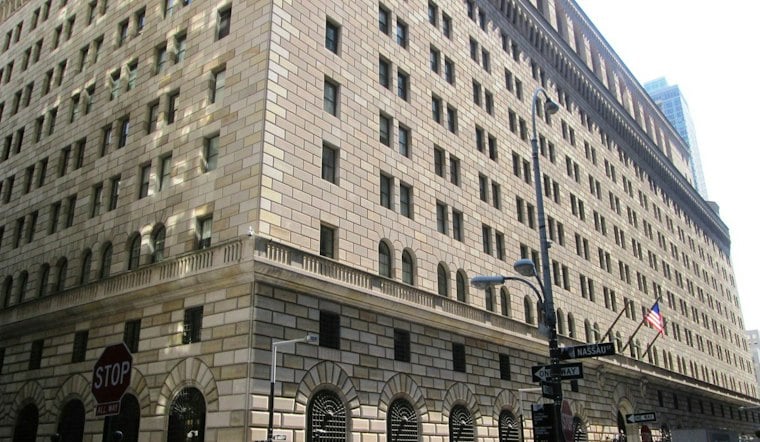
Americans' expectations for inflation barely budged last month, but their confidence in the job market took a sharp hit, according to new survey data released by the Federal Reserve Bank of New York. Median inflation expectations held steady at 3.9% one year ahead, 3.3% three years ahead, and 3.0% five years ahead in October, while the share of people who think unemployment will be higher a year from now jumped to its highest level since April 2020.
The findings come from the New York Fed's monthly Survey of Consumer Expectations, a nationally representative panel that tracks how everyday households view prices, jobs and their own finances. As Bloomberg reported in covering the release, the headline inflation figures were unchanged from the prior month, even as the labor-market mood soured. The survey draws on a rotating panel of roughly 1,200 household heads, each of whom may participate for up to twelve months, and it defines the short term as one year ahead, the medium term as three years ahead, and the longer term as five years out, per the New York Fed.
Unemployment Fears Hit a Six-Year High
The most striking shift in the October data was in how people size up the job market's future, not its present. The mean expectation that the national unemployment rate will be higher in a year rose 1.4 percentage points to 45.3%, the highest reading since April 2020, with the increase concentrated among respondents without a college degree, the survey's findings show.
Other labor-market measures moved in less clear-cut directions. The mean perceived probability of losing one's job in the next 12 months ticked up 0.4 percentage points to 13.9%, though that remains below its 12-month trailing average of 14.3%. At the same time, the perceived probability of finding a new job after a layoff also rose 0.4 percentage points, climbing to 46.5% — its highest level since November 2025. The share of people who think they might voluntarily quit their job in the next year fell 0.5 percentage points to 19.4%, still running above its 12-month trailing average of 18.4%.
That mixed picture follows a stretch of improvement. In September, the New York Fed had reported that labor-market expectations mostly improved, with unemployment, job-finding, job-loss, and quit expectations all moving in a more favorable direction. October's pullback in unemployment sentiment marks a notable reversal from that trend.
Prices Hold Steady, but Household Finances Feel the Squeeze
While inflation expectations themselves were flat, the underlying price picture was uneven. Median year-ahead expected price changes fell for gas, stayed unchanged for food, and rose for medical care, college education and rent, the survey data show.
Household finances showed signs of strain even as inflation expectations held firm. Median expected household-income growth slipped 0.1 percentage point to 3% in October, according to the ABA Banking Journal's account of the release. Meanwhile, the average perceived probability of missing a minimum debt payment in the next three months climbed 1.6 percentage points to 13.8%, its highest level since December 2025, the same report noted.
A Separate Survey Paints a Similar Mood
The University of Michigan's Surveys of Consumers, a separate national gauge of consumer sentiment, offered a complementary view of how Americans are feeling about their financial footing. About 57% of consumers spontaneously mentioned that high prices have eroded their living standards, the highest share since May and up sharply from 46% in February, according to the University of Michigan Surveys of Consumers. That survey also reported year-ahead inflation expectations of 4.3%, down from 4.7% the previous month, along with long-run inflation expectations of 3.4%, down from 3.5% a month earlier.
Taken together, the two surveys suggest a nation where price pressures may be leveling off on paper, even as many households report feeling squeezed and increasingly uneasy about the durability of the job market. The New York Fed's October data, released alongside the Bloomberg report, underscores that steady inflation numbers don't necessarily translate into steady consumer confidence.





