

























































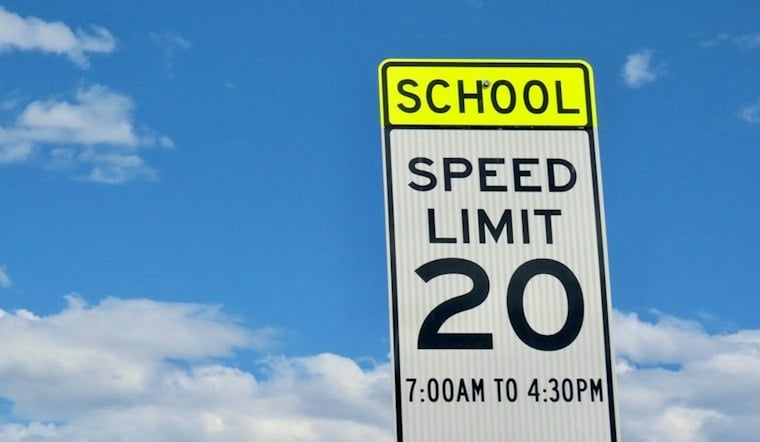
Amsterdam is on the verge of adopting a law that would let the city install automated speed cameras in up to five school zones, following years of pursuing state authorization for the plan. The Common Council this week authorized a five-year contract with Sensys Gatso USA, the vendor that would supply, operate and maintain the cameras, and a public hearing on the proposed ordinance is set for 5:55 p.m. during the Dec. 1 Common Council Committee of the Whole meeting, ahead of the regular council meeting at 6 p.m. that same night.
How the Cameras Would Work
Under the proposed ordinance, the cameras would only operate on school days, with photo enforcement permitted up to one hour before and after the school day and up to 30 minutes before and after student activities. Drivers would only receive a violation if caught traveling 11 mph or more over the posted speed limit, which in Amsterdam's school zones is set at 15 mph. The city would post signs in any area using photo enforcement, and Amsterdam police would verify every violation before a ticket is issued.
Vehicle owners caught speeding would face a $50 fee per violation, with an additional $25 penalty tacked on for nonpayment. City officials said the fines and the 11-mph enforcement threshold were modeled after provisions already in place in other communities. Amsterdam has pursued school speed zone camera plans since at least 2025, when officials first sought state lawmakers' blessing, as The Daily Gazette reported at the time, when the request covered up to 15 school zones. The state Legislature has since approved home-rule legislation allowing Amsterdam to proceed, and Governor Kathy Hochul signed it into law.
No Upfront Cost, but a Cut of the Fines
The contract with Sensys Gatso USA comes with no upfront cost to Amsterdam, according to the seed reporting from The Daily Gazette. Instead, the company would retain $27 from each paid fine during the first year, with its service fees adjusted annually based on the federal Consumer Price Index. City officials stressed the cameras are limited strictly to school speed-zone enforcement and are not automated license plate readers.
Mayor Michael Cinquanti has framed the program as a safety measure rather than a revenue generator, saying the city wants drivers to travel safely rather than be penalized. City officials said the goal is to promote speed-limit compliance, not collect fines. Cinquanti has said camera enforcement can help reinforce traffic laws and protect pedestrians, adding that the city wants to save lives, protect people on foot, slow speeding drivers and change their behavior over time.
Police Chief Cites Staffing Limits
Police Chief Joseph Spencer said speeding in school zones remains a continuing concern for his department. He has argued that automated monitoring is more effective than expecting patrol officers to be stationed at every school during arrival and dismissal, something the department's staffing cannot realistically achieve. Spencer said he believes the program will ultimately improve safety in school zones, though it remains uncertain exactly how soon a camera rollout could occur even after the ordinance is adopted.
Amsterdam is still determining exactly where the cameras would be placed. Earlier reporting identified the 15 mph school zone on Church Street at the entrance to St. Mary's Institute as a potential target, along with zones around R.J. McNulty Elementary School and Wilbur H. Lynch Middle School because of their heavy foot traffic, per the earlier Daily Gazette report. Spencer has said the vendor would likely conduct traffic studies to help finalize those locations. An appeal process for people who want to challenge a speed-camera violation must still be established before enforcement begins.
How Amsterdam Compares to Other NY Cities
State lawmakers have previously authorized similar school-zone camera initiatives in Albany, Kingston, Schenectady and Syracuse, according to the earlier Daily Gazette report. Schenectady's own rollout illustrates how long these programs can take to get moving: its City Council advanced a camera installation plan nearly a year after receiving state approval under home-rule legislation, with a rollout the city said was delayed and cameras not expected to go live before Oct. 13 at the earliest, as reported in a separate Daily Gazette article. Schenectady's program, planned for 20 school zones, carries the same $50-per-ticket cap and 11-mph threshold Amsterdam is now proposing; Schenectady was also setting up its own appeals system for disputed tickets.
For now, Amsterdam's path forward runs through the Dec. 1 public hearing, where residents will get their first formal chance to weigh in before the Common Council votes on the ordinance.



