

























































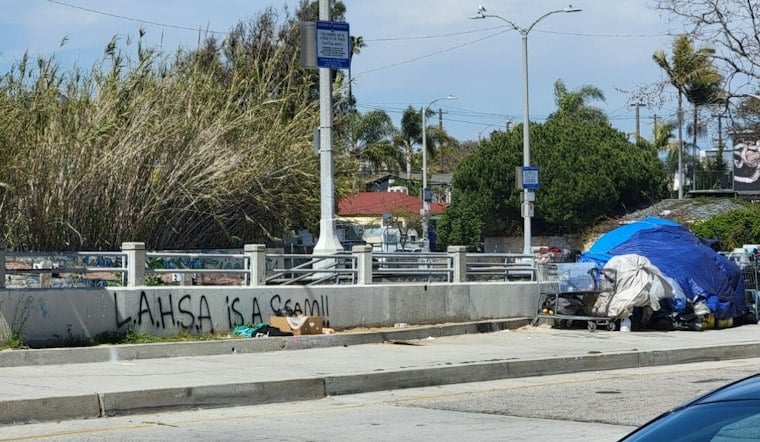
The 2026 homeless count tallied just 671 recreational vehicles scattered across the Antelope Valley's 400 square miles of desert, a steep drop from the 1,432 counted the year before. That decline of 761 RVs sounds like progress on paper, but people who actually live out there say it doesn't match what they're seeing on their own back roads.
According to the Los Angeles Times, the Antelope Valley's reported drop accounted for three-fourths of a 21% countywide decrease in counted RVs this year. That's a huge chunk of the county's overall improvement riding on one desert region's numbers. Residents aren't buying it. “The number hasn't gone down. If anything, it's increased,” one resident told the paper, and others said they simply haven't seen the kind of mass towing operation that would explain hundreds of RVs disappearing from the landscape.
A Count That Swings Wildly by Neighborhood
The inconsistency isn't just countywide versus local — it shows up community by community within the Antelope Valley itself. In Littlerock and Pearblossom, the RV tally jumped from just four one year to 349 the next, then fell back to 253, per the same Times report. Llano saw a similar whiplash: its count more than tripled to 631 before more than halving to 298 in the latest survey.
Those swings raise an obvious question — are RVs actually moving in and out of these communities at that pace, or is the counting method itself the problem? The count is organized by the Los Angeles Homeless Services Authority, which runs what the nonprofit research group RAND describes as a volunteer-led visual survey spanning more than 2,800 census tracts across the county. In the Antelope Valley specifically, the Times reports the count relies on a combination of outreach teams, the Palmdale Police Department's drone, and a consistent group of local volunteers.
A Possible Glitch, and a Defense From Officials
One name that surfaces in the Times' reporting is Christopher Minsal, who suggested a digital glitch may have doubled the prior year's count across three large census tracts — a theory that, if true, would help explain why this year's number looks like such a dramatic drop by comparison. The Los Angeles Homeless Services Authority, for its part, has defended its methodology, telling the Times the Antelope Valley presents a unique counting challenge because of its vast, often desolate terrain.
The Times' own analysis adds another wrinkle: a three-year average of the data points to a likely overcount in 2025, compounded by an undercount in 2024. In other words, neither of the two most recent counts may be a clean baseline for measuring this year's change, which makes the sudden 761-RV drop even harder to take at face value.
A Broader Pattern of Undercounting Vehicles
The Antelope Valley's numbers don't exist in a vacuum. RAND's research found that the official count undercounted people and dwellings in three neighborhoods it studied by 26% in 2024 and by 32% in 2025, compared with a separate data source known as LA LEADS. Vehicles, specifically, showed the largest gap of any category RAND examined. That tracks with what outreach groups have long argued: RVs and cars are easy to miss, especially when they're tucked into desert washes or unmarked dirt roads far from where volunteers are assigned to walk.
Vehicular homelessness has been a growing piece of the region's broader housing crisis for years. A 2024 methodology report from the University of Southern California found that year's countywide point-in-time count recorded 6,854 RVs among 21,288 total vehicles, tents and makeshift shelters counted across Los Angeles County. A UCLA research project on the issue has described vehicular homelessness as a rising challenge for both the people living in cars and RVs and for the cities trying to respond to it.
Conflicting Claims About the Trend Line
The disagreement over this year's RV numbers echoes a larger conflict over how homelessness in the Antelope Valley is actually trending. A Los Angeles County statement on the 2026 count claimed the Antelope Valley, officially Service Planning Area 1, saw a 37% drop in unsheltered homelessness. But a separate report from LAist found that homelessness in the region rose 42% in the past year alone, and that overall homelessness in the Antelope Valley has more than doubled since 2018. It's not clear from the available reporting whether those two figures are even measuring the same population or time period, but the contradiction underscores just how unsettled the region's numbers are.
LAist also reported that families with children make up 18% of the Antelope Valley's homeless population, compared with 15% countywide — a detail that speaks to who, exactly, is living in these RVs and cars scattered across the desert. Countywide, the 2025 count found overall homelessness down 4% and unsheltered homelessness down 9.5%, even as the sheltered population grew 8.5%, according to reporting from USC Today. That same count estimated an average of 1.75 people living in each counted vehicle, tent or makeshift dwelling.
None of this resolves the central mystery sitting out in the Mojave: whether 761 RVs were actually towed, relocated, hidden from view, or simply missed by a count that even its defenders admit struggles with the terrain. What's clear is that the people living along those back roads aren't convinced the rigs ever left.





