

























































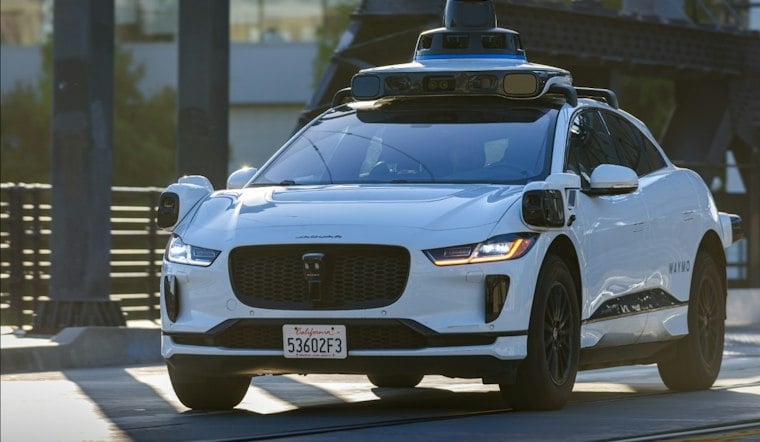
Drivers across the Phoenix area have been crashing into Waymo robotaxis and driving away at a rate that outpaces ordinary hit-and-runs, according to police records gathered over more than four years. Of 88 police-reported crashes involving Waymo vehicles between September 1, 2020, and December 31, 2024, 43 — nearly half — were classified as hit-and-runs in which the Waymo stayed put and the other driver left.
The finding comes from Arizona’s Family Investigates, which spent 10 months collecting police crash reports and body-camera footage from the five cities that make up Waymo’s Valley service area: Phoenix, Scottsdale, Chandler, Mesa and Tempe, according to the station’s report. Working with a traffic safety researcher to compare hit-and-run rates per million miles driven, the investigative team determined that, accounting for miles driven, Waymos were involved in police-reported hit-and-runs at 2.4 times the rate of other drivers in Maricopa County.
Waymo reviewed the station’s methodology and said its researchers appreciated the rigor and thought behind it, the outlet reported. The company also pushed back on the framing, arguing it is unclear whether its vehicles are actually involved in more hit-and-runs or whether Waymo simply reports incidents more consistently than the public does. Waymo added that hit-and-runs are uncommon relative to the more than four million autonomous miles its vehicles log each week across more than 15 U.S. cities.
Why Drivers Say They Walked Away
Some of the documented cases suggest drivers genuinely didn’t know what to do once they realized no one was behind the wheel. A 2022 Chandler police report described a woman who approached a driverless Waymo after a minor crash with her license and registration in hand, according to the outlet — but with no person to hand the documents to, she ultimately left the scene.
Researchers Missy Cummings, a George Mason University professor, and Phil Koopman, a professor emeritus at Carnegie Mellon University, offered driver confusion as one possible explanation for the pattern, per the station’s reporting. Koopman has said ordinary drivers receive no training on how to communicate with a robotaxi after a crash, and both researchers have argued Waymo should make the information-exchange process easier. Cummings has also said researchers and government regulators should investigate and work to mitigate the hit-and-run pattern.
Waymo’s roadside assistance specialists told the outlet that drivers who hit the company’s vehicles often leave the scene, and that rear-end crashes in particular tend to end with the at-fault driver departing before anyone can exchange information. One documented incident involved a 2020 Mesa crash in which officers suspected the driver who hit a Waymo was impaired; another, from October 2024, involved a truck that damaged a Waymo near 2nd Street and Buckeye Road in Phoenix before driving away. A Chandler crash near Ray and Price roads in March 2024 was also among the incidents officers responded to.
How Waymo Says the Reporting Process Works
Waymo maintains that drivers involved in a crash do not need to wait at the scene once they’ve submitted their information through one of the company’s digital options. Waymo directs anyone involved in or who witnessed a crash with one of its vehicles to fill out a form so its team can follow up, and instructs people to call 911 if anyone needs medical attention or feels unsafe. According to the station’s reporting, drivers can also report a crash by scanning a QR code on the vehicle’s driver-side door, through the Waymo app, by calling a dedicated phone line, by emailing the company’s insurance address, or by speaking with a roadside assistance representative at the scene.
Camille Dredge, Waymo’s senior director for ride-hail operations, said collisions can occur and that the company is prepared to respond, the outlet reported. Waymo also said it invests heavily in educating drivers about exchanging insurance information and that rider and community safety remains its top priority. The company declined a new interview request about the station’s findings and did not state whether it tracks hit-and-runs internally or how many it has recorded, according to the report.
A Legal Gray Area for Unattended Vehicles
Arizona law requires drivers who hit an unattended vehicle to locate its owner or leave contact information, a requirement that predates autonomous vehicles but now applies to empty robotaxis as well. Separately, Arizona statute addresses accidents involving fully autonomous vehicles directly: under A.R.S. § 28-663, the vehicle’s owner — or someone acting on the owner’s behalf — must promptly contact law enforcement to report the accident, or the vehicle itself may alert police to the crash.
Industry Data Paints a Different Picture
Separate safety analyses, which don’t directly address hit-and-run rates, generally show Waymo vehicles crashing less often than human drivers across other measures. The Insurance Institute for Highway Safety found Waymo’s overall crash involvement rate was 68% lower than human drivers across four cities, including a 76% reduction in Phoenix, though the rate was actually 4% higher in Austin. IIHS also noted that around half of all crashes and a third of injury crashes go unreported generally, complicating any direct human-versus-Waymo comparison.
Waymo’s own safety dashboard reports 95% fewer serious-injury-or-worse crashes and 82% fewer crashes involving airbag deployment compared with its human-driver benchmark. A separate peer-reviewed study examining more than 7.14 million rider-only miles through October 2023 in Phoenix, San Francisco and Los Angeles found a police-reported crash rate of 2.1 incidents per million miles for Waymo’s driving system versus 4.68 for the human benchmark — a 55% reduction — though that same study said comparisons involving any property damage or injury were inconclusive. None of these broader safety comparisons were designed to measure how often drivers flee the scene after striking a driverless vehicle.





