

























































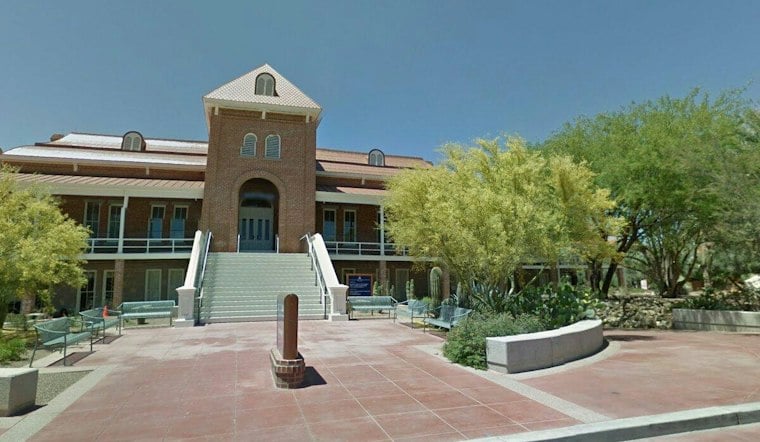
The Arizona Board of Regents has approved new limits on how much the state's three public universities can raise tuition and fees in coming years, even as the University of Arizona confirmed it will keep resident undergraduate tuition frozen for a fourth consecutive year heading into fall 2027. Under the new caps, the University of Arizona could raise in-state undergraduate and graduate tuition by up to 3% per year starting in fall 2029, with professional-program tuition allowed to climb by as much as 5% annually from fall 2029 through fall 2032.
The board's action, reported by KVOA, sets limits that match the increases already allowed under current policy — 3% for undergraduate and graduate tuition and 5% for professional programs. The move comes as Arizona's universities work through a broader planning process: Arizona Board of Regents Information | Curricular Affairs states that the board approved tuition and fee growth rates through the 2028–29 academic year under a new multi-year tuition-setting structure, one designed to give universities a longer runway for budgeting instead of negotiating rates year to year.
Arizona State University, Northern Arizona University and the University of Arizona had each submitted proposals to the board for 2027–28 tuition and fees, along with growth rates stretching from 2029–30 through 2032–33, according to a release from the Arizona Board of Regents. The board scheduled a virtual public hearing on those proposals for November 9 from 1 p.m. to 2 p.m., and anticipated including review and possible action on the proposals at its November 19 meeting, per the same release.
UA's Freeze Stretches Into a Fourth Year
Separately, the University of Arizona announced it will freeze tuition rates and fees for all undergraduate and graduate students for fall 2027, extending a freeze that already covers the current fall semester. With the fall 2027 action, resident undergraduate tuition at the university will have been held frozen for four consecutive years, according to University of Arizona News. The freeze also extends to nonresident undergraduates and all graduate students, meaning none of those groups will see rates increase for fall 2027 either.
Jeremy Meyers, a University of Arizona graduate student, said he wants to see education remain manageable and accessible, while acknowledging that the university still operates like a business. His comment captures the tension running through the board's broader approach: freezing costs for current students while laying out caps that allow for future increases once the freeze period ends.
Why Regents Say Multi-Year Caps Matter
The five-year growth rates are intended to help universities remain competitive and adequately support enrollment growth, ongoing operations and maintenance while accounting for inflationary pressures, according to the same Arizona Board of Regents policy materials. That framing reflects a shift already underway before this latest round of approvals — a multi-year tuition-setting structure for the state's three public universities took effect in the 2024–25 school year, requiring each university to present maximum growth rates for resident tuition, fees, housing and meal plans in six-year cycles, as previously reported by This Is Tucson.
That earlier six-year plan, approved by the board for the University of Arizona, set maximum growth rates through 2029 of 5% for its College of Medicine campuses in Tucson and Phoenix and 5% for its College of Veterinary Medicine, per the same outlet's reporting. For students enrolling in the 2023–24 school year, in-state undergraduate tuition had risen 3%, from $11,525 to $11,871, while out-of-state tuition rose 4%, from $37,827 to $39,340, the publication's earlier coverage noted.
A Longer-Running Affordability Debate
The new caps and the UA freeze both arrive against a backdrop of long-term cost pressure on Arizona families. From 2008 to 2023, the Arizona Legislature's general-fund investment in higher education fell by nearly half, even as tuition and fee rates at the state's public universities more than doubled — from $6,756 to $13,890 — according to the same This Is Tucson reporting. That gap between shrinking state support and rising sticker prices has shaped much of the debate over how aggressively universities can raise rates in future years, even as the current freeze gives UA students a reprieve through fall 2027.





