

























































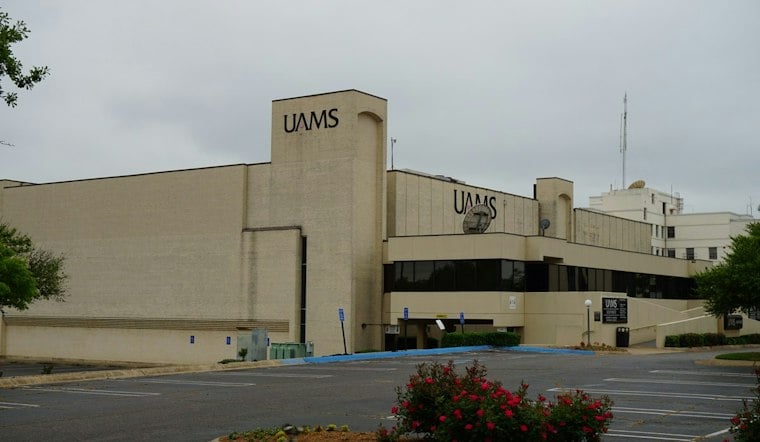
Two mobile coaches outfitted with CT scanners are now crisscrossing Arkansas, bringing lung cancer screening directly to residents in some of the state's hardest-to-reach corners. A third van is expected to join the fleet soon, part of a push by the University of Arkansas for Medical Sciences to close a dangerous gap in a state that loses roughly 2,000 people to lung cancer every year.
A State With Outsized Stakes
The KUAF Public Radio report on the rollout notes that UAMS is prioritizing visits to underserved areas including the Mississippi Delta, El Dorado, Texarkana and western Arkansas. The stakes are steep: Arkansas ranks fifth in the nation for lung cancer mortality and third for cigarette smoking, according to the station's reporting, and the Arkansas Department of Health attributes 90 percent of the state's lung cancer cases to smoking. More than four in ten Arkansans live in rural areas, per a 2025 University of Arkansas report cited in the same coverage, making transportation to specialized screening a persistent obstacle.
UAMS Winthrop P. Rockefeller Cancer Institute formally announced the arrival of the vans on Oct. 23, calling them the state's first lung cancer screening fleet, according to UAMS. Two of the three new coaches have already deployed, with the third expected to follow shortly, the health system said. Each coach carries a Philips Incisive CT 5100 scanner, and the $4 million needed to fund the program came through an appropriation administered by the U.S. Department of Health and Human Services' Health Resources and Services Administration.
Who Qualifies, and What Happens on Board
Screening is recommended for adults ages 50 to 80 who are current smokers or quit within the past 15 years and have a smoking history of at least 20 pack-years — the equivalent of a pack a day for 20 years or two packs a day for 10, per KUAF's reporting. The Cancer Institute also recommends screening for adults with COPD. Patients are scheduled at 15-minute intervals aboard the vans, which the station reports also provide tobacco cessation counseling, a detail echoed by Radiology Business, which noted patients receive counseling and other resources as part of the program.
The urgency behind early detection is stark. Without screening, about three-quarters of lung cancer cases are not caught until the disease has advanced, according to KUAF's reporting, whereas screening findings are limited to early-stage disease in roughly 75 to 80 percent of detected nodules. Michael Birrer, director of the Winthrop P. Rockefeller Cancer Institute, said rural conditions create major challenges for cancer care and transportation, underscoring why bringing the scanners to patients rather than requiring patients to travel has become the institute's strategy.
Building Toward a Six-Van Fleet
UAMS says the mobile screening fleet will eventually grow to six vans, which the health system describes as the largest fleet of cancer screening vehicles in the United States, according to its own announcement. UAMS is also working to install low-dose CT scanners at its regional sites in Jonesboro, Helena, El Dorado and Texarkana, with plans to combine those stationary scanners and the mobile vans to cover the entire state, KUAF reports. The institute coordinates van visits with local community organizations and venues, and the new lung screening effort builds on an existing program: UAMS has operated its MammoVan for breast cancer screening for more than 16 years, according to its announcement.
How badly screening is needed remains a matter of some dispute in the numbers themselves. Arkansas's 2025 Act 390 states that only 3.7 percent of individuals eligible for lung cancer screening in the state are actually screened, while a report from nwaonline.com puts the figure at 3.9 percent. A separate 2025 report from the American Lung Association ranked Arkansas 33rd out of 51 states and territories for lung cancer screening, with 16.6 percent of high-risk residents screened compared with 18.2 percent nationally — and 47th out of 51 for the rate of new lung cancer cases, at 68.21 per 100,000.
What the Law Requires
Arkansas's Act 390 of 2025 requires health benefit plans, commercial insurers and Medicaid to cover annual low-dose CT lung cancer screenings without deductibles, co-pays or coinsurance, according to the Arkansas State Legislature. The law requires covered health benefit plans to provide that coverage, along with follow-up care consistent with American Cancer Society guidelines, beginning Jan. 1, 2026.
Arkansas is not alone in taking screening on the road. In New York City, Columbia University, Weill Cornell Medicine and NewYork-Presbyterian launched the city's first mobile lung cancer screening van in October 2025, stationing it at federally qualified health centers and community partner sites, according to Columbia's cancer center. Separately, a 2023 qualitative study that interviewed 30 staff, providers and program directors across 10 VA medical centers found that patient communication, resource availability and workload were key systemic barriers to expanding rural lung cancer screening — a reminder that getting scanners into communities is only part of the challenge facing programs like UAMS's.





