

























































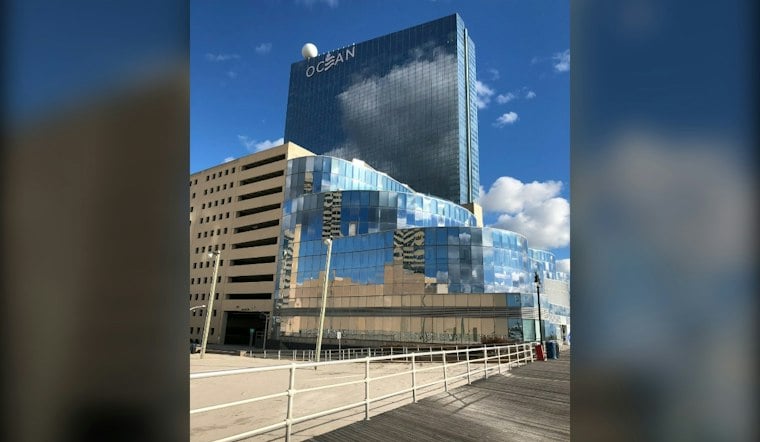
Atlantic City officials are preparing to inspect long-vacant buildings scattered across the resort town, many of them boarded up with broken glass and crumbling exteriors, even as new apartments and shops rise just blocks away in the Orange Loop district. The effort could eventually mean repairs or demolition for properties the city has flagged, including some large, prominent buildings in the tourism district.
The plan, reported by NBC10 Philadelphia, comes as the city is said to be aiming to inspect 10 to 15 long-vacant buildings. Dale Finch, Atlantic City's director of licenses and inspections, said vacant buildings attract vagrants and drag down property values for their neighbors. Finch also said the city is trying to secure the funding it needs, noting the effort will require a substantial amount of money.
A City Still Wrestling With Decades of Vacancy
The scale of the problem isn't new. A Census Bureau figure cited in a report on the city's blight fight found 23% of Atlantic City's housing stood vacant, compared with 11% statewide, according to The Press of Atlantic City. That same report said officials had once tracked nearly 500 abandoned or vacant properties on a constantly evolving list, though the current count is not established.
Atlantic City also received a $30,000 scholarship to help address vacant, abandoned and deteriorating properties, providing up to 125 hours of technical assistance from national experts, according to Atlantic City Focus. The outlet also reported that Finch said city officials are currently revising Atlantic City's vacant abandoned property ordinance.
How the City's Unfit-Buildings Law Actually Works
Atlantic City's municipal code already spells out a process for dealing with structures deemed unsafe. Under Chapter 108 of the city code, buildings vacant for an extended period and left in disrepair or boarded up can be considered public nuisances and unfit buildings, though that determination isn't automatic — the code requires an investigation and a hearing first, per Atlantic City's municipal code.
The code requires at least 10 days’ notice before a hearing. If a hearing determines a building is unfit, the public officer can order repairs or require the building to be vacated and closed, and a dangerous building can ultimately be ordered demolished if the owner refuses to comply. Should an owner fail to act, the code allows the public officer to arrange the work directly, with qualifying costs plus a $100 administrative fee becoming a lien on the property.
Earlier blight-fighting efforts offer some sense of scale, even if they don't speak to current funding levels. A report found the Casino Reinvestment Development Authority had approved an additional $1 million for demolitions, pushing its total demolition investment in the city past $6.15 million over several years, with about $4 million of that spent in the tourism district, according to the same Press of Atlantic City report. At the time, then-Mayor Marty Small said properties for demolition under the newly approved funds hadn't yet been identified. A separate account from WHYY noted that demolition hearings had risen 20% after an ordinance change allowed demolition six months after a property was deemed vacant.
New Construction Reshapes the Orange Loop
While officials sort out how to tackle the blight, new construction keeps reshaping parts of the city, particularly the Orange Loop, a beachfront district of three beach blocks. One of the firm's current projects, Surf Lodge, is described in the seed reporting as a nearly 12,000-square-foot development; Authentic City Partners' own project page puts the building at approximately 11,000 square feet and describes it as a 12-unit mixed-use building with a surf shop planned for the commercial floor, with completion targeted by the end of 2026.
Surf Lodge replaced an aging rooming house just steps from the boardwalk, according to the seed reporting. Evan Sanchez, a developer with Authentic City Partners, said the new building replaced a dilapidated structure and could allow for greater density in the city. Sanchez also pointed to recent national attention from the New York Times as a validation point for Atlantic City's broader transformation.
The Orange Loop has shifted from undeveloped, run-down properties into a neighborhood with restaurants, coffee shops and a yoga studio, according to The Press of Atlantic City, which also reported that the New Jersey Economic Development Authority awarded more than $4.4 million in grants under the Atlantic City Revitalization Grant Program to two businesses for mixed-use projects in the district.
More Housing Projects Taking Shape Across the City
Other developers have been chasing similar momentum. Mark Callazzo, who helped launch several businesses along Tennessee Avenue, was planning to create five apartments above the Tennessee Avenue Beer Hall, the Press of Atlantic City reported in 2023. And in the Southeast Inlet neighborhood, a proposed townhome project would span more than 90 parcels across four blocks, creating 149 new lots for 152 units—146 in 19 buildings, with the remaining units in four detached homes and a duplex, according to Jersey Digs, which noted there is no official construction start timeline.
For residents navigating a city caught between decay and rebirth, the contrast is hard to miss. Briana Simon, who works in Atlantic City, said she supports addressing deteriorating properties and revitalizing the city, per the seed reporting. Atlantic City's approach to its neglected buildings arrives alongside the very housing developments transforming other parts of town — a tension officials appear determined to confront as inspections move forward.





