

























































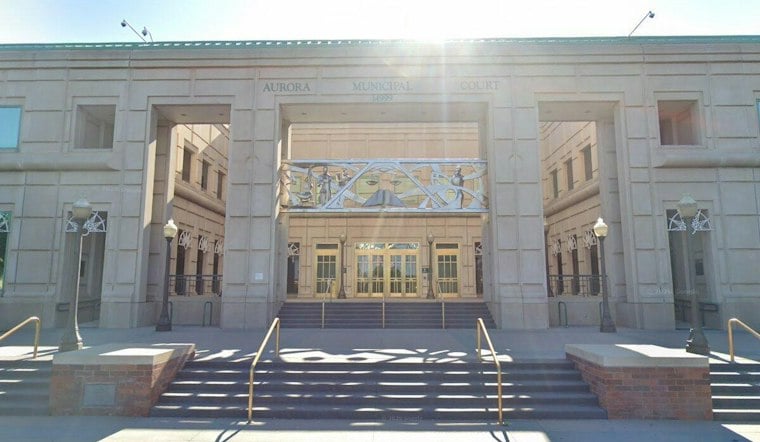
Aurora’s municipal court is refusing to appoint lawyers for low-income residents facing charges that could land them behind bars, according to allegations from the ACLU of Colorado and the Colorado Freedom Fund. At an October 8 hearing, Aurora Presiding Judge Shawn Day said plainly that he wasn’t following the new state law because he viewed it as an unfunded mandate — telling the court he would be happy to comply once the city gets the money to do it.
The allegations, detailed in The Denver Post, center on House Bill 1134, which clarified that municipal court defendants have a right to counsel whenever their offense carries the possibility of jail time. The civil liberties groups wrote a letter to Aurora city leaders expressing concern that the court was not following state law, and they’re asking the city to take expeditious action to comply. The groups argue that failure to implement changes risks the constitutional rights of Aurora’s most vulnerable residents.
At the center of the dispute is a disagreement over when the right to counsel actually kicks in. Civil liberties groups contend that anyone accused of violating Aurora’s municipal code is entitled to a court-appointed lawyer if the code permits incarceration — even if, as happened in the October 8 case, the city attorney’s office waives the possibility of jail for that particular defendant. Day told the court that the city did not allow that defendant to apply for a public defender because it lacked the money to provide one, and he said that if the state doesn’t fund the mandate, compliance becomes optional in his view.
City Officials Offer Conflicting Accounts
City spokesperson Joe Rubino said, in a statement attributed to the city, that Day ruled the bill’s service requirements go beyond what is constitutionally required. Rubino declined to comment further, citing the possibility that the case could be appealed.
That explanation doesn’t sit well with Aurora City Councilwoman and Mayor Pro Tem Alison Coombs, who called the municipal court’s practices deeply concerning. Coombs said the city council was never advised of any standing judicial order on the matter, and she pushed back hard on the idea that the council ever endorsed Day’s unfunded-mandate reasoning — the council, she said, has never taken that position. She argued any such order should be subject to council policy direction rather than a unilateral call by the chief judge, and said she’s told Day directly that court officials shouldn’t be the ones setting policy. Access to counsel and criminal prosecution, Coombs said, are issues that affect both individual people and the city as a whole.
Code Changes Promised, But Not Yet Final
Aurora’s council says it is in the process of updating city code to reflect state law and comply with a Colorado Supreme Court ruling concerning municipal sentences, with the hope of bringing those changes before the full council by February 2027. That timeline remains a stated goal rather than a done deal.
The Supreme Court ruling looming over all this dates to December 2025, when the court unanimously decided that cities cannot impose harsher penalties than the state allows for the same crimes, according to Denver7. In Aurora specifically, the city attorney and public defender estimated that 300 to 500 active cases with suspended sentences fell under that ruling. The city has said it filed notices outlining the new, lower maximum penalties in those cases, and confirmed that three people who had been serving sentences potentially harsher than allowed were released as a result.
The ACLU and the Colorado Freedom Fund didn’t stop at Aurora’s doorstep — the groups sent letters to more than 50 municipal councils statewide urging them to quickly bring their sentencing codes into line with the ruling, the same Denver7 report notes. Lakewood and Arvada have already updated their municipal codes to match state law, while Denver and Aurora had not formally adopted changes as of that reporting.
A Statewide Pattern, and a Different Reputation
Aurora’s current predicament follows a broader pattern Colorado has been grappling with for months. Gov. Jared Polis signed House Bill 1134, the Fairness & Transparency in Municipal Court Act, in April 2026 after civil rights groups observed municipal courts around the state failing to provide lawyers to indigent defendants. That same month, the Denver Post’s own reporting found multiple Colorado cities were not providing attorneys to poor people facing jail time.
It’s a sharp contrast to how Aurora’s public defense system was once described. A September 2021 evaluation from the National Legal Aid & Defender Association called Aurora’s municipal court public defender office a model system, worthy of review by other municipalities seeking to strengthen right-to-counsel services. Civil liberties groups say the stakes of getting this right go beyond a single hearing — uncounseled plea deals, they argue, can carry consequences like immigration status risks that defendants may not fully understand without a lawyer in the room.




