

























































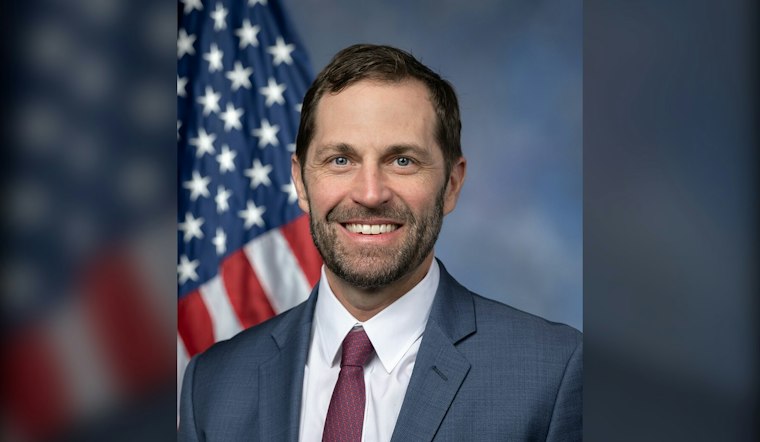
Aurora Democrat Jason Crow has introduced legislation that would ban a sitting president from pardoning himself, a response to comments from President Donald Trump suggesting he believes he already has that power. The U.S. representative is sponsoring the Pardon Prevention Act alongside California Rep. Mike Levin, with a companion measure also moving in the Senate.
Crow, who co-chairs the End Corruption Caucus, introduced the legislation aimed at curbing abuse of presidential pardons, according to Colorado Politics. Sen. Catherine Cortez Masto of Nevada has introduced a similar measure in the Senate. The bill would prohibit presidential self-pardons outright, update bribery statutes to cover pardons involving the president and vice president, and require Justice Department investigation of pardons linked to the president, his family members, or his appointees, the paper reports.
Trump's Comments Spark the Push
The legislation follows remarks Trump made in a 60 Minutes interview this month, in which he said he believes he has the power to pardon himself and described self-pardoning as not unreasonable, according to Colorado Politics. The U.S. Constitution does not specifically address presidential self-pardons, leaving the question legally unsettled.
Crow said the bill reforms presidential pardons and provides oversight, per the paper's reporting. He said presidents should not abuse the pardon power, and argued that the justice system should not treat wealthy and well-connected people differently from working people.
What the Bill Would and Would Not Do
Beyond barring self-pardons, the Pardon Prevention Act would require an inspector general investigation and submission of all materials to Congress within 30 days of any pardon granted to a president's family member, Colorado Politics reports. The bill would not ban presidential pardons for family members outright — it would instead add that disclosure and review requirement. A separate account of the legislation, reported by Times Now News, describes additional provisions: the Justice Department's inspector general would be directed to investigate pardons that raise possible conflicts of interest, and a president or vice president could be prosecuted for trading pardons for something of value. People who receive pardons would also have to disclose gifts made to projects linked to the president, per that report.
Crow and Levin unveiled the bill on a Wednesday, according to the outlet's account. The bill has little chance of becoming law while Trump remains in the White House, the report notes, and three legal experts told CBS News that key parts of the measure would likely collide with the president's constitutional pardon power.
A Pattern of Controversial Pardons
The push comes against a backdrop of pardons by presidents of both parties that have drawn scrutiny. Trump pardoned several close associates during his two terms in office, including former campaign chairman Paul Manafort and Charles Kushner, the father of his son-in-law Jared Kushner, according to Colorado Politics. Democratic predecessor Joe Biden pardoned his own son, Hunter Biden, in 2024; Hunter Biden had been convicted on several gun and tax charges dating back to 2014.
Those cases from both parties have fed arguments from Crow and other lawmakers that the pardon power needs tighter guardrails and more disclosure, even as legal experts question how much of the new bill could survive a constitutional challenge. A Times Now News investigation cited in the same report found that roughly 70% of Trump's second-term clemency actions skipped the Justice Department's pardon office altogether, a figure that climbs to 92% once January 6 defendants are included — a pattern the sponsors point to as evidence of the oversight gap their bill is meant to close.




