

























































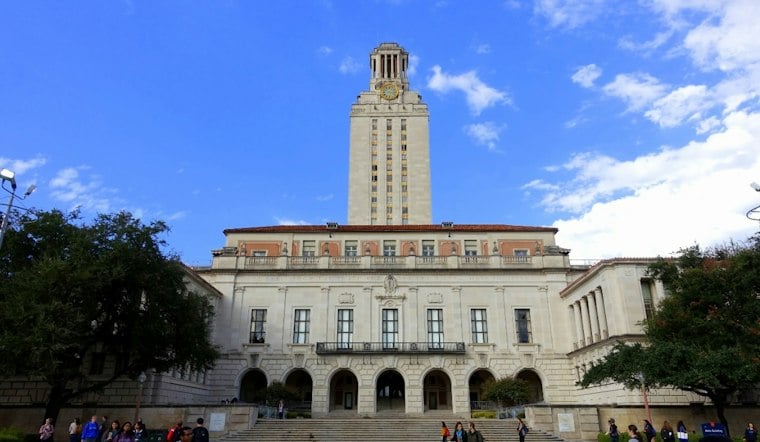
Law enforcement officials, researchers and public safety leaders gathered in downtown Austin this week for the 34th Annual International Problem-Oriented Policing Conference, a three-day gathering focused on crime prevention and evidence-based policing strategies. The event runs through Wednesday in downtown Austin.
As reported by KXAN, the Austin Police Department and the University of Texas at Austin police department hosted the conference, with Arizona State University and Texas State University serving as sponsors. The Travis County Sheriff's Office is also listed as a host of the event, according to the conference agenda published by the Center for Problem-Oriented Policing at Arizona State University.
A Packed Agenda of Breakout Sessions
The draft agenda lists 10 breakout sessions on Monday, November 16, and another 10 on Tuesday, according to the same agenda document from the Center for Problem-Oriented Policing. Topics on offer this week include an introduction to problem analysis and problem-oriented policing, situational crime prevention, improving problem-solving processes, and integrating problem-oriented policing into daily police operations, per the conference's own event page.
Other sessions cover leading problem-solving and innovation, improving crowd control and officer safety, blocking crime opportunities, and using artificial intelligence to enhance problem-solving, the event page notes. Organizers say the full agenda features more than 20 different crime and safety problems for attendees to choose among.
Closing Awards and a Scheduling Discrepancy
Wednesday's schedule includes five more breakout sessions, a closing plenary, and the presentation of the 2026 Herman Goldstein Awards, which the agenda document says are set to end at 12:30 p.m. The conference's official event page, however, states that the conference will conclude at noon on Wednesday — a discrepancy between the two planning documents that has not been resolved in materials reviewed for this story.
As reported by Police1, the program will feature winning and finalist projects from the Herman Goldstein Award for Excellence in Problem-Oriented Policing. Registration for the conference costs $595 per person, though agencies that register five or more attendees receive a $50-per-person reduction, according to the event page.
Research Behind the Approach
The problem-oriented policing model at the center of the conference has drawn academic scrutiny for years. A systematic review from the Campbell Collaboration found the approach associated with a statistically significant overall 34% reduction in crime and disorder, drawing on 34 studies published between 1989 and 2018 — 28 from the United States, five from the United Kingdom and one from Canada.
The review also found that when problem-oriented policing is applied to specific places, crime-reduction benefits were more likely to spread to nearby areas than to simply displace crime there. At the same time, the Campbell Collaboration review found limited impacts of the approach on police legitimacy, fear of crime, and collective efficacy — a reminder that the strategy's track record is stronger on crime statistics than on community perception measures.





