

























































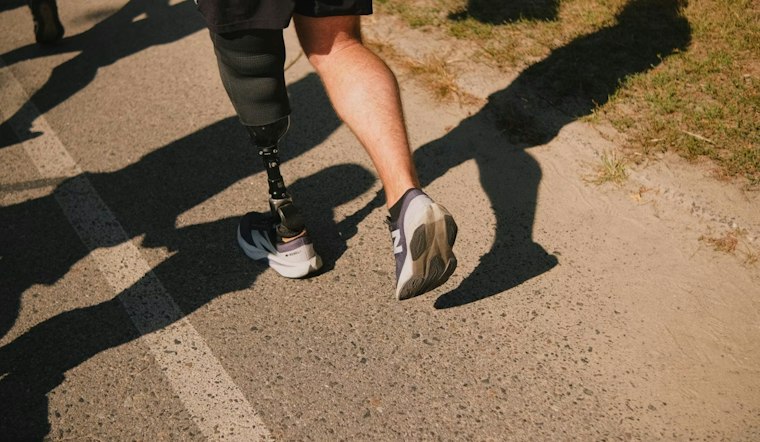
Four Southwest Florida high school students packed their bags this week, not for a soccer match, but for something closer to the ground game of changing lives. The group departed Babcock Ranch on Thursday, Nov. 12, bound for San Juan de los Lagos, Mexico, carrying with them the fruits of a two-and-a-half-month sprint: 85 handmade prosthetic legs built specifically for amputees attending the Amputee Soccer World Cup.
A Classroom Turned Into a Prosthetics Workshop
The students aren't going to compete. According to WINK News, they're instead headed to the tournament to help fit local amputees and athletes with the prosthetic legs their classmates spent months building back home. The project is led by STEM educator Brian Copes, who joined Babcock High School this past summer after years of running similar programs elsewhere, including work he began making prosthetics with students while teaching in Alabama.
Copes says his students typically produce about 100 prosthetic legs over the course of a year. Getting to 85 in roughly two and a half months meant leaning on outside help — high schools and universities across the country manufactured and shipped additional parts to Babcock Ranch so the group could hit its deadline before the World Cup kicked off.
Students Say the Project Reshaped Their Plans
For junior Redding Rodecap, who had originally planned to pursue aerospace engineering, the hands-on work building limbs for strangers overseas changed his trajectory. He said working on the prosthetics sparked a new interest in biomechanical engineering, adding that he wants to work on prosthetics, advance the field and help people going forward.
Sophomore Halle Treece said the experience reinforced something simpler: that young people can accomplish meaningful change when given the tools and the chance. Classmate Carter Styron-Smith said he hadn't previously had much opportunity to help people in a tangible way, while Chris Dye described the trip to Mexico as surreal and unexpected.
One Teacher's Years-Long Mission
Copes has said his classroom blends math, English and science into hands-on projects designed to teach students that they can change the world, and he believes traveling to developing countries and meeting prosthetic recipients firsthand can reshape how young people see that world. It's a philosophy he's carried through earlier chapters of his work: at a previous school, his organization, Skilled Knowledgable Youth, made 60 prosthetic legs in a year through partnerships with companies and other schools, according to the Courier-Herald. In one earlier school year, Copes' students and a dozen partner schools together manufactured 100 prosthetic parts, per the Morgridge Family Foundation, with students and partner schools traveling to El Salvador, Honduras and Costa Rica to help deliver and fit the devices.
Babcock isn't the only Florida-adjacent classroom chasing this kind of impact. Students at Gulfport High School have spent three years using 3D printing to build prosthetic parts for amputees in Central and South America through the STEP Forward Project, according to WLOX, and that program reported bringing 80 prosthetic legs of its own to the same tournament in San Juan de los Lagos.
The Tournament Bringing It All Together
The 2026 Amputee World Cup is set to run Nov. 13 through Nov. 22 in San Juan de los Lagos, featuring 24 teams from four continents, according to USA Today. The same report notes that amputee soccer, despite being played in more than 60 countries, still isn't recognized as a Paralympic sport, and that the U.S. Soccer Federation doesn't officially fund the American amputee national teams beyond an annual youth-development grant and occasional apparel donations.
The Babcock students are scheduled to return to Southwest Florida on Nov. 23, closing out an eleven-day trip that started in a high school workshop and ends on the sidelines of a world championship. Whether measured in legs built or lives touched, Copes' students have spent this fall proving that a classroom project can travel a lot farther than anyone expected.




