

























































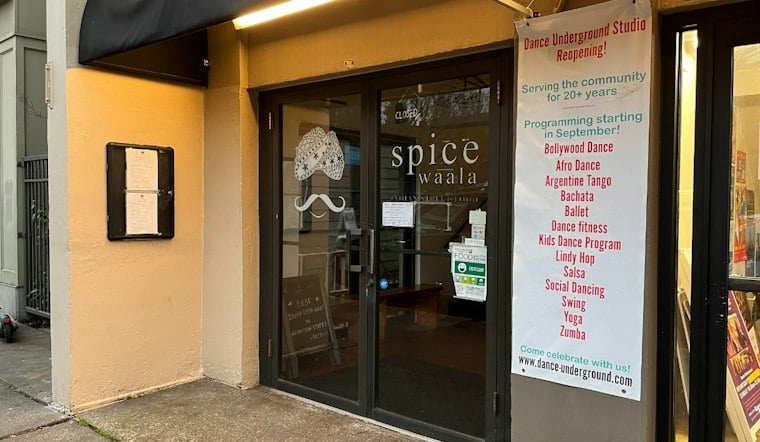
A Ballard restaurant owner who says he has spent years pushing the city to change its delivery laws is now trying a different fix altogether: building his own delivery service. Spice Waala co-owner Uttam Mukherjee has co-founded Yaku, a local alternative to apps like DoorDash and Uber Eats, aiming to undercut their fees while still paying drivers fairly.
Mukherjee told reporters he wants Yaku to hit what amounts to a trifecta — lower costs for customers, more transparent pricing, and fair pay for drivers — according to The Stranger. The move comes as FOX 13 Seattle reports Mukherjee has pushed the city for years to change delivery laws and is now looking to escape high delivery app fees altogether by moving his restaurant away from third-party platforms.
Exactly when Yaku went live is a bit murky. MyBallard reported the service launched October 29, while The Stranger's account says Yaku had only been active since October 30. Either way, the service is brand new, and so far five Ballard restaurants have signed on: Spice Waala, Rachel's Bagels and Burritos, Pie Bird Bakeshop, Lil Woody's and Ballard Pizza Company, per MyBallard's reporting.
How the Flat Fee Actually Works
Every Yaku order carries a flat $9.99 delivery fee, and MyBallard's report notes there are no service fees or other hidden charges tacked on. That's a notably different structure than the big apps, where commissions and surcharges stack up in ways that can be hard for customers to parse.
The Stranger ran its own comparison to test the pitch: a wrap and two snack items from Spice Waala rang up at $31.50 on Yaku, versus $35.36 on DoorDash — even though DoorDash was waiving its own $1.99 delivery fee at the time. Yaku's drivers, meanwhile, are hourly employees who get paid for all their work time and reimbursed for mileage, rather than working as gig contractors, the same MyBallard report states.
Right now the service is small by design. The Stranger reported Yaku had just two drivers at the time of its article, and MyBallard described the delivery zone as a 2-to-3-mile radius covering Ballard and stretching into parts of Greenwood, Phinney and Fremont. Mukherjee said it's free for restaurants to join, and the platform is deliberately limited to local businesses — no national chains allowed, according to MyBallard.
Years of Rising Fees Behind the Push
The frustration driving Yaku didn't come out of nowhere. Mukherjee said Spice Waala's delivery business fell 50 percent over the past couple of years as fees climbed, per MyBallard's reporting. That tracks with earlier numbers from GeekWire, which found Spice Waala's delivery orders were down 30 to 40 percent in the first five months of 2024 compared with the year before. Eater Seattle had reported a similar 30 percent drop for January 2024 alone, which the restaurant attributed to a $5 surcharge.
That surcharge traces back to Seattle's PayUp law, which set new pay standards for gig delivery workers. In response, DoorDash and Uber — which The Stranger notes control most of the app delivery market — added a $5 fee to orders within Seattle city limits. Eater Seattle has also reported that delivery platforms typically take a commission of 20 to 30 percent per order from restaurants, on top of whatever fees customers see.
Other Restaurants Have Tried Their Own Workarounds
Mukherjee isn't the first Seattle restaurateur to go looking for an exit from the big apps, though results have varied. Bok a Bok tested its own in-house delivery drivers at two locations starting in 2024, only to close entirely earlier this year, The Stranger reported. Another Seattle restaurant co-owner, Michelle Braash, told GeekWire her business simply stopped taking delivery-app orders in 2024 and now directs customers to its own online ordering system or to come in for pickup.
The math behind those decisions can be stark. Grillbird owner Matt Parker told Eater Seattle that a $54 order placed for pickup on his restaurant's own website would balloon to $85 if ordered through Uber Eats instead. Some of the fallout has rippled down to individual workers, too — Eater Seattle reported that a drop in orders prompted delivery driver Tony Illes to go independent, operating under the moniker Tony Delivers.
City policy has tried to address the commission squeeze directly. The Seattle City Council has described legislation it passed as capping app-based delivery and pickup commission fees charged to restaurants at 15 percent, according to the Seattle City Council. Whether a small, restaurant-built alternative like Yaku can scale beyond its current two drivers and handful of Ballard partners remains to be seen, but for now it stands as one local answer to fees that have been squeezing restaurants and drivers alike for years.





