

























































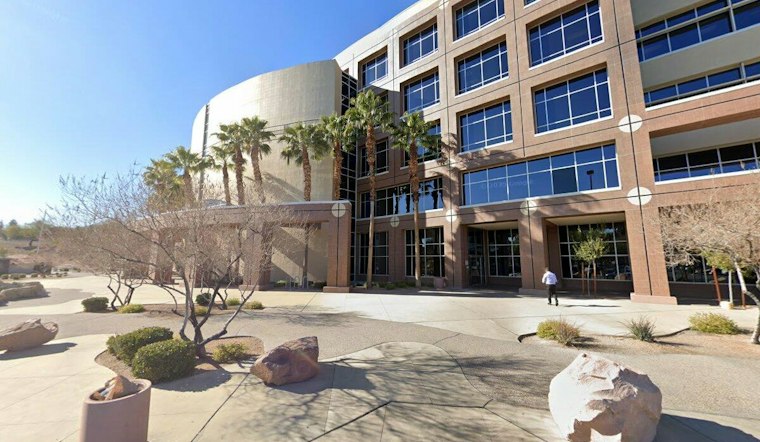
Soo Kim did not appear before the Nevada Gaming Control Board and Gaming Commission Thursday. At a special hearing, officials questioned the pace of progress on a $2.1 billion ballpark that is supposed to open on the Las Vegas Strip in April 2028.
Bally's is specifically responsible for the northwest plaza entrance, which is meant to serve as the main access point from the Strip once the stadium opens. There was still time to build out a podium connecting the Strip's corners to the stadium, along with shared access tying together the podium, stadium, utilities and parking.
A Three-Way Funding Puzzle
The financing behind the stadium's non-gaming infrastructure involves Bally's, the Athletics and Gaming and Leisure Properties, the real estate company that owns the project's real estate assets. Gaming and Leisure Properties told regulators it was willing to cover an anticipated shortfall in Bally's funding, per the same Nevada Independent report. The company has also indicated it is conditionally willing to raise its loan for Bally's portion of the work from $125 million to $250 million, though that increase hinges on resolving business matters between Bally's and the Athletics that remain unsettled, according to a separate Nevada Independent account.
The three-party arrangement reflects control of the site as much as construction: GLPI owns the 35-acre Tropicana parcel and leases it to Bally’s, which bought the casino’s buildings and operations but not the land. The parties’ 2023 agreement contemplated transferring about nine acres to the A’s for the stadium and having GLPI commit up to $175 million toward hard construction costs, with additional funding possible under certain conditions. That framework helps explain why any larger GLPI backstop involves negotiations among the landlord, resort operator and team.
That conditional language matters because financing questions remain unresolved.
Nevada’s 2023 stadium law caps the public contribution at $380 million, using a mix of district revenues from certain existing taxes and fees, county bonds and transferable tax credits. The law also requires the A’s stadium developer partner to pay the first $100 million of project costs; the Stadium Authority says public money cannot be spent until that amount is paid and the county bond reserve is funded. That sequencing makes public funding a later tranche, not a substitute for the project’s initial private commitments. The statute sets out the funding cap and payment sequence.
The A's Have Already Absorbed Extra Costs
Some of the infrastructure originally expected to be built by Bally's has already shifted to the ballclub itself. The Athletics filed permit applications for a six-story parking garage and a central utility plant, work the Las Vegas Review-Journal reported at $45 million, representing a 2.3 percent increase to the overall ballpark budget. The newspaper separately reported that Bally's was seeking financing for the plaza.
Bally's Juggles Projects Nationwide
The Las Vegas stadium work is one piece of a larger balance sheet. iGaming Business reported that Bally's ended the third quarter with $497 million in cash against long-term debt of $4.8 billion, a financial backdrop against which the company is also developing multibillion-dollar resorts elsewhere. The same report noted that the Las Vegas site has seen little progress since Bally's imploded the former Tropicana in October 2024.
Dreitzer said during the hearing that the stadium project must be completed and indicated the board will keep close watch on its progress. For now, the funding gaps separating a finished Strip entrance from an unresolved construction timeline remain open questions that regulators plan to keep asking about.





