

























































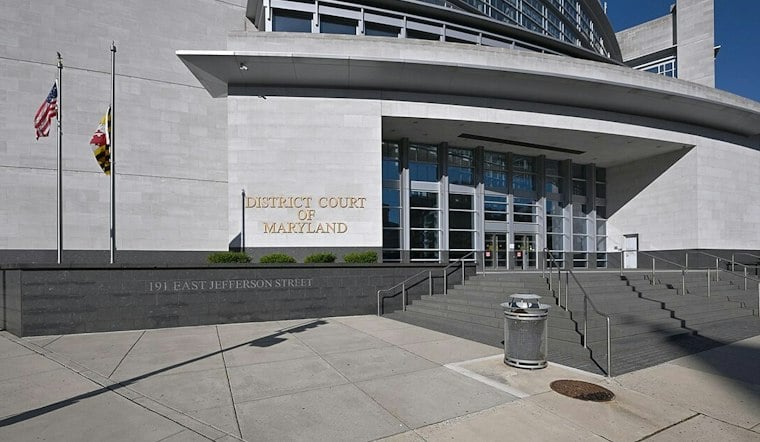
A 49-year-old man has been indicted on federal charges after allegedly passing counterfeit bills at a Catonsville pizza shop and later trying a similar move at a Glen Burnie store, where a sharp-eyed employee caught on. Clifton Monroe Jr. made his initial court appearance last Thursday, October 29, after being charged by criminal complaint, and investigators say the scheme stretched over roughly a year before it unraveled.
According to WBFF/FOX45 News, Monroe allegedly used counterfeit money to pay for goods at a Catonsville pizza shop and a convenience store back in April 2025. At the pizza shop, court documents cited by the station say he walked away with $45 in genuine change for his fake bills.
A Glen Burnie Clerk Spots the Fakes
The station reports Monroe tried a similar scheme in January at a Glen Burnie retail store, where he was expected to receive $36.15 in change. This time, an employee recognized the bills as counterfeit, contacted store police, and Monroe was apprehended on the spot, per the same account.
Investigators later executed a search warrant at Monroe's home in April and say they found evidence of counterfeit-currency production there, the station reports. That detail, paired with the two alleged attempts to pass fake bills months apart, forms the backbone of the federal case now moving through court.
Charges and Possible Penalties
Monroe faces four counts of passing or possessing counterfeit obligations or securities, along with one count of possessing counterfeit obligations or securities and one count of counterfeiting and forging U.S. obligations or securities, according to the station's report. The U.S. Attorney's Office, District of Maryland similarly describes Monroe as facing four counts of passing or possessing counterfeit obligations or securities along with one count of possessing counterfeit obligations.
Reported figures on potential prison time vary. WBFF/FOX45 News reports Monroe could face up to 25 years in federal prison for possessing counterfeit obligations or securities, while the station also reports he could face up to 20 years for each count of passing or possessing counterfeit obligations or securities, as well as up to 20 years for counterfeiting or forging U.S. obligations or securities. Separately, an excerpt of 18 U.S.C. § 472 states that a person who, with intent to defraud, counterfeits or alters a U.S. obligation or security may be fined, imprisoned for not more than 20 years, or both, though that excerpt alone does not establish which penalty applies to each of Monroe's charged counts.
Counterfeit Schemes Beyond Maryland
Small-dollar counterfeit schemes targeting local shops have surfaced elsewhere too. In Florida, WESH reported that a man and a woman used counterfeit $50 bills at four businesses in Seminole County, including Ice Spot, Kava Culture, and Bronx House Pizza. One shop owner there said the fake bills left his business out about $100 to $130, including the product taken, and a scanner ultimately caught a fake bill when the suspects tried to return to the pizza shop. A Kava Culture representative told the station the business now plans to automatically scan any transaction over $20.
As with any federal case, the indictment against Monroe is not a finding of guilt, and he is presumed innocent unless proven guilty in court. No trial date or further court proceedings were detailed in the available reporting.



