

























































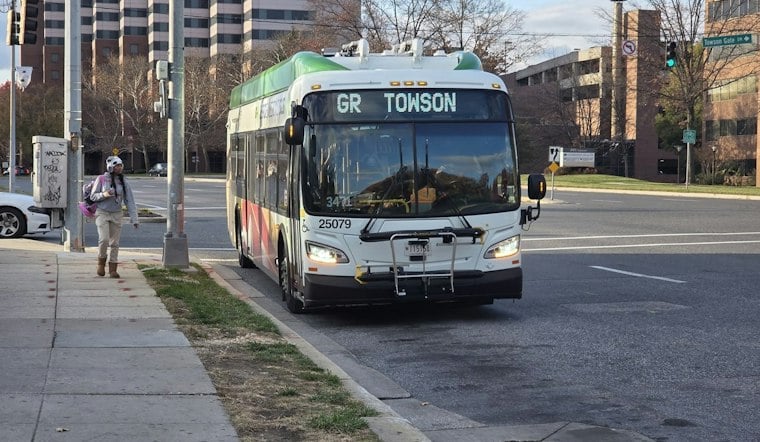
Marguerite Woods, a 74-year-old Northwest Baltimore resident, booked a Call-A-Ride pickup for 8 a.m. Monday to get to her 9 a.m. technology class, the same class she uses to advocate for making local art galleries accessible to people with disabilities. The ride never came. She called to cancel around 9 a.m., hopped into a traditional rideshare instead, and watched a Call-A-Ride car finally pull up to her home around 9:40 a.m. — after she had taken a rideshare to her class.
Her experience was far from isolated during the first week of Maryland Transit Administration's overhauled on-demand transportation program, according to The Baltimore Banner. Call-A-Ride users across the city reported drivers failing to show up, technical failures and scheduling mishaps throughout the week, with some riders missing medical appointments and others, according to advocates, scrambling to find rides to work or scrambling to pick up kids from school after the Monday launch. Woods said rideshares simply aren't sustainable on her fixed income, leaving her with few backup options when the system falters.
Call-A-Ride functions like an Uber or Lyft for people with disabilities, relying on contractors that provide sedan and wheelchair-accessible vehicle service. Riders pay just $3 for most trips, and the program served about 17,000 people last year, per MTA figures cited by the Banner's reporting. The service also frees up the agency's larger MTA-branded paratransit vans for riders with the highest needs.
A New App Replaces Direct Driver Contact
The MTA's new system centers on a proprietary mobile application meant to centralize bookings and simplify management for the agency, according to the Banner's reporting. Under the old setup, riders scheduled directly with providers like WAV and Uzurv, each running its own app or call center for ride management and driver communication — arrangements that gave riders exact arrival times, vehicle information and a direct line to their driver.
That direct contact is gone. The new app offers only a 30-minute pickup window and lacks vehicle tracking or direct communication with drivers, the Banner reports. Per the MDOT MTA Call-a-Ride site, changes took effect Nov. 9, and customers can now book through dispatch operators, the mobile app or an automated phone system — but they no longer book or call providers directly. The agency's site says the service remains available only to MTA-certified Mobility customers who meet eligibility requirements.
Chris Danielsen, who lives in downtown Baltimore, said his Monday morning ride to work never arrived. When he tried to get help, an AI agent couldn't assist him or cancel the ride, and he ended up waiting in a call queue for over an hour, the station's report notes.
Advocates Say the Stakes Go Beyond Inconvenience
Ronza Othman, president of the National Federation of the Blind of Maryland, said the new app is difficult to use with assistive technology such as screen readers. She described Call-A-Ride as critical infrastructure necessary to daily life, and said system failures jeopardize users' health and safety — calling the rollout failure an insult added to injury. Othman has asked the MTA to restore the previous booking system until problems with the new one are resolved.
Gabriel Rubinstein, managing attorney of Disability Rights Maryland, said the disruptions need immediate attention. CBS Baltimore separately reported that rider Patricia Stallworth said people's lives depend on the service, and that Charles Skinner described a neighbor who missed a scheduled eye surgery after her ride never came.
MTA Points to Oversight Gains, Rules Out Reversal
MTA spokesperson Courtney Mims said in an email that the new system provides better oversight, trip information access and data to address problems, and that the previous invoicing process — which relied on provider invoices submitted to MJM Innovations — made oversight difficult and limited the agency's ability to respond. MJM Innovations is the private company contracted by MTA to manage the call center, the new app and the system rollout. Mims said returning to the old system isn't an option because of contract issues; the agency's statement did not address the specific problems riders reported to the Banner.
The state approved the Call-A-Ride contract in August 2026; it spans five years and is valued at up to $274.5 million. The new system is intended to increase on-demand availability of wheelchair-accessible vehicles, according to the Banner's reporting.
Separately, CBS Baltimore reported that the MTA attributed some early problems to an issue with a phone provider that created a backlog, which the agency said has since been resolved, and that it is monitoring performance daily and adjusting schedules to reduce late and missed pickups. The outlet also reported the agency's statement that riders had booked more than 2,100 trips through the new system.
Accessibility Rules Set Requirements
Federal regulations cited in 28 CFR § 35.200 set April 24, 2026, as the deadline for public entities with populations of 50,000 or more to ensure that covered web content and mobile apps they provide or make available meet accessibility requirements.
For riders dealing with missed appointments and long hold times now, the accessibility rules offer little comfort. Woods, for her part, said she doesn't see rideshares as a workable long-term substitute, and advocates like Othman continue pressing the MTA to bring back the old booking channels while the new system's problems get sorted out.



