

























































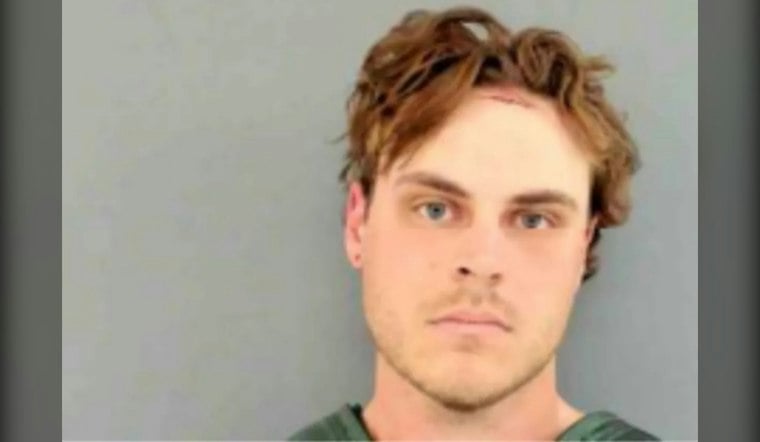
A Newton County pursuit that deputies said exceeded 100 miles per hour ended with the driver pulling over near the hospital and surrendering. The Neshoba Democrat reported that Michael Chad Barefield, 28, of Little Rock, was arrested Oct. 27 at Range Avenue and West Hospital Road and charged with felony pursuit, five counts of disobeying a traffic control device, four counts of improper passing, failure to signal a lane change and following too closely.
According to the report, a deputy tried to stop Barefield after seeing his white Ford Mustang fishtail onto Highway 15 near Frog Level Road around 12:15 p.m. Sheriff Eric Clark said the Mustang continued through the Canal Place Shopping Center lot and along local roads, where deputies alleged Barefield ran stop signs, passed vehicles improperly and drove on the wrong side of the road. Clark estimated the pursuit lasted about seven minutes. The report describes the charges but does not give a later court disposition.
Other reported pursuits ended differently
Barefield’s surrender contrasts with a separate pursuit reported by the Neshoba Democrat: on Nov. 15, Skyler Keith Whatley fled a traffic stop near Neshoba General and drove on Highway 19 toward the Newton County line. The newspaper reported speeds topping 100 miles per hour; Lauderdale County deputies stopped Whatley’s truck with stop sticks at the county line.
A third separately reported case had a different route and outcome. The Neshoba Democrat reported that on March 3, a Conehatta man, Gabe Thomas, led law enforcement on a 10-mile chase from the Neshoba County Fairgrounds to Road 129 below Dixon, with deputies reporting speeds above 100 miles per hour. Thomas was charged with DUI among other offenses.
These accounts show that reported pursuits in the area have ended in different ways—from a driver stopping and surrendering to a stop-stick intervention at a county line. They are individual examples, not a complete record of pursuits, and do not establish how often such chases occur or whether their frequency is changing.



