

























































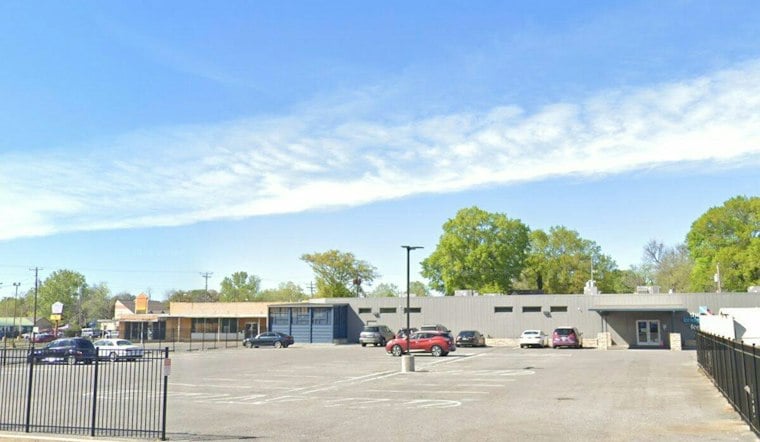
Collis Temple Jr., the former LSU basketball standout and Baton Rouge businessman, has been ordered to pay a $25,000 penalty after Louisiana's Board of Ethics found he violated state ethics law by using his seat on the Bridge Center for Hope's board to help steer a contract toward property he owned. The case centers on the Bridge Center for Hope's selection of a building owned by one of its board members.
According to WBRZ, the ethics board's October 2 opinion concluded that Temple allegedly used his position on the Bridge Center for Hope board to help award a contract to property he owned, resulting in a conflict of interest and a violation of state ethics law. Temple was the sole owner of Human Resource Group, the entity that owned the Florida Boulevard property ultimately selected for the center, per the same report.
How the Deal Came Together
The roots of the case trace back to 2019, when Temple was named to the Bridge Center for Hope board for a two-year term, around the same time the nonprofit entered an agreement with East Baton Rouge Parish government to use public funds to manage a crisis stabilization program, according to WBRZ's reporting. That August, the Bridge Center board selected Recovery International to provide clinical treatment services, and by December the two organizations had authorized a cooperative agreement, the station's report states.
It was in that same month that Temple suggested a Florida Boulevard property as a proposed site for the center — a building owned by his company, Human Resource Group, per the same account. Recovery International then recommended the property, citing cost savings and renovation timelines, and the Bridge Center board approved the site unanimously in January 2020, according to WBRZ.
Separate reporting from The Advocate at the time described the selected building as a vacant property owned by board member Collis B. Temple Jr., and noted that the decision to locate at Temple's property followed a recommendation from the facility's operator, RI International. The Advocate reported the nonprofit's board of directors unanimously accepted that recommendation.
The Resignation and the Numbers Behind the Site
Temple resigned from the Bridge Center board on the day of the site-selection meeting, according to WBRZ, a move The Advocate similarly reported at the time, writing that Temple had agreed to step down from the board to avoid a conflict of interest. Backers of the choice pointed to space and cost comparisons: The Advocate reported Temple's site offered about 25,600 square feet of usable space, compared to only 15,500 square feet at a competing site proposed by Baton Rouge General, with cost per square foot ranging between $10 and $12 at Temple's property versus $24.50 at the Baton Rouge General site.
RI International estimated the $1.1 million lease rate for Temple's site was 50 percent cheaper than the negotiated rate for Baton Rouge General's Mid City campus, The Advocate reported. Business Report later detailed that the five-year lease between Recovery Innovations Inc. and Temple carried a general lease amount of $1.1 million over five years. Recovery International paid $150,000 to Human Resource Group for the property on February 13, 2020, with additional payments following in April 2020 and January 2021, according to WBRZ.
Transparency Questions Over the Lease
The lease itself became a point of friction in early 2020. Business Report detailed that the Bridge Center and Recovery Innovations had refused a records request for the lease, arguing it was not a public document because it had been privately negotiated — even as Temple himself said he had no problem making it public.
What the Ethics Law Says — and an Earlier Court Opinion
At the heart of the ethics board's finding is a provision WBRZ's reporting describes as barring former board members from entering contracts with their former board or commission for two years after leaving it, and more broadly prohibiting a former board member from aiding another person for compensation in a transaction involving the former agency.
A 2023 opinion from the Louisiana Court of Appeal, First Circuit, involved Temple and Human Resources Group.




