

























































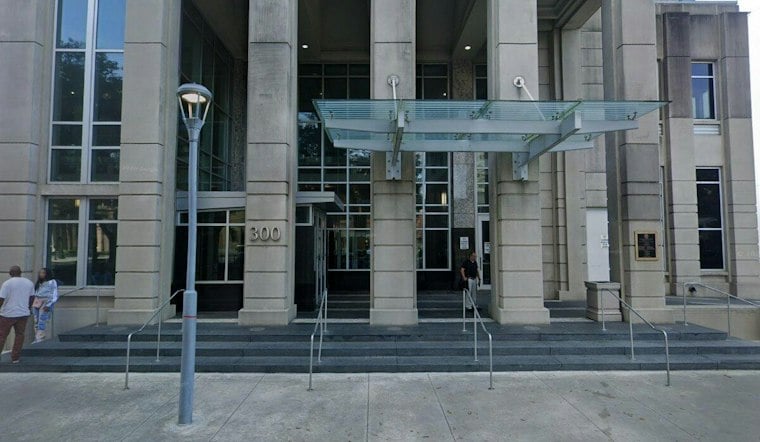
Louisiana Attorney General Liz Murrill's office has lost its bid to remove Judge Gail Horne Ray from a set of high-profile Baton Rouge corruption cases, after ad hoc Judge Bonnie Jackson denied the recusal request in court on Wednesday, Nov. 4. The ruling keeps Ray on the bench for prosecutions involving Councilman Cleve Dunn, former Capital Area Transit System administrator Pearlina Thomas and contractor Jay Colar.
Jackson's decision, announced in court Wednesday, rejects a motion that Murrill's office filed in September, according to WAFB. The Attorney General's office plans to seek writs following the denial, the station reports.
The recusal fight stemmed from a separate, long-running legal dispute. The motion claimed Ray should be removed because her attorney, Steven Irving, told WAFB that three 19th Judicial District Court judges — including Ray, along with judges Don Johnson and Ron Johnson — are suing Governor Jeff Landry, Attorney General Liz Murrill and Secretary of State Nancy Landry over voting rights.
Two Cases the AG's Office Says Are Linked
At the center of the dispute is a motion to reopen a 1980s federal voting-rights case alongside a declaratory-judgment suit the three judges filed in February. The recusal motion argued that Irving's public attribution of the renewed litigation, often called the Clark case, to Ray created what it called a more serious recusal problem, contending that no reasonable observer could conclude Ray could fairly preside over a case in which the Attorney General appears through the same counsel.
But Irving pushed back on that framing in September, telling the station the two matters are legally distinct. There is a motion to reopen the Clark case to which Judge Ray is not a party and a separate declaratory judgment suit filed in February by three judges, one of whom was Judge Ray, he said. These are two separate court cases.
The Redistricting Fight Behind the Lawsuit
The underlying voting-rights dispute traces back to Act 243, which the Louisiana Legislature passed in 2025. The law eliminated the 19th Judicial District Court's three-subdistrict map and replaced it with two subdistricts and a new at-large seat, doing so without seeking approval from the federal court that established the district's original consent decree, per the same WAFB report.
Under the previous map, the 19th Judicial District Court had 15 judges — nine Black and six white. Plaintiffs argue Act 243 was specifically drawn to reverse that trend, alleging that lawmakers only intervene when white voting power is at stake but not when Black voting power is diluted, the station's reporting notes.
Separately from their declaratory-judgment suit, the three judges are asking the federal court to reopen the historical voting-rights case, declare that Louisiana remains bound by the original consent decree, and block Act 243 from taking effect. They have also requested an expedited ruling as the 2026 judicial elections approach.
A Pattern of Recusal Fights
Wednesday's ruling is not the only recusal battle tied to the three judges. In a separate matter, Judge Marilyn Castle has already approved recusals of the three judges in dozens of cases filed by Murrill's office, according to an earlier WAFB report. WBRZ separately reported that Judge Marilyn Castle denied the AG's office's request to recuse Judge Gail Horne Ray and said the motion was untimely; it remains unclear whether that ruling and Wednesday's denial involve the same motion.
For now, Ray remains in place to oversee the corruption cases against Dunn, Thomas and Colar, while the Attorney General's office weighs its next move in pursuit of writs.



