

























































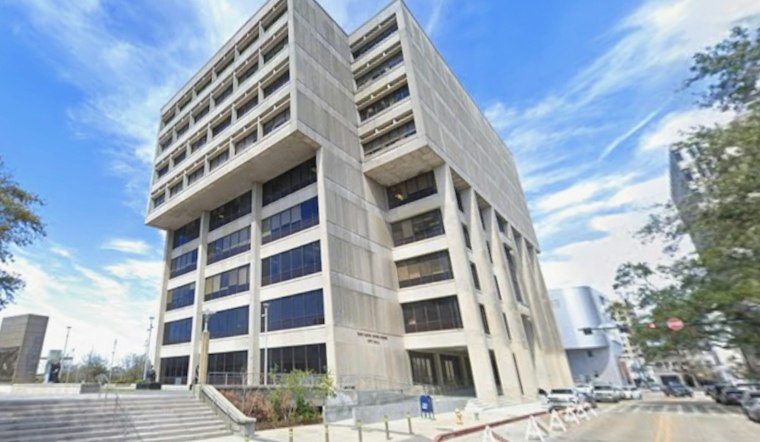
The proposed 2027 East Baton Rouge City-Parish budget lists no funding for the Iris Domestic Violence Center, ending a city funding stream the organization has relied on for decades. Iris Executive Director Patti Joy Freeman says the shelter is serving more clients while facing higher expenses, and that losing City-Parish support could force cuts to staff or services. Mayor-President Sid Edwards says he is confident he can still help Iris, but has not said how much funding that might involve.
Iris's City-Parish allocation had already fallen before the proposed zeroing-out. Unfiltered with Kiran reported that Iris received $193,670 in 2025 and $155,750 in 2026. Freeman told the outlet the shelter has more clients and higher expenses, leaving it stretched as that local funding disappears.
Freeman told Unfiltered with Kiran that Iris was not warned the previous year that its funding could be eliminated. Edwards, by contrast, said outside agencies had been alerted well over a year earlier that they would probably face some decreases. Their accounts differ on what notice Iris specifically received.
Where the Money Went — and Why It's Drying Up
One change in the funding picture came in 2025, when support for Iris and other nonprofits providing government-linked services was moved from the City-Parish General Fund to money received through the federal American Rescue Plan Act. Edwards has said that pandemic-era funding is running out and that the administration is prioritizing essential City of Baton Rouge services, while describing the nonprofits as important.
The reduction predates that funding shift. The City-Parish budgeted $253,180 for Iris in 2016 — an amount that, according to the same report, would need to be about $356,000 today to match its original buying power after inflation. Instead, the allocation declined over time as costs rose.
A Shelter Stretched Across a Population of 800,000
Freeman has described Iris as the state's largest shelter organization and the country's largest single-site organization of its kind, covering a population of 800,000 and taking in 3,500 to 5,000 people a year. About 85 percent of its clients come from East Baton Rouge Parish itself. Freeman has pointed to the scale of the underlying problem too, noting that one in three women will experience domestic violence in their lifetimes.
Iris reported $3,776,323 in total revenue in 2024, according to the group's own filing cited by the outlet, while City-Parish records showed the local government paid Iris $242,080 that same year — about 6.41 percent of the shelter's total revenue. Freeman has said Iris relies substantially on federal grants and state funding to make up the rest, and that every dollar brought in is important to keeping services running.
A Statewide Pattern of Unmet Need
Louisiana's domestic-violence service system leans heavily on federal money to begin with. A Louisiana Legislative Auditor performance audit found that shelters statewide averaged 2,659 unmet requests for shelter per year during federal fiscal years 2015 through 2020, and that about 90.1 percent of the state's $15.3 million in annual domestic-violence funding in 2020 came from federal grants. A more recent one-day survey from the National Network to End Domestic Violence counted 54 unmet requests for services among participating Louisiana programs, with roughly 76 percent of those involving emergency or other housing.
Statewide funding swings have hit other domestic-violence programs too. Per The Advocate, Louisiana allotted $7 million to the Louisiana Coalition Against Domestic Violence in the current and previous fiscal years, but that money was treated as one-time funding — and the coalition's leader has said losing it would eliminate 229 shelter beds and at least 11 outreach offices statewide.
Iris Is Not the Only Nonprofit Facing Zero
Iris is far from alone in the proposed 2027 City-Parish budget. WBRZ reported that 15 organizations would see their funding reduced to zero under the proposal, including Big Buddy and the Greater Baton Rouge Food Bank alongside Iris. The same proposal would eliminate $250,000 in annual operating support for the Arts Council of Greater Baton Rouge, which received $334,220 from the city-parish in 2016 and $250,000 the year before this one, per the station's separate reporting on a decade of shrinking nonprofit allocations.
Metro Council member Anthony Kenney has said the proposed budget is not final and that he hopes to hear from organizations and agencies before a final vote. The Advocate has reported that the broader round of cutbacks reflects a multiyear effort by the city-parish to adjust to lost tax revenue tied to the formation of the City of St. George, as well as the failure of Edwards's Thrive tax rededication initiative in 2025.
The Budget Remains Before the Council
City-Parish records show Mayor-President Sid Edwards submitted the proposed 2027 budget to the Metro Council on November 5, 2026, for consideration; it was not yet a final appropriation. The proposed plan lists no Iris allocation, but the submission establishes that the budget was still before the Council. The records cited here do not specify whether Iris funding could be restored through an amendment. The City-Parish’s 2026 budget proposal said some outside agencies would continue receiving support through American Rescue Plan interest earnings, while warning that several would face reductions and likely need new funding sources in 2027. The broader revenue debate does not identify replacement money for Iris: The Advocate reported that three Thrive proposals on the November 15 ballot were projected to generate more than $20 million in additional annual City-Parish revenue if approved. That was a projection for the broader budget, not funding earmarked for Iris.
For now, Edwards says his team is looking at creative funding outside of government to help organizations like Iris. I am confident that I am going to be able to help Iris out, he said. At what level, I don't know.





