

























































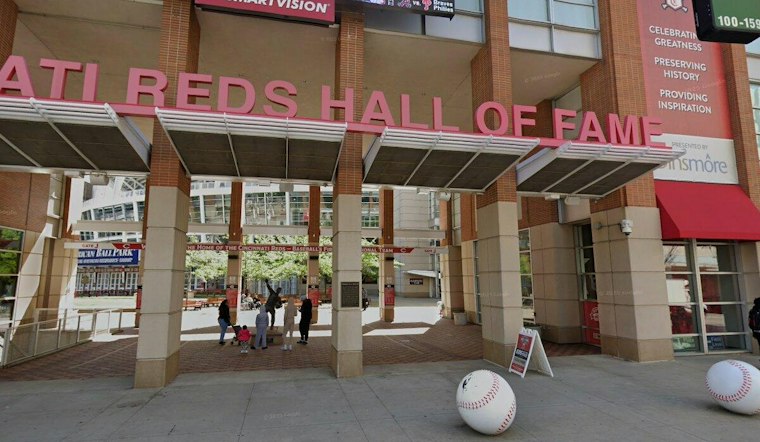
A Berkeley Springs native who spent years building a scratch-made model of Riverfront Stadium out of plywood and balsa wood has finally found it a permanent home — inside the Cincinnati Reds Hall of Fame Museum itself. Timothy Miller recently delivered the model in person, decades after a single childhood ballgame set him down the path of building it.
A Boyhood Trip That Sparked a Decades-Long Project
Miller's connection to the Reds traces back to 1977, when he attended his first Reds game with his family, as detailed by the Morgan Messenger. He had already started watching Major League Baseball the year before, in 1976, and became a Reds fan then. Soon after, he decided to build a model of Riverfront Stadium, the outlet reports.
There was just one problem: he had no blueprints and no scale to work from. Miller instead relied on a seating brochure that showed a plan and profile of the stadium, along with photographs he had taken during the game, piecing the structure together through trial and error. He built the model with a plywood base and a balsa wood structure, and the Messenger's report notes it took many hours over several years to finish.
A Model That Traveled With Him
The model didn't stay still any more than its builder did. Miller lived in Berkeley Springs but later moved the model with him to Harrisonburg, Bridgewater and Winchester, Virginia, and to Knoxville, Tennessee, according to the same account. Its longest stay, Miller said, was on the wall of his office at the Shenandoah station of Washington Gas.
The stadium holds more than architectural significance for Miller. Riverfront Stadium was also the site of his first date with his future wife, Deidra, in 1988, and the two later married. Riverfront Stadium opened in 1970 and was one of several so-called cookie-cutter stadiums built during that era, the Messenger notes — though the publication gives conflicting information on when the Reds left it, stating in its article text that the ballpark was the Reds' home from 1970 to 2003, while a photo caption in the same report lists 1970 to 2002. Either way, Riverfront Stadium was torn down in 2002.
The Reds’ official ballpark history dates Riverfront Stadium, later called Cinergy Field, from 1970 to 2002, resolving the conflicting end date. The multipurpose venue also housed the Bengals through 1999 and hosted five National League pennant-winning Reds teams, including three World Series champions. The team’s account of Riverfront’s place in Reds history helps explain why a model of the stadium carries meaning beyond its design.
Keep It, Sell It, or Give It Away
As the years passed, Miller weighed what to do with the model he'd carried from state to state. He considered keeping it or selling it on eBay, but ultimately decided to donate it instead. He contacted the Cincinnati Reds Hall of Fame, which sits next to Great American Ball Park in downtown Cincinnati, and asked if staff would consider displaying it.
The model will join a museum built to present the club’s history, not just honor its Hall of Famers. The Reds Hall of Fame and Museum spans 16,000 square feet and features historical, interactive and educational exhibits. For visitors, Miller’s hand-built recreation can add a view of a former home ballpark to the team’s broader story.
The Hall of Fame's executive director accepted Miller's offer and said the museum would find a place for it to be displayed, assuring Miller the model would have a permanent spot on view. Miller told the outlet he hoped other Reds fans could enjoy the model for years to come.
Delivering It in Person
Miller delivered the model to the museum himself, and the executive director and staff helped carry it inside. Staff members had already seen photographs of the model before Miller arrived, and once it was in place, museum visitors stopped to admire it.
Riverfront itself no longer stands: the stadium was imploded on Dec. 29, 2002, and the Reds moved into Great American Ball Park the following season. The former stadium stood just west of the current ballpark, making Miller’s model a detailed record of a place that has been absent from Cincinnati’s riverfront for more than two decades.
Miller's ties to Berkeley Springs run deep beyond the ballpark model. He graduated from Berkeley Springs High School in 1983 and played baseball that year for the school's state champion Indians squad. He said he plans to return to Cincinnati next year.





