

























































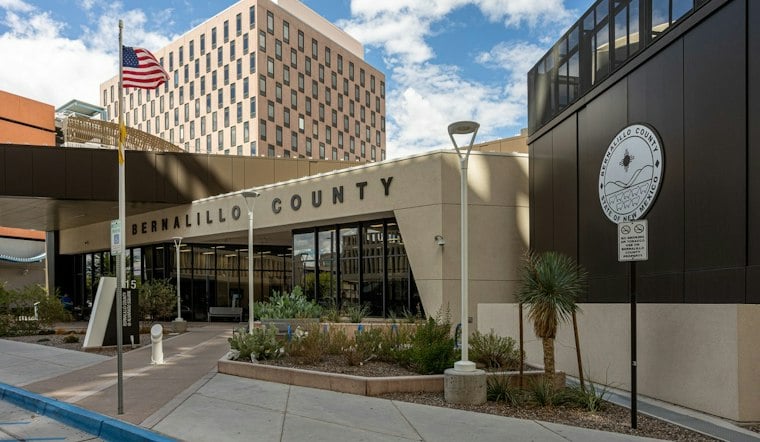
A month after Bernalillo County commissioners declared a civil emergency over fentanyl, the county still hasn't finalized how much money it will spend, which partners it will formally work with, or when a promised expansion of street outreach will actually begin. The declaration came as the county reported roughly six opioid overdose deaths a week during 2025, and as officials acknowledged the emergency response is still taking shape.
What the Declaration Actually Does
Commissioners unanimously approved the resolution on Oct. 14, according to nm.news, which also reported that it grants County Manager Cindy Chavez emergency authority effective immediately, an authority that stays in place until commissioners decide to change or end it. The proposed response described by nm.news includes expanding street medicine and addiction treatment, tracking overdoses in real time, and launching a sheriff's operation targeting drug trafficking organizations. Bernalillo County also requested state assistance and forwarded its declaration to state officials, with whom it continues discussing treatment needs, according to reporting by The Daily Lobo. As nm.news also noted, the declaration does not guarantee any new state or federal funding.
County officials announced plans to double medical street outreach through UNM's street medicine program and Albuquerque Health Care for the Homeless, per the Daily Lobo's reporting, but Chavez did not specify whether doubling meant more staffing, more hours, more teams or more patient contacts, and she gave no baseline or completion date. The county had not finalized a new agreement with UNM as of the Daily Lobo's report, though it said it is evaluating partnerships and expects to share more details in the coming months. Chavez told the Daily Lobo the county was still determining how funds would be allocated and would provide details in coming months, and that some funding will go toward a scalable, county-led emergency operations center meant to consolidate community-needs information, coordinate departments and partners, track progress and guide decisions around treatment access, emergency response, public safety and outreach. She did not specify when that center would become operational.
Existing Services Already on the Streets
UNM's Mobile Medical Team already provides medical services directly to people living on streets, in shelters and in temporary housing, along with preventive care, chronic disease management and mental health services, according to the Daily Lobo. UNM's broader street medicine effort, described by City Desk ABQ, handles stitches, prescriptions, wound cleaning and mental health assessments, while Albuquerque Community Safety connects people to housing, food, opioid prevention and education, and transportation to shelters. City Desk ABQ also reported that Albuquerque Health Care for the Homeless and First Nations Community HealthSource run their own street outreach initiatives, and that a past Connect-to-Care pop-up near HopeWorks downtown saw about 20 clients within an hour, connecting them to services or informing them of what's available.
UNM Hospital's ASAP Clinic offers outpatient treatment for opioid, methamphetamine and alcohol addiction with morning walk-in hours for same-day treatment, according to UNM HSC Newsroom, which also reported the 2025 figure of roughly six opioid overdose deaths per week countywide. Separately, UNM HSC reported a 28% increase in New Mexico overdose deaths from March 2025 to March 2026, citing CDC data that the state now leads the nation in drug overdose deaths. KUNM reported a different figure, describing statewide overdose deaths as having increased by almost 30% with another 32% increase predicted the following year, and also reported that people leaving jail are up to 40 times more likely to die of an overdose, citing state health department data.
Jail Detox Numbers and a New Treatment Vendor
The Metropolitan Detention Center has between 125 and 200 people detoxing on any given day, per the Daily Lobo's reporting, and the county is seeking a new vendor for medication-assisted treatment that may include long-acting injectable medications for people with opioid use disorder. That new vendor would be required to coordinate with community providers to support continued treatment after release, with new treatment services scheduled to begin July 1, 2027. No implementation date has been set for the long-acting injections themselves.
Past emergencies and support after jail
KUNM reported that the governor’s 2023 emergencies involving National Guard deployments in Albuquerque, Rio Arriba County and Española were followed by a Legislative Finance Committee report that found the declarations had “not changed much.” Those were governor-declared emergencies; Bernalillo County’s current declaration is a county-level response. According to KUNM, the committee reviewed the earlier declarations. Bernalillo County’s Behavioral Health Authority says its Resource Reentry Center connects people released from MDC with services including behavioral health and medical treatment, and partners with the county Health Council to provide Narcan training and distribution. The overdose-risk figure cited above—people leaving jail are up to 40 times more likely to die of an overdose—comes from state health department data and is not a county-specific estimate.
A Volunteer's View From the Street
Ilse Biel, a volunteer in Albuquerque’s International District and near the First Street and I-40 overpass, told the Daily Lobo she has seen no tangible changes at the locations where she volunteers, while cautioning that her observations do not cover every neighborhood in the county. She said repeated moves of unhoused residents make it harder for outreach workers to stay in contact, particularly when people lack phones.
Biel said concerns about future clearances can make residents reluctant to accept donated tents, and that removals can separate people from important belongings. She also alleged that police displacement operations near harm reduction collaborative offices coincided with lower service attendance; the Daily Lobo noted that claim has not been independently confirmed. She argued that outreach works better when people can remain in predictable locations long enough to build relationships with providers.
The City of Albuquerque administers encampment operations under a policy that describes shelter offers, outreach and storage of belongings while permitting conditional clearance of encampments on public property. Under that policy, the city provides written notice at least 24 hours before clearing a Priority 2 encampment, according to the City of Albuquerque's encampment policy document; for a Priority 1 encampment, written notice is provided if possible, with oral instructions issued otherwise.
Gaps in Treatment and One Woman's Relapse
Biel told the Daily Lobo that the county’s care campus has improved, but that timely access to help remains difficult. She pointed to pet restrictions at some recovery facilities as a barrier to accepting treatment placements, and said the homeless union is looking for pet foster arrangements for people entering treatment. She also said programs do not always coordinate transitions effectively.
Biel said people need sustained support and consistent contact with outreach workers, adding that many have lost trust in authorities. Chavez told the Daily Lobo that each data point in the county’s tracking represents a person suffering or someone close to them, and said the county intends to measure service gaps, treatment availability and the number of people accessing care as the response develops. Whether that measurement translates into finalized funding, a completed UNM agreement or a working emergency operations center remains an open question.
A previous wave of emergency declarations covering Albuquerque, Rio Arriba County and Española in 2023 was later reviewed by the Legislative Finance Committee, which found, as reported by KUNM, that those declarations had “not changed much.” Bernalillo County says it will prioritize investments in groups serving people experiencing homelessness, addiction and recovery, and will allocate some funding to the emergency operations center, though specific allocations have not yet been finalized.





