

























































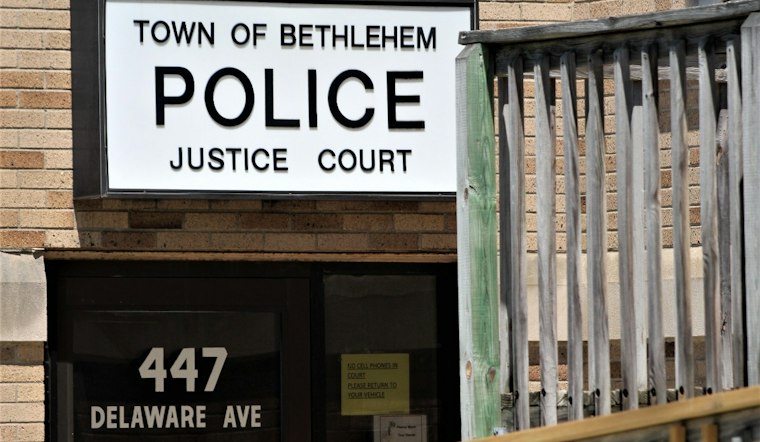
Bethlehem’s 2027 spending plan preserves services while raising the town tax rate by 2.03% for homeowners. The Town Board unanimously approved the $57.1 million budget without changing the preliminary plan, according to Spotlight News. For a home assessed at the median value of $250,000, the increase amounts to $22.46 a year.
The budget is $1.95 million, or 3.5%, higher than the 2026 plan. Bethlehem’s comptroller first presented it on October 29, according to The Daily Gazette. Among the larger cost increases are $349,000 in state-projected retirement system payments, $509,000 for employee health insurance, and $778,000 for unionized employees’ salaries and benefits.
Electricity costs are also expected to rise: Bethlehem budgeted $270,000 more for power in 2027, an 18.2% increase over 2026. The town plans to use $215,000 from its retirement reserve fund to offset part of the retirement-cost increase, rather than pass the full increase on to taxpayers, according to Spotlight News.
Staying Under the State's Tax Cap
The budget’s total tax levy increase is 2.47%, just below New York’s state tax cap, according to Spotlight News. Comptroller Michael Cohen said he was pleased that the plan stayed within the cap and that next year’s budget remained within expected reach of being balanced.
Town Supervisor Tom Schnurr also described the budget as staying within the tax cap and providing value to taxpayers. He said it maintains services residents rely on, while noting that other municipalities face broader pressures heading into 2027.
Board member Maureen Cunningham said Bethlehem is the only municipality in New York State that uses multi-year planning. Fellow board member David DeCancio characterized the 2027 plan as fiscally responsible, saying it controls spending while meeting residents’ needs.
Clouds on the Horizon for 2028 and 2029
Not every number in the plan points toward smooth sailing. Current projections show deficits of $777,000 for 2028 and $1.9 million in 2029, though Cohen assured the board that these figures are only projections, not adopted budgets. The comptroller also noted that nearby localities are raising taxes anywhere from 18% to 43%, rates he said far exceed Bethlehem's own increase.
The town's finances extend beyond the operating budget. Bethlehem's proposed five-year capital plan totals $73.6 million, which is $10.3 million below last year's $81.5 million projection — a drop largely attributed to the completion of capital projects such as the town's complete-streets initiative, per the same Daily Gazette reporting.
For residents trying to understand where their property tax dollars actually go, the town keeps just 12 cents of every tax dollar collected, with the remainder distributed to the school district, Albany County, the library, and local fire districts, per a report from Spotlight News.
Bethlehem’s operating-reserve benchmarks
Bethlehem’s 2023 financial statements say the town’s fund-balance policy sets operating-fund reserve levels at 7.5% minimum, 15% optimal and 20% maximum, according to the Town of Bethlehem. Those policy thresholds offer a benchmark, but do not by themselves show how the town’s unrestricted fund balance has changed in recent years.
How Bethlehem Compares to Colonie's Budget
The budget season has played out differently just a few towns over. Colonie's Town Board unanimously approved its own $138 million 2027 budget on Nov. 5, a plan that, unlike Bethlehem's, actually cuts town property taxes along with water and sewer rates. A Colonie homeowner with a home assessed at the median value of $352,300 would see an annual town property tax decrease of $14.81, or $1.23 per month, according to figures reported by acting comptroller Christopher Kelsey.
Colonie's budget rose by roughly $8 million, or 6.74%, from its 2026 budget of $129 million, and water district users there are expected to see a 4% rate reduction in 2027. The contrast underscores just how much budget outcomes can vary even among neighboring Capital Region towns facing similar cost pressures.



