

























































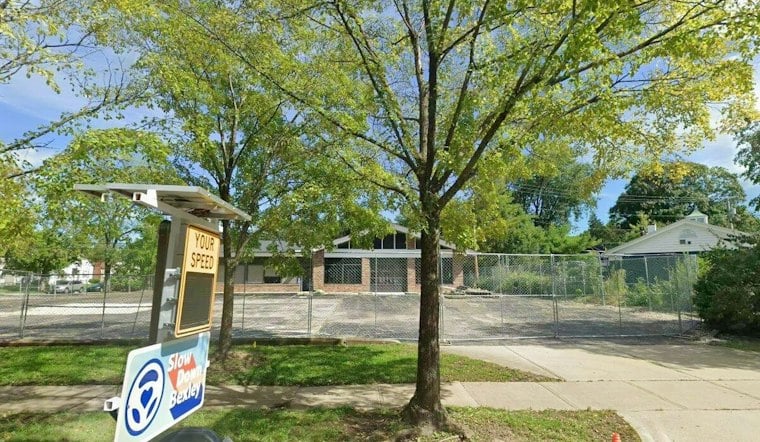
Construction crews have begun work on two apartment complexes in Bexley that will bring the Columbus suburb its first mixed-income housing development funded through Low-Income Housing Tax Credits, with a combined 43 new homes planned near North Cassady and East Livingston avenues. Demolition is finished and foundation work is underway at one site, while demolition continues at the other, according to the City of Bexley.
A Years-Long Push Finally Breaks Ground
The city broke ground Thursday on the project in partnership with the nonprofit The Community Builders, according to WOSU Public Media. The development will include one-, two- and three-bedroom units, with anticipated rents designed to accommodate households across a range of incomes, the City of Bexley says. The Cassady Avenue site also calls for roughly 3,500 square feet of first-floor commercial space that the city plans to build out as a new senior center, per the city, though WOSU separately described the planned senior facility at that site as 4,000 square feet — a discrepancy the available records do not resolve.
The project's size has also been described differently across sources. The city and WOSU both put the combined total at 43 residential apartments, while RDL Architects, a firm listed in connection with the development, has described the project as 59 units spanning 54,000 square feet with 2,400 square feet of commercial and office space. Nothing in the available record explains the gap between those figures.
Years of Legal Wrangling Before the Shovels Arrived
Getting to groundbreaking took more than three years of collaboration between The Community Builders, the City of Bexley and local stakeholders, according to a 2022 proposal filed with the Ohio Housing Finance Agency. That proposal describes the development as Bexley's first project funded through Low-Income Housing Tax Credits. The Livingston Avenue portion of the plan ran into legal trouble along the way: the city says the Franklin County Common Pleas Court reversed a City Council decision that had upheld the Board of Zoning and Planning's approval back in August 2022, and that the 10th District Court of Appeals upheld that reversal in September 2023, citing ambiguity in the zoning code's conditional-use provisions.
Bexley City Council responded in May 2024 by passing Ordinance 04-24 to clear up that ambiguity, including how residential conditional uses are treated in commercial districts, the city says. By March 2025, the Board of Zoning and Planning, the Architectural Review Board and the Tree and Public Gardens Commission had issued all final approvals needed for both sites, according to the city. The addresses tied to the project are 2300 East Livingston Avenue and 420 North Cassady Avenue, per the Ohio Housing Finance Agency filing.
Rents as Low as $300 a Month
Once complete, the tax-credit financing will allow some rents to run as low as $300 a month for families earning up to 80% of the area median income, WOSU reported. The 2022 state filing specifies that the one-, two- and three-bedroom units will be affordable to residents at or below that same 80% threshold, with 11 units set aside for Project Based Vouchers. WOSU reported that apartments are expected to begin leasing in early 2028.
The City of Bexley notes that Bexley Apartments is a private redevelopment project rather than a direct city initiative, even as officials have championed it publicly. Separately, the city lists a 100% property-tax abatement for 15 years for new residential construction designated as affordable housing within its Southwest Bexley Redevelopment Area, according to the City of Bexley.
A Region Squeezed by Rising Rents
The project arrives as Central Ohio grapples with a widening affordability gap.
Statewide numbers tell a similar story. Ohio faced a shortage of 266,000 affordable and available rental units in 2026, according to the Coalition on Homelessness and Housing in Ohio's Gap Report, which put Columbus's shortage at 53,000 units with only 27 affordable units available for every 100 extremely low-income renters. The same report found that 73% of Ohio's extremely low-income renter households spent more than half their income on rent, up from 66% just five years earlier. A 2025 Columbus Dispatch analysis found Columbus trailing other major Ohio cities on this measure, with 25 available units for every 100 low-income renters compared with 37 in Cincinnati and 39 in Cleveland.
Suburbs Historically Slow to Add Affordable Options
Affordable housing has historically been scarce in Columbus's suburbs. A 2023 Dispatch article described suburban areas as limiting affordable housing options even as the broader Columbus region boomed, and recounted how one renter, Kimaiya Brown, searched for housing in the Grove City area to be closer to her father but came up empty. A representative for The Community Builders told WOSU that the Bexley project makes the city the first first-generation suburb to create this type of development — a characterization attributed to the developer rather than independently confirmed.
George Tabit, identified by WOSU as senior vice president of The Community Builders, said he hopes the Bexley project will inspire other Central Ohio communities to pursue similar developments. Whether it becomes a model other suburbs follow may take years to determine, but for now the foundations rising near Cassady and Livingston avenues mark the first steps toward homes that won't be available to renters until leasing begins in early 2028.





