

























































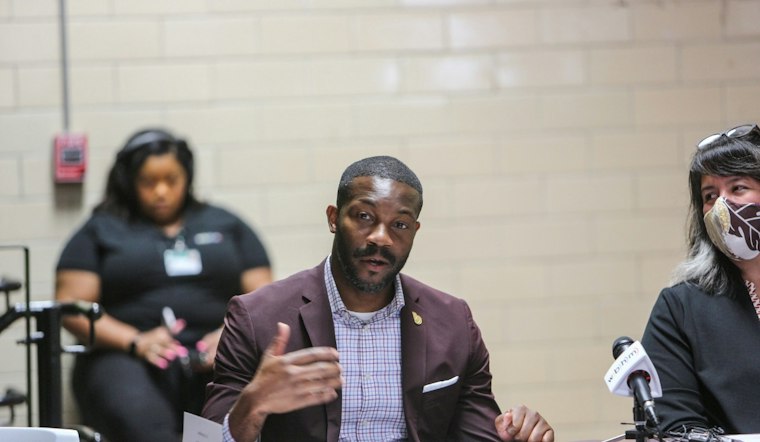
Birmingham is getting more than $8.3 million to overhaul traffic signals and crosswalks at 256 of its most dangerous intersections, Mayor Randall Woodfin announced on social media Monday. The money will fund new signal timing, accessible pedestrian signals, curb ramps, and a pilot program banning right turns on red near UAB, with city officials estimating the changes could prevent between 25 and 40 deaths or serious injuries over the next five years.
Woodfin said the city is working to synchronize its traffic lights, an issue critics have long complained slows traffic flow across Birmingham, according to AL.com. The mayor has also personally griped about the city's traffic lights in the past, the outlet reports. The newly announced funding will go toward updating signal timing and coordinating lights so traffic moves more smoothly, while also making it safer and easier for pedestrians to cross streets.
What's Changing at Birmingham Crosswalks
The project includes a long list of upgrades aimed specifically at people on foot. Accessible pedestrian signals with audible and other cues will help people cross, alongside countdown signals showing pedestrians how much time is left before the light changes, the report notes. At 100 intersections, pedestrians will get a head start in the crosswalk before oncoming traffic gets a green light, and the plan calls for new curb ramps at 190 intersections designed for people using wheelchairs, walkers or strollers.
Five intersections will go even further, offering dedicated crossing time with vehicle traffic stopped in every direction so pedestrians have the street entirely to themselves. The city also plans to improve visibility near crossings so drivers and pedestrians can see each other more easily, per the same account. Birmingham will additionally run a pilot program banning right turns on red at 20 intersections around UAB, a change aimed at reducing conflicts between turning vehicles and people in the crosswalk.
No Timeline Yet, But More Details Promised
Woodfin has not released a start date or completion schedule for the work. “We'll share the schedule as the project moves forward,” the mayor said, according to the outlet's report.
The investment lands against a troubling backdrop for pedestrian safety in the Birmingham area. The Birmingham-Hoover metro area recorded more than 130 pedestrian fatalities between 2018 and 2022, 35 more than the 98 deaths counted in the previous five-year stretch, according to a separate AL.com report. Nationally, 7,522 people were struck and killed while walking in 2022 alone, a 40-year high, that report found.
Part of a Broader Push for Safer Streets
This is not Birmingham's first attempt at tackling the problem. The City Council earlier this year approved an application for a separate $10 million federal grant aimed at improving traffic signals and pedestrian infrastructure at the city's busiest intersections, which was also expected to fund countdown timers, sound cues and accessible push buttons, according to BirminghamWatch. A separate $2 million Carbon Reduction Program allocation, reported previously by ABC 33/40, was intended to upgrade signals using newer wireless technology and was expected to be mostly complete within 12 to 18 months. It's not clear from available reporting how these earlier initiatives overlap with the newly announced $8.3 million award.
Other cities have pursued similar fixes. Nashville's Department of Transportation planned to ban right turns on red at seven intersections and add leading pedestrian intervals at seven intersections; only 25th Avenue South and Children’s Way were slated to receive both measures, according to WPLN News, giving people on foot a head start to establish visibility in the crosswalk before vehicles turn. Portland likewise passed an ordinance targeting its High Crash Network, where a small share of streets account for a majority of traffic deaths, per Portland.gov.
For now, Birmingham residents are left waiting on specifics. Woodfin's office has promised updates as the project develops, but which intersections come first, and when work will actually begin, remains to be announced.




