

























































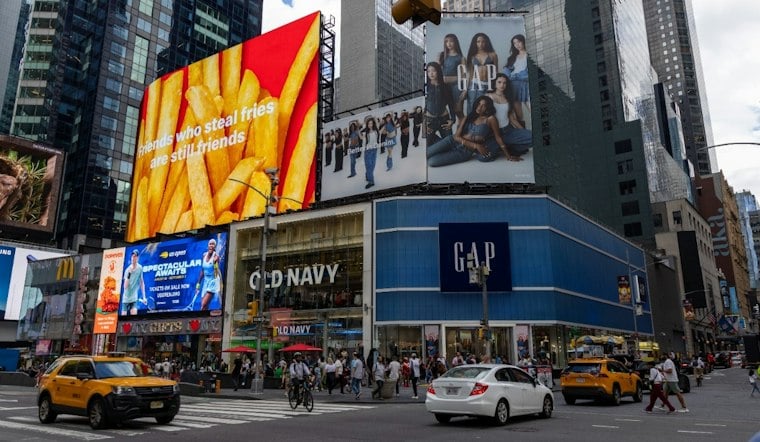
Shoppers hunting for the deepest possible Black Friday discounts this year may be running up against a new obstacle: artificial intelligence. Major retailers including Gap, Under Armour and Family Dollar are using AI-driven software to decide what to charge and how deeply to mark products down, with the stated goal of protecting profit margins without scaring off customers.
Consumer brands are increasingly turning to AI to set prices, hoping to trim discounts while still protecting their bottom lines, according to Reuters. A Gap spokesperson told the outlet that the company uses Impact Analytics to make, in the retailer's words, more informed markdown decisions based on demand and inventory signals. Under Armour and Family Dollar, meanwhile, rely on a separate platform called First Insight to decide what to charge for products and to estimate how price changes will ripple through sales.
Luxury and Sportswear Brands Lean on the Same Playbook
The approach isn't confined to mall staples and discount chains. Tiffany, Dolce & Gabbana and Kering's Yves Saint Laurent all use Anaplan software for pricing, according to Anaplan itself, as cited by Reuters. Across the sportswear category, the share of products put on sale actually grew over the past year, but the average discount came down â from 36% to 32% on items like sports bras, based on data cited in the Reuters report.
That squeeze is already showing up in specific, real-world markdowns. One pricing firm, Kapnova, advised a beauty brand to reduce a planned Black Friday discount on a skincare product from 40% down to 30%, per Reuters. Separately, First Insight suggested a brand scale back a buy-one-get-one promotion from 50% off to 40% off. AI pricing firms told the outlet that their tools often indicate discounts can be reduced without dampening demand.
Weather Data and Trillion-Dollar Holiday Forecasts
Pricing software isn't just adjusting discount depth; it's also shaping what lands on shelves in the first place. Dick's Sporting Goods and Ross Stores have each used weather-forecasting AI tools to help plan inventory for at least two years, the Reuters report noted. Impact Analytics software generally recommends fewer promotions, run for shorter periods and across fewer products, which helps explain why more items can go on sale while the average discount still shrinks.
The stakes this holiday season are sizable. The National Retail Federation estimates U.S. holiday sales will rise 4.2% from 2025 to just over $1 trillion, a forecast cited in the same Reuters report alongside a current inflation rate of 3.7%. Retailers have been reluctant to discuss AI pricing.
AI Pricing Spreads Across Consumer Brands
Consumer brands are increasingly turning to AI to set prices. AI tools can help inform pricing and markdown decisions.
AI-assisted pricing is part of a broader business trend, not just a holiday-retail tactic. A survey of more than 2,200 business leaders across 28 countries and 39 industries found 41% used AI to gather market intelligence, including competitors’ prices, while 28% used it for real-time price optimization, the Associated Press reported. The survey spans industries, so it does not establish how widely retailers use the tools or how they affect shoppers’ bills.
Retailers including Gap, Under Armour and Family Dollar use software to inform pricing and markdown decisions.
Shopper Backlash Is a Risk
AI-informed pricing also carries a reputational risk: cash-strapped shoppers could push back if they sense they're being charged more, or discounted less, than they expect heading into the holidays.
Algorithmic markdowns do not necessarily mean shoppers are charged different prices based on who they are. The FTC defines personalized pricing as using personal data to estimate what an individual is willing to pay. In August 2026, the agency sought comment on a draft enforcement policy warning that undisclosed use of such data could violate consumer-protection law, while noting it cannot ban personalized pricing in every circumstance.
Still, when implemented well, the effects can be subtle enough that most consumers may never realize the tools are at work behind the scenes. As one expert quoted by Reuters put it, AI pricing is becoming controversial precisely because shoppers want deep discounts even as retailers get smarter about predicting exactly how little they can offer and still make the sale.





