

























































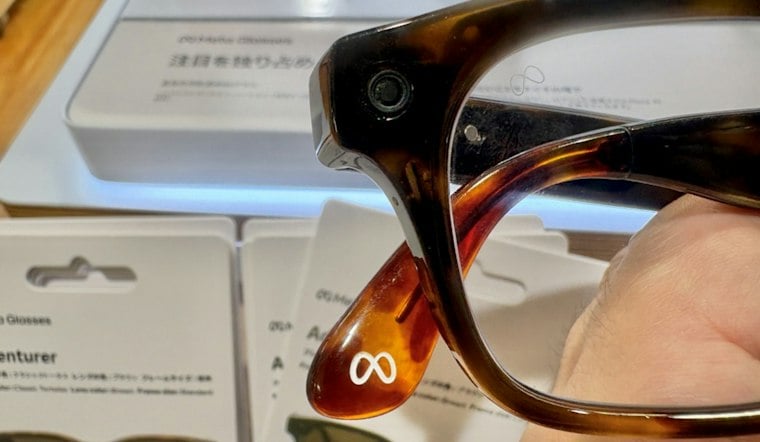
Belard Ernest hasn't seen anything in 20 years. But this week in Washington, D.C., the totally blind Coast Guard veteran from New Orleans used a pair of Meta smart glasses to help him imagine his surroundings, navigate the sidewalks, and find his way to the door of a pizza restaurant where he sat down to eat with others on the trip.
The moment was detailed by Louisiana Radio Network, which reported that Ernest received one pair of the Meta smart glasses as part of a group of Louisiana veterans who traveled to Washington this week for a series of Veterans Day events. The trip was made possible by an Honor Flight sponsored by Meta, according to the outlet. The glasses include AI features designed to help create a mental picture of what Ernest would see if his eyesight were intact, and they provide audio descriptions of objects around him — tools that reportedly helped him reach the restaurant door himself before joining the rest of his group for dinner.
Meta's Pledge to Blind Veterans Nationwide
The glasses Ernest wore are part of a larger initiative Meta announced to donate Ray-Ban Meta glasses to every blind veteran in America at no cost, according to a statement from about.fb.com. Meta says more than 130,000 American veterans are legally blind and will be eligible for the program. A separate program page from TechSoup describes the donation effort differently, saying it is capped at 130,000 units of Ray-Ban Meta Gen 1 AI glasses — language that reads as a device cap rather than a count of eligible veterans, though the dossier does not resolve how the two figures relate to each other.
Meta says it is working with the Blinded Veterans Association to provide hands-on training with every single pair distributed, per its own announcement. That training effort is echoed in reporting on a separate group of veterans from Northeast Ohio, where the Blinded Veterans Association reportedly developed training to help veterans learn to use the technology and use it confidently, according to Ohio Tech News. That same report noted the association had placed new requests for the glasses on a waitlist while it processes applications.
How the Technology Works
The glasses are not standalone devices. As Stars and Stripes reported, they must be connected to a smartphone or tablet, with all AI processing happening on that paired device. TechSoup's program page describes a Detailed Responses feature that can read a menu aloud or describe what a wearer is looking at, including objects, colors, and environmental details, and it also notes a hands-free connection to sighted volunteers through Be My Eyes.
Ernest's trip follows a pattern seen in other Meta-sponsored Honor Flights around Veterans Day this year. Stars and Stripes reported that one such flight carried 50 blind and visually impaired participants to Washington for a three-day tour, with each person set to receive a pair of the glasses. A separate Lafayette veteran, Francis Arceneaux, was selected for a similar Meta-sponsored Honor Flight for visually impaired and blind veterans from Louisiana and across the country, according to a report from Yahoo News. Arceneaux told the outlet the glasses could read an email on his computer or tell him what he was looking at when out and about.
Veterans Find Names on the Memorial Wall
Other veterans touring Washington this week used the same technology for more solemn purposes. A report from KALB described a group of veterans from across the country touring Washington's war memorials using the AI glasses, including Vietnam veteran Victor Dunham, who used his pair to find a friend's name, Anthony, on the Vietnam Veterans Memorial wall. Ohio Tech News separately reported that seven veterans from Northeast Ohio took part in their own Meta-sponsored Honor Flight surrounding Veterans Day, with an itinerary that included museums, military memorials, ceremonies, and a celebration.
For Ernest, the trip to Washington offered something more ordinary but no less meaningful: a chance to walk into a restaurant and share a meal with the group he traveled with, guided by technology designed to put a picture back into a world he has not seen in two decades.





