

























































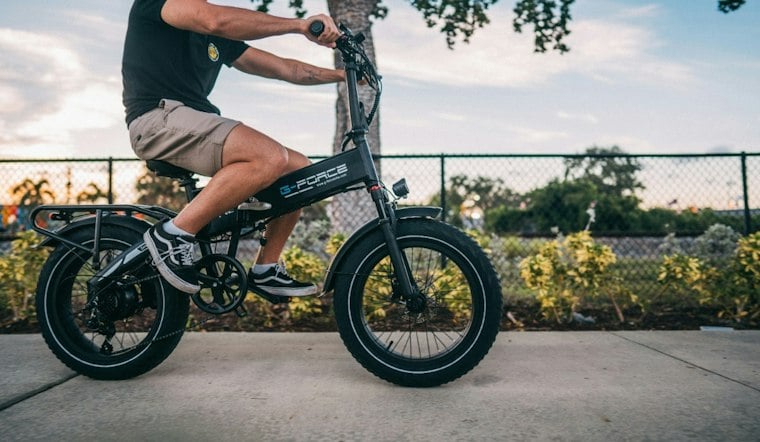
Federal land managers overseeing hundreds of miles of singletrack between Parachute and Eagle are weighing whether to dramatically expand where electric mountain bikes are allowed to ride. The Bureau of Land Management is considering opening more than 100 miles of Colorado River Valley trails to Class 1 e-bikes, with one option on the table that would add as many as 187 miles to the roughly 18 already in play.
The Colorado River Valley Field Office released a draft environmental assessment laying out several alternatives for expanded e-bike access, according to The Colorado Sun. The proposal traces back to a request from area mountain bike interest groups, who asked the field office in January 2024 to allow Class 1 e-bikes on designated mountain bike trails. Those bikes assist only while the rider pedals and stop providing power at 20 mph, with no throttle involved, per the same report.
Right now, the field office manages nearly 220 miles of designated singletrack mountain bike trails spread across 567,000 acres, working alongside local governments and open-space agencies in Glenwood Springs, Rifle, Carbondale, Eagle, Gypsum, New Castle, Eagle County and Pitkin County. All motorized trails are already open to e-bikes, but only about 18 miles of nonmotorized trail — at the Grand Hogback Trail System north of Rifle — currently allow Class 1 models, as Bicycle Retailer and Industry News reported.
Three Paths Forward, Including No Change at All
The draft lays out three main alternatives. Alternative A would allow Class 1 e-bikes on trails at the Crown, Hardscrabble-East Eagle, New Castle and Thompson Creek areas, while keeping Red Hill off-limits to e-bikes; the BLM has reported that the Crown and Hardscrabble-East Eagle see relatively low crowding, and the agency said this option would have minimal effects on existing recreation settings while still expanding e-bike opportunities.
Alternative B goes much further, opening all designated mountain bike trails managed by the field office — including Red Hill and smaller systems outside established recreation management areas — for a total of 187 added miles. That would include 20 miles at Red Hill itself and 49 miles on less-used trails elsewhere. Alternative C, the no-action option, would keep the current 18 Grand Hogback miles as the only designated nonmotorized trails open to Class 1 e-bikes.
Red Hill has drawn particular scrutiny because of its high use relative to its size, concentrated near the Colorado 82 trailhead. The BLM has said e-bike access there would likely increase encounters between hikers and mountain bikers, and both Pitkin County and the Carbondale Bike, Pedestrian & Trails Commission opposed e-bike access at Red Hill in their scoping letters.
Wildlife Habitat and Trail Wear Weighed, Not Fully Resolved
The draft assessment evaluates access across jurisdictions, recreation and visitor experiences, big-game habitat and behavior, and economic and quality-of-life impacts. Many existing trails cross mule deer and elk summer, winter and severe-winter ranges, as well as fawning and calving habitat, and the BLM has said the narrower 118-mile expansion would not cause measurable impacts to big-game habitat or reproduction. A broader alternative, by contrast, could increase functional loss of big-game habitat and potentially affect reproductive success on additional trails outside established recreation areas, according to the same assessment.
On trail wear, the BLM did not analyze in detail the potential effects of increased use, heavier bikes or trail widening on erosion, trail stability and long-term maintenance, saying instead that purpose-built trails and standard maintenance practices should make any impacts manageable. At Grand Hogback specifically, the agency has reported no user conflicts or trail-maintenance issues tied to e-bike use so far, a finding echoed by the Roaring Fork Mountain Bike Association, which cited the BLM’s own statement that it found no user conflicts or trail maintenance issues there.
A president of a Rifle-area mountain-biking organization told Summit Daily that Grand Hogback trails had seen very minimal physical impact from e-bikes even as use increased — a data point that may inform how the BLM weighs the heavier-use alternatives elsewhere in the system.
Public Comment Window Closes Dec. 14
The BLM already received 668 comments during the public scoping period this year, and classified 349 of them as substantive. Field office manager Lisa Dawson said public feedback played an important role in shaping the alternatives now being evaluated, per the Sentinel. The agency is now requesting substantive comments identifying inaccuracies, analysis gaps, new information or reasonable alternatives, with that window open through Dec. 14.
No changes to current trail designations will take effect before the environmental review and decision-making process is complete, the bicycle-industry trade publication reported. If the BLM does adopt expanded access, it has proposed pairing it with education, signage, coordination with local land managers, directional riding and ongoing monitoring.
Surveys elsewhere in the region suggest the public is split but leaning toward acceptance. A Roaring Fork Mountain Bike Alliance survey of more than 1,300 respondents found over 60% were supportive or neutral on allowing e-bike access on mountain bike trails, per Summit Daily. A Town of Eagle survey from December 2025 found about 58% support for Class 1 e-bikes on the town’s dirt trails, while 32% said no class of e-bike should be allowed on them at all.
The Vail Valley Mountain Trails Alliance has described e-bike access as one of the polarizing issues in its own member surveys, according to The Colorado Sun, even as its executive director told Summit Daily that e-bikes are showing up on trails more and more every year, with local bike shops increasing their e-bike rental offerings. The debate echoes decisions already made elsewhere on BLM land: the agency opened e-bike access in Fruita’s 18 Road area back in 2019 and expanded it to 29 miles of North Fruita Desert trails in 2022, and more recently opened more than 200 miles of singletrack to pedal-assisted e-bikes near Moab.




