

























































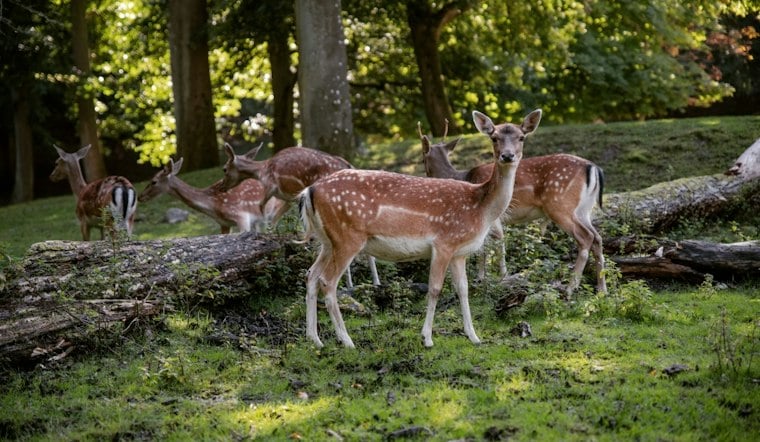
Block Island residents are ready to get rid of their deer entirely. A new survey from the Block Island Residents Association found that 73% of respondents want to completely eliminate the island's deer population, while another 21% favor significantly reducing the herd, according to The Block Island Times — a striking show of frustration as tick-borne illness spreads across the small Rhode Island community.
A Survey Shows Overwhelming Support for Drastic Action
More than 840 people with ties to Block Island responded to the survey, according to the Providence Journal. Nearly 75% of those who responded said they had done less hiking over the past summer specifically because of tick concerns, a sign of how deeply the issue has reshaped daily life on the island. The newspaper's report comes just months after it detailed a separate rise in alpha-gal syndrome, a tick-triggered meat allergy, among islanders.
The idea of eliminating deer from Block Island entirely would be especially notable given the animals were never a native part of the landscape. Four deer were sent to the island by ferry in February 1967, as reported by the Block Island Residents Association, which means the entire herd that now roams the island descended from that small, deliberately introduced group.
Nobody Agrees on How Many Deer Are Even Out There
Just how many deer currently live on Block Island depends on who you ask, and the two most-cited estimates don't come close to matching. The Providence Journal reports that a Rhode Island Department of Environmental Management flyover conducted two years before its November report put the number somewhere between 150 and 900 deer. The Block Island Residents Association, however, says there have been no formal counts since 2014 and that current estimates for 2024 suggest more than 1,200, and possibly as many as 2,000, deer on the island — figures the group says are up from roughly 800 deer counted in a 2014 aerial survey that translated to about 82 deer per square mile.
The residents' association has been pushing for herd reduction for years. In 2013, the BI Deer Task Force, DEM and Town Council set a long-range goal of shrinking the island-wide population to roughly 10 deer per square mile, or about 100 deer total. A local-hunter program that took effect for the 2014-2015 season pays hunters $150 per deer tail, plus $12.50 for each deer tag, and as many as 400 deer were killed during the 2023-2024 season, as noted by the Block Island Residents Association — a bounty figure the Providence Journal also cites in its report. Despite that incentive, the number of deer killed suggests the hunting program alone hasn't come close to reaching the group's target.
What Full Elimination Would Actually Require
Getting rid of every deer on the island wouldn't be as simple as expanding the existing hunt. The Providence Journal reports that options on the table include expanded hunting, bringing in professional sharpshooters, or using bait to draw deer in.
Some of those restrictions are spelled out in state law. A Rhode Island Department of Environmental Management regulation excerpt cites risks to natural resources as a consideration in deer management.
Would It Even Work? The Science Is Mixed
Even supporters of deer reduction stop short of promising it would end the tick problem. Joe Loya told the Providence Journal that eradication would not eliminate ticks outright, but said there is strong scientific evidence it would dramatically reduce the number of mature ticks and the transmission of Lyme disease. The residents' association points to a comparable experiment on Great Island, Massachusetts, in 2017, where reducing the herd by 80% to a density of five to eight deer per square mile was associated with tick numbers falling by more than 80%.
Not every study agrees that the strategy pays off broadly. A 2017 review published in the Journal of Integrated Pest Management concluded that deer reduction has not been proven to reduce human Lyme disease risk, or that its usefulness may be limited specifically to island settings. A comparable debate is playing out on Martha's Vineyard, where a winter drone survey from Tick Free MV counted 4,681 deer, a density of roughly 49 per square mile that the group says is nearly three times what Massachusetts wildlife biologists consider healthy. Tick Free MV has said the island can sustain 1,500 deer or fewer, which would require cutting the herd by close to 70%, but the group's executive director, Virginia Barbatti, acknowledged in comments reported by BlueDot Living that even a 70% reduction would not solve the tick problem outright on its own.
For now, Block Island's path forward remains unsettled. The survey results signal strong public appetite for dramatic action, but the specifics — which method might be used, whether state lawmakers would take up special legislation, and how large the herd actually is today — remain open questions.





